

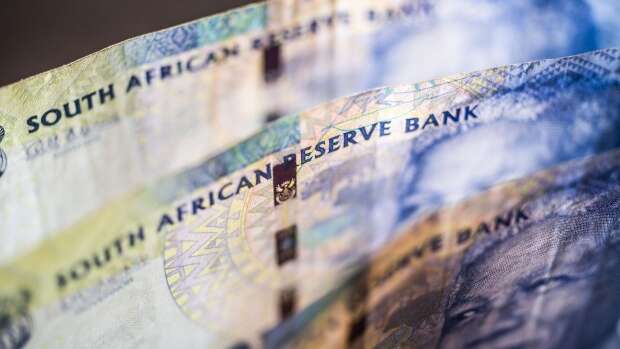

- South African Rand Holds Steady as Investors Await Budget and Inflation Verdict
South Africa’s rand held broadly steady in early trading on Tuesday as investors resisted taking major positions before two domestic events capable of reshaping expectations for the currency: September inflation data and the government’s medium-term budget.
The subdued movement should not be mistaken for an absence of risk. Rather, it reflects a market waiting to determine whether improved tax receipts can strengthen South Africa’s fiscal position and whether renewed inflation pressures will require monetary policy to remain restrictive for longer.
The rand’s near-term direction will depend on how those two forces interact. A credible budget that directs stronger revenue towards deficit and debt reduction could support the currency. Higher-than-expected inflation, meanwhile, could increase expectations of further interest-rate tightening, potentially offering yield support while exposing the economy to weaker growth.
Investors are approaching the medium-term budget with revenue expectations. Finance Minister Enoch Godongwana is expected to present an improved fiscal outlook on Wednesday after corporate tax, value-added tax and personal income tax collections exceeded earlier assumptions.
Corporate tax receipts rose 22.8 per cent during the first five months of the fiscal year, supported by strong mining profits. VAT collections increased 9.1 per cent, while personal income tax revenue advanced 8.4 per cent, according to estimates.
BNP Paribas expects revenue to be revised upwards by more than R50bn relative to the February estimates, while Goldman Sachs projects an improvement of about R40bn. Both institutions expect the Treasury to incorporate only R10bn to R20bn of the windfall into its formal projections.
Using the windfall to reduce borrowing would therefore send a stronger signal than using it to finance new recurring expenditure. It would demonstrate that the government is treating revenue outperformance as an opportunity to rebuild fiscal space rather than an invitation to expand commitments.
Analysts expect the main budget deficit to narrow to between 3.3 and 3.6 per cent of gross domestic product during the current fiscal year, compared with the Treasury’s February target of 3.7 per cent. BNP Paribas also expects the debt-to-GDP ratio to decline over the medium term after peaking at 78.2 per cent in 2025.
For currency investors, those numbers are important because debt dynamics influence sovereign risk, borrowing costs and the amount of fiscal flexibility available when economic conditions deteriorate. A government that spends an increasing share of revenue servicing debt has fewer resources for infrastructure and services that could raise long-term growth.
The budget is expected to provide details of a formal fiscal anchor intended to restrain borrowing and debt. Goldman Sachs expects a principles-based framework rather than a fixed numerical ceiling.
The credibility of that anchor will depend on its enforcement. Moody’s has indicated that it will examine the framework’s design, including possible exemptions and how quickly deviations must be corrected. A rule that can be suspended easily would offer markets little assurance.
The possibility of credit-rating improvement adds to the significance of Wednesday’s statement. Goldman Sachs expects S&P Global to raise South Africa’s rating to BB+ at its November review, placing it one level below investment grade, and sees the possibility of an upgrade from Moody’s.
Yet stronger revenue and a better fiscal framework cannot conceal South Africa’s fundamental weakness: limited economic growth. The International Monetary Fund expects the economy to expand by only 1 per cent this year. That pace remains insufficient to generate employment rapidly, broaden the tax base or make debt reduction easier through sustained nominal growth.
Inflation presents the second test for the rand. Consumer prices increased 4.4 per cent year on year in August, with housing and utilities, transport, insurance and financial services contributing to the rise. September figures will show whether those pressures strengthened further.
South African Reserve Bank Governor Lesetja Kganyago has warned that global energy and food costs continue to create upside risks. He expects inflation to average 4.4 per cent in 2026, return to the central bank’s tolerance band in 2027 and reach its 3 per cent target in 2028.
The central bank raised its policy rate by 25 basis points to 7.25 per cent in September after pausing in July. Governor Kganyago has described the stance as “moderately restrictive” and said future decisions will be taken meeting by meeting.
That cautious position reflects an uncomfortable trade-off. Higher rates can contain inflation and support the rand by preserving the appeal of South African assets. But they also raise borrowing costs for households and businesses in an economy already struggling to generate momentum.
Oil prices intensify the dilemma. Inland petrol exceeded R30 a litre this month after the Middle East conflict pushed crude above $100 a barrel. More expensive fuel can feed directly into transport costs and indirectly into the price of goods distributed across the economy.
The rand has remained stable despite a stronger dollar. Governor Kganyago has attributed part of that resilience to fiscal consolidation and an appropriate monetary-policy stance, while warning that stability should not encourage complacency.
External forces remain relevant. Emerging-market currencies are sensitive to United States interest rates, Treasury yields and global risk appetite. The rand weakened sharply on October 14 after stronger-than-expected American inflation increased expectations of tighter Federal Reserve policy.
Tuesday’s stability therefore represents a pause before information, not a decisive judgment on South Africa’s outlook. Investors want evidence that the revenue improvement will be preserved, that the fiscal anchor will impose meaningful restraint and that inflation can be contained without inflicting greater damage on growth.
The most favourable outcome would combine a narrower deficit, credible debt control and inflation that does not force additional aggressive tightening. A weaker outcome would involve spending the revenue windfall while energy costs lift inflation and rates.
The rand’s calm will be tested by which of those narratives gains credibility. South Africa has an opportunity to show that improved revenue can become lasting fiscal repair. If the budget falls short or inflation surprises upwards, the currency’s stability may prove less a sign of confidence than the silence before repricing.

