


- SWAG Demands Overhaul of Ghana Football as Pressure Mounts on GFA
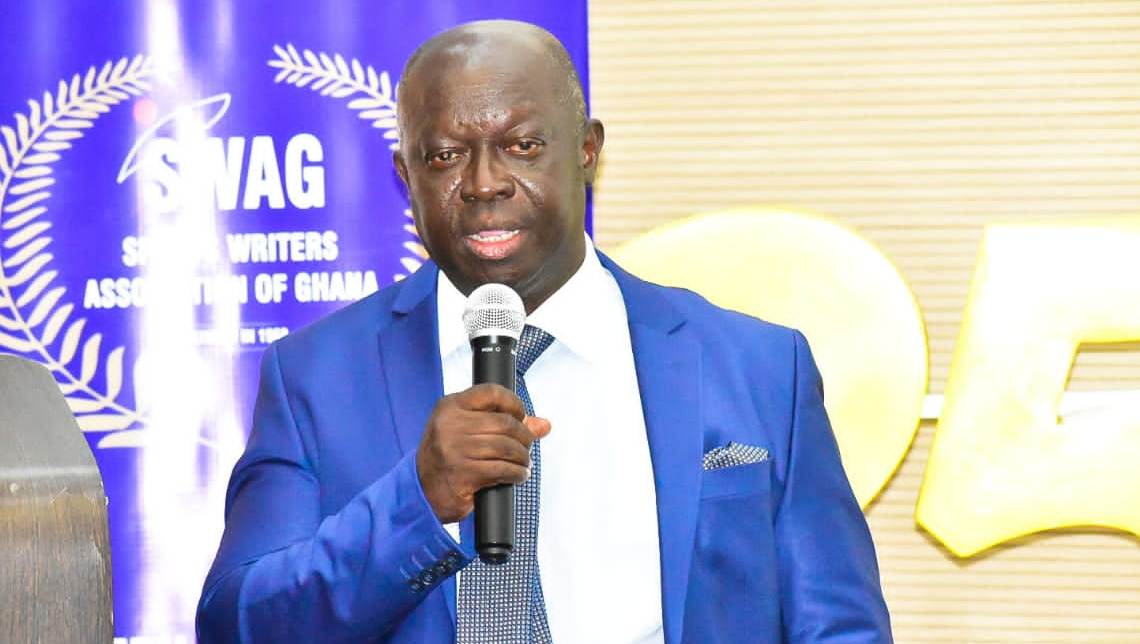
The Sports Writers Association of Ghana has demanded a comprehensive overhaul of the country’s football system, warning the leadership of the Ghana Football Association to reverse the decline of the national teams or step aside.
SWAG said the Black Stars’ defeats to Côte d’Ivoire and The Gambia at the start of the 2027 Africa Cup of Nations qualifying campaign were symptoms of a deeper crisis that could not be resolved through another coaching change.
Ghana lost 2-0 to Côte d’Ivoire in Bouaké before surrendering a two-goal lead in a 4-2 home defeat to The Gambia. The results left the Black Stars without a point from their opening two Group C fixtures.
In a strongly worded statement, SWAG described the continued deterioration of the Black Stars and other national teams as a “paralysing terror” for Ghanaians.
The association said Ghana’s football problems extended beyond the senior national team, pointing to the country’s failure to qualify for the 2025 AFCON, the stagnation of the junior teams and the erosion of a recognisable tactical identity.
SWAG’s intervention came on the same day the GFA and Carlos Queiroz mutually agreed to terminate the Portuguese coach’s contract.
Queiroz left after winning only one of seven matches in charge. Ghana suffered four defeats during that period, with the opening losses in the AFCON qualifying campaign intensifying scrutiny of his position.
“This was not an easy decision,” Queiroz said, but both sides concluded that ending the relationship was “the most appropriate course of action” in the interests of Ghanaian football.
His departure made him the latest coach to leave the Black Stars without resolving the team’s persistent weaknesses.
SWAG said the cycle of appointing coaches, dismissing them after poor results and beginning another rebuilding exercise had produced only “cosmetic band-aids”.
The argument shifts responsibility away from the technical bench alone and towards the institutions responsible for player development, national-team appointments, domestic competitions and long-term planning.
If the same administrative structure repeatedly produces poor results under different coaches, changing the coach may alter the immediate mood without correcting the underlying problem.
SWAG is demanding that appointments to national teams be based on competence, technical ability and proven performance rather than political influence or personal relationships.
That principle would need to extend beyond the head coach to technical directors, youth-team coaches, scouts, team managers and other officials attached to the national sides.
The association also wants Ghana’s domestic competitions restructured to improve player development and create a clearer pathway from youth football to the senior national teams.
This is significant because a successful national team cannot be separated from the system beneath it. Ghana’s traditional strength came from schools football, youth competitions, strong domestic clubs and junior national teams that consistently developed players for the Black Stars.
When those foundations weaken, the senior team becomes increasingly dependent on recruiting foreign-based players developed by football systems outside Ghana.
The result may be a group of individually talented footballers without the shared tactical education and competitive experience needed to function as a coherent national side.
SWAG said the era of apologies and blame shifting must end, with accountability applied to those responsible for managing Ghana football.
The association has called on the GFA leadership to restore the competitiveness of the national teams or vacate office in the national interest.
“If the leadership cannot reverse the declining fortunes of our national teams, then it must step aside,” SWAG’s position amounts to.
The demand increases pressure on GFA President Kurt Okraku and his Executive Council, whose administration has faced growing criticism over senior national-team performances, repeated coaching changes and the condition of the domestic game.
Mr Okraku has led the GFA since 2019 and was re-elected in 2023. His administration has highlighted investments in youth development, women’s football and infrastructure, but the Black Stars’ results have become the most visible measure by which the public judges its performance.
The defeats to Côte d’Ivoire and The Gambia have now transformed dissatisfaction with the national team into a broader argument about governance.
Should the GFA leadership fail to implement the required reforms, SWAG wants the management of Ghana’s national teams transferred to an independent Public Interest Committee.
Such a proposal would raise legal and institutional questions because FIFA strongly guards the autonomy of national football associations from government or third-party interference.
Any alternative management structure would therefore require careful design to avoid sanctions while ensuring that the GFA remains accountable for the use of public funds and the performance of teams carrying Ghana’s name.
An independent committee would also not succeed merely because it is described as independent. Its membership, mandate, financing, reporting requirements and relationship with the GFA would have to be clearly established.
The larger issue is whether Ghana needs another committee or a football administration with transparent appointments, measurable objectives and consequences for persistent failure.
The Black Stars still have time to recover in the AFCON qualifying campaign, with fixtures against Somalia expected in November. But qualification alone may no longer be enough to settle the wider debate.
SWAG’s statement reflects a growing view that Ghana’s football crisis is not simply about losing two matches. It concerns a development system that no longer produces consistent results, an administrative culture in which accountability is difficult to locate and a national team that has lost much of its identity.
Replacing Queiroz may offer a short-term reset. Rebuilding Ghana football will require something much harder: reforming the system that appoints the coaches, develops the players and repeatedly survives the failures.

