


- Revenue, Inflation and Debt Dominate Ghana’s New IMF PCI Review
Ghana’s first major test under its new non-financing arrangement with the International Monetary Fund begins with a deceptively simple question: can the discipline that helped stabilise the economy survive when fresh IMF money is no longer the immediate reward?
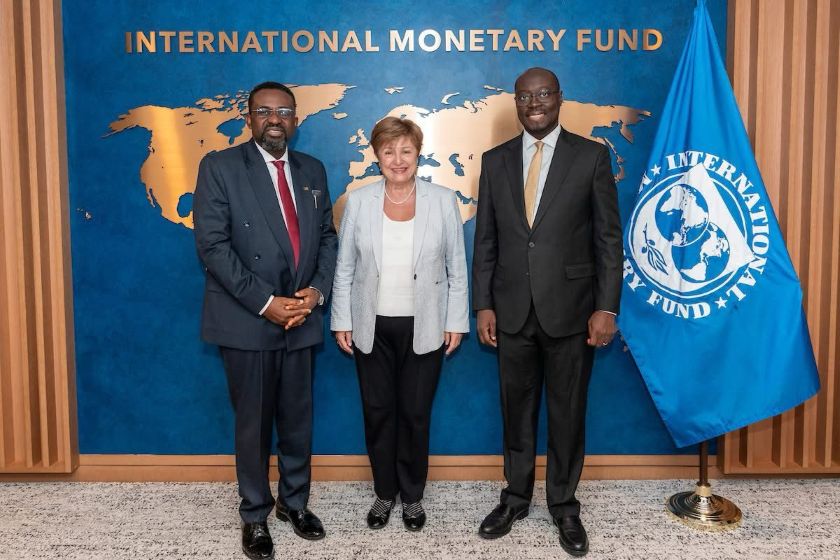
An IMF mission led by Dr Ruben Atoyan has opened formal discussions with the government under the Policy Coordination Instrument, placing revenue mobilisation, inflation, debt management and preparations for the 2027 Budget at the centre of a two-week review.
The engagement marks a change in the character of Ghana’s relationship with the Fund. The IMF Executive Board completed the sixth and final review of the Extended Credit Facility on July 27, 2026, while considering Ghana’s request for a 36-month PCI. Unlike the ECF, the PCI does not provide direct financing. Its value lies in policy monitoring, reform credibility and the signal it sends to investors and development partners.
The review is therefore less about unlocking a disbursement than proving Ghana can maintain discipline after the emergency phase. Recent gains must rest on durable institutions rather than temporary controls or programme incentives.
Fiscal performance during the first nine months of 2026 will provide the starting point. The mission will assess revenue mobilisation, year-end expenditure management and spending plans for 2027. These areas will reveal whether recovery has created genuine fiscal space.
Revenue is especially important. Ghana cannot finance infrastructure, social programmes and debt service sustainably if collection lags behind its ambitions. The question is not simply how much revenue can be raised, but how. Compliant businesses and salaried workers cannot indefinitely carry the burden while large parts of the economy remain lightly taxed.
The 2027 Budget will therefore be judged on whether it broadens the revenue base, improves compliance and reduces leakages without suppressing investment. New taxes may deliver quick receipts, but they can also weaken businesses already facing financing and operating constraints. Administrative reforms, digital enforcement and better treatment of exemptions may offer more durable gains if implemented transparently.
Expenditure will attract equal scrutiny. The government is preparing to prioritise infrastructure investment, creating a tension between development needs and fiscal restraint. Ghana requires roads, energy systems, water infrastructure and productive public investment, but its recent crisis showed how quickly spending commitments can outpace available resources.
The central issue is therefore the quality of expenditure. Infrastructure spending should be selected according to economic returns, readiness and financing sustainability, not political visibility. Projects that unlock production, reduce logistics costs or crowd in private capital can strengthen future revenues. Poorly appraised commitments can recreate arrears, increase debt and weaken the credibility the PCI is intended to preserve.
Ghana’s debt position will also feature in the discussions. Debt restructuring reduced immediate pressure, but it did not remove the obligation to manage repayments prudently. The review is likely to examine whether borrowing plans, domestic maturities and future spending are consistent with debt sustainability. That assessment matters as government balances renewed investor interest against its stated reluctance to rush back to international capital markets.
On the monetary side, the mission is expected to examine inflation targeting, monetary policy and foreign-exchange arrangements. Ghana’s improved inflation performance strengthens the recovery narrative, but the durability of that progress depends on fiscal discipline, currency stability, food supply, energy costs and external conditions.
Lower inflation can improve household purchasing power and create room for lower interest rates. Yet easing policy too quickly could revive demand and currency pressure, while maintaining restrictive rates for too long may constrain private credit and investment. The Bank of Ghana must therefore show that decisions remain anchored in data and consistent with its price-stability mandate.
Foreign-exchange arrangements will receive particular attention because currency stability affects inflation, debt service and business confidence. Authorities must demonstrate that improvements reflect sustainable export earnings, reserve accumulation and credible policy—not interventions that temporarily suppress demand or transfer risks elsewhere.
The IMF is also expected to assess the Bank of Ghana’s financial position, international reserves and safeguards for central-bank independence. This is crucial because monetary credibility depends on the institution’s ability to make decisions without fiscal dominance or political pressure. A central bank weakened by losses, inadequate capital or blurred responsibilities may struggle to anchor expectations even when headline indicators improve.
The review will consequently test coordination between the Ministry of Finance and the Bank of Ghana. Fiscal policy cannot expand aggressively while monetary policy is expected to contain the resulting inflationary pressure. Nor can the central bank deliver lasting currency stability if public borrowing, arrears or quasi-fiscal liabilities continually generate new vulnerabilities.
Finance Minister Dr Cassiel Ato Forson has described the PCI as an anchor for Ghana’s next reform phase, aimed at strengthening resilience and supporting broad-based growth. That description captures both the framework’s usefulness and its political challenge. An anchor can reinforce discipline, but the government must retain ownership of reforms rather than present every difficult measure as an IMF instruction.
Because no direct funding is attached, the PCI also changes the accountability equation. Success will be measured by implementation, not disbursement. Clear fiscal rules, credible budgets, stronger revenue administration, transparent debt reporting and protection of central-bank independence will matter more than favourable language in a mission statement.
For investors, a positive review could reinforce confidence that Ghana will not abandon consolidation as growth strengthens. For citizens, however, macroeconomic credibility must eventually translate into jobs, reliable services, affordable credit and improved living standards. Stability that remains confined to fiscal tables will struggle to retain public support.
The 2027 Budget is where these expectations will converge. It must combine infrastructure investment and growth ambitions with credible revenue assumptions, disciplined spending and protection against new debt distress. Promises must be costed, priorities sequenced and financing disclosed.
Ghana has moved beyond the immediate emergency that produced the ECF, but it has not moved beyond the need for discipline. The PCI review will show whether the country can institutionalise reform when the incentive is confidence rather than cash. That may be the more demanding test and the one that determines whether recovery becomes lasting economic resilience.

