


- The Beautiful Game or the Business Game? FIFA’s Billion-Dollar Gamble Puts Football’s Soul on Trial
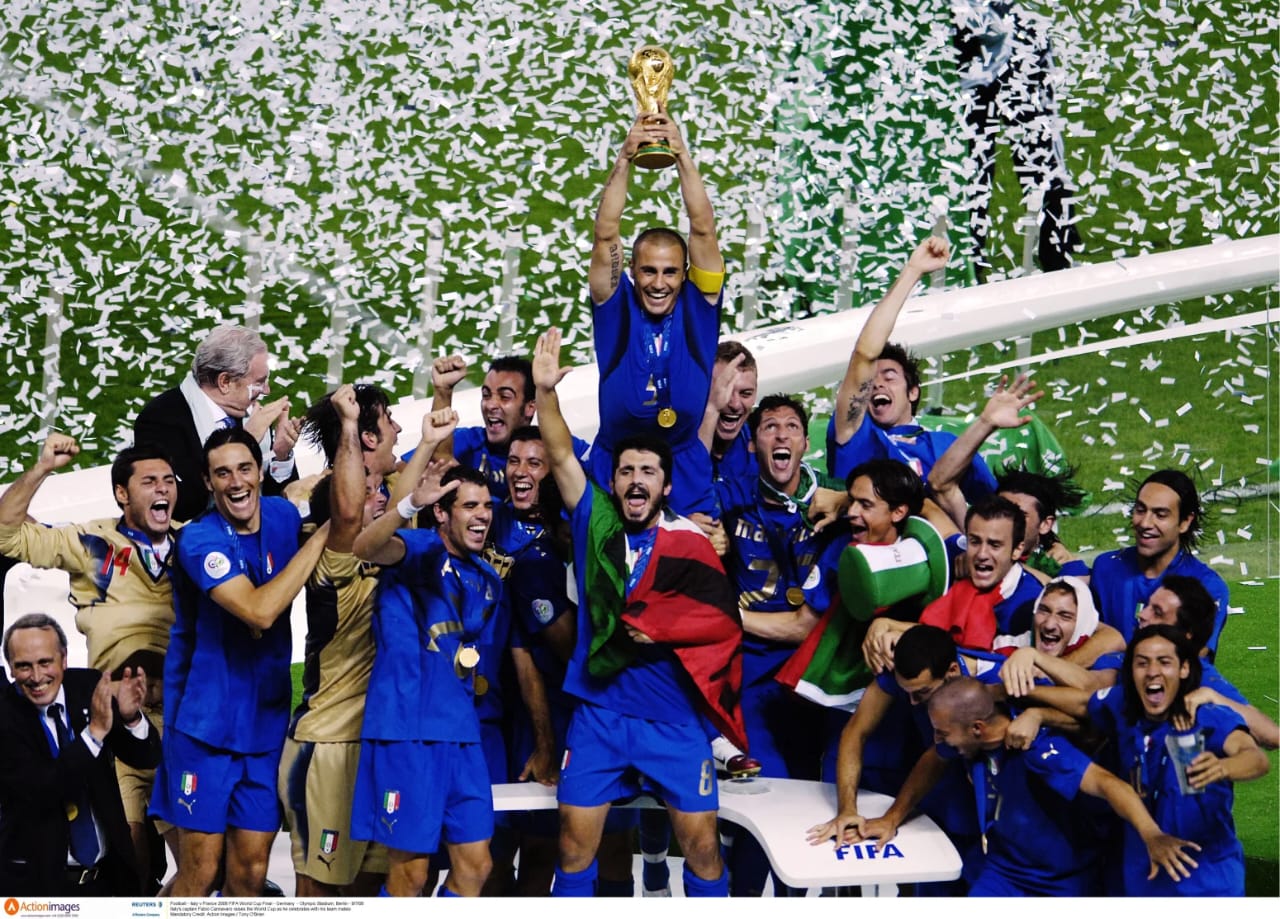
I still remember sitting in front of a television as a young schoolboy during the 2006 FIFA World Cup in Germany. Like millions of children across the globe, I was captivated by the roar of the crowds, the brilliance of Zinedine Zidane, the artistry of Ronaldinho, the resilience of Fabio Cannavaro and the unforgettable drama that only the World Cup could produce. Back then, football felt wonderfully uncomplicated. The World Cup belonged to everyone—the child kicking a battered ball on a dusty field, the supporter draped in national colours and every country dreaming of etching its name into history.
Twenty years later, the game I fell in love with finds itself at one of the most defining crossroads in its history.
The debate is no longer centred on tactics, rivalries or the next generation of stars. Instead, it revolves around boardrooms, billion-dollar valuations and one uncomfortable question: Can football’s greatest competition remain true to its purpose while embracing the demands of modern commerce?
That question has emerged following FIFA’s proposal to establish a new commercial subsidiary FIFA Forward Enterprise (FFE) and sell a minority stake to private investors. What FIFA describes as an innovative financial strategy has quickly become one of the most fiercely contested governance issues the sport has witnessed in decades.
At the heart of the proposal lies an ambitious restructuring of football’s commercial engine.
Rather than directly managing the business operations of its flagship competitions, FIFA wants a newly created company to oversee the commercial rights of the FIFA World Cup, the Club World Cup and other major tournaments. Sponsorship, broadcasting, licensing and marketing activities would all fall under the new entity, while FIFA insists it would continue to retain complete authority over football governance, tournament regulations, qualification systems and the international calendar.
To fund the initiative, FIFA intends to sell roughly 20 per cent of the company to private investors in a deal expected to raise approximately $4.2 billion. The organisation estimates the subsidiary could eventually be valued at nearly $20 billion, making it one of the most valuable commercial assets in global sport.
On the surface, the proposal appears both logical and progressive.
Football has never enjoyed greater global popularity. Television audiences continue to grow, sponsorship deals become increasingly lucrative and commercial opportunities expand with every tournament. FIFA argues that separating the business side of football from its regulatory responsibilities would allow specialists to maximise commercial revenues while enabling the governing body to concentrate on developing the game.
Central to that vision is development funding.
Gianni Infantino has consistently defended the proposal by arguing that football’s enormous commercial success should directly benefit every corner of the world, not just the sport’s traditional powerhouses.
Under the proposed financial model, FIFA’s 211 member associations could receive as much as $40 million each during the 2027–2030 funding cycle through a combination of its existing FIFA Forward programme and a new initiative known as Fast-Forward.
For smaller football nations, that money could prove transformational.
It could finance new stadiums, modern training facilities, youth academies, coaching education, grassroots projects and women’s football programmes that currently struggle for resources. In countries where talent often exceeds opportunity, such investment could fundamentally reshape football’s future.
Viewed purely through that lens, FIFA’s proposal is difficult to dismiss.
After all, few football supporters would oppose greater investment in developing nations.
But football has never existed solely within balance sheets and business plans.
The strongest resistance has not come from those opposed to development funding. Instead, it has come from those questioning whether football’s most treasured competition should ever become intertwined with private investment.
UEFA was among the first to voice its concerns, arguing that the proposal crossed a significant line in football governance. The Asian Football Confederation later criticised FIFA for introducing the proposal without adequate consultation, while CONCACAF also questioned the process surrounding the plan. Across the football landscape, administrators have expressed concern that decisions of such magnitude should involve wider discussion before reaching member associations for approval.
The criticism extends beyond procedure.
Many fear that while FIFA insists governance will remain entirely under its control, private investors committing billions of dollars will inevitably expect commercial growth in return.
Their concern is not that investors would immediately dictate sporting decisions.
Rather, they question whether commercial expectations could gradually influence future debates surrounding tournament expansion, broadcasting arrangements, scheduling and the increasing number of FIFA competitions.
History offers reason for caution.
Modern football has become increasingly intertwined with commercial interests. Transfer fees continue to break records almost annually. Television rights have transformed domestic leagues into global entertainment products. Elite clubs now function as multinational brands as much as sporting institutions, while private equity firms have steadily increased their presence across football.
Spain’s La Liga previously sold part of its commercial rights to investment firm CVC. Formula One has flourished under private ownership. Rugby unions have also embraced outside capital to accelerate commercial growth.
FIFA, however, occupies a uniquely different position.
Unlike domestic leagues or privately owned sporting competitions, it remains a non-profit governing body entrusted with protecting and developing football across every continent.
Its responsibility extends beyond generating revenue.
It exists to safeguard the integrity of the world’s most celebrated sporting competition.
That distinction explains why many observers believe the World Cup should never be viewed purely as another commercial asset.
Perhaps the greatest question surrounding the proposal is also the simplest.
Why now?
The recently concluded 2026 FIFA World Cup in the United States, Canada and Mexico became the most commercially successful edition in the tournament’s history. Record attendances, unprecedented broadcasting audiences and soaring sponsorship revenues reaffirmed the World Cup’s position as sport’s biggest global spectacle.
If football’s greatest competition is already generating extraordinary financial returns, critics ask why external investment has suddenly become necessary.
FIFA argues that this is not about solving financial problems but about accelerating future growth.
Officials believe a dedicated commercial company would generate even greater revenues over the coming decades, allowing football development programmes to expand on a scale previously unimaginable.
Yet important questions remain unanswered.
If FIFA retains complete authority over governance, sporting regulations and tournament operations, what exactly are private investors purchasing?
FIFA insists investors would own a minority share of the commercial subsidiary rather than the World Cup itself. They would receive no voting control over football matters, no authority over tournament formats and no influence on regulatory decisions.
Nevertheless, analysts continue to debate how such an investment generates long-term value without some expectation of future commercial expansion.
Those uncertainties have fuelled demands for greater transparency before member associations cast what may become one of the most consequential votes in FIFA’s modern history.
Ultimately, this debate is about far more than financial engineering.
It represents two competing visions of football’s future.
One believes football must fully embrace modern commercial opportunities if it is to provide meaningful investment across all 211 member associations.
The other argues that football’s greatest competition derives its value from something no balance sheet can adequately measure—its history, its emotional connection with supporters and its ability to unite nations every four years.
Neither perspective is entirely without merit.
Football unquestionably requires investment. Grassroots development, women’s football and emerging nations deserve greater financial support. If additional resources genuinely strengthen the global game, few would oppose that ambition.
Yet football’s greatest strength has never been its commercial value.
It has always been its emotional value.
The World Cup is more than a sporting event. It is where children discover heroes, where underdogs inspire continents and where entire nations pause to dream together. It belongs to generations of supporters who have invested far more than money into its legacy.
That is why this debate feels different.
It is not simply about a proposed $4.2 billion investment.
It is about defining what football should become in the decades ahead.
Can the sport continue to evolve commercially without losing the ideals that made billions fall in love with it?
Can financial innovation coexist with football’s traditions without compromising either?
As FIFA’s member associations prepare to decide the proposal’s future, those questions may prove even more important than the investment itself.
Because for those of us who first discovered football through the magic of a World Cup screen in 2006, the tournament has never been defined by corporate valuations or commercial strategies.
It has always been defined by hope.
And if football is to remain the beautiful game, perhaps its greatest prize should never be measured solely by the billions it can generate—but by the dreams it continues to inspire.

