

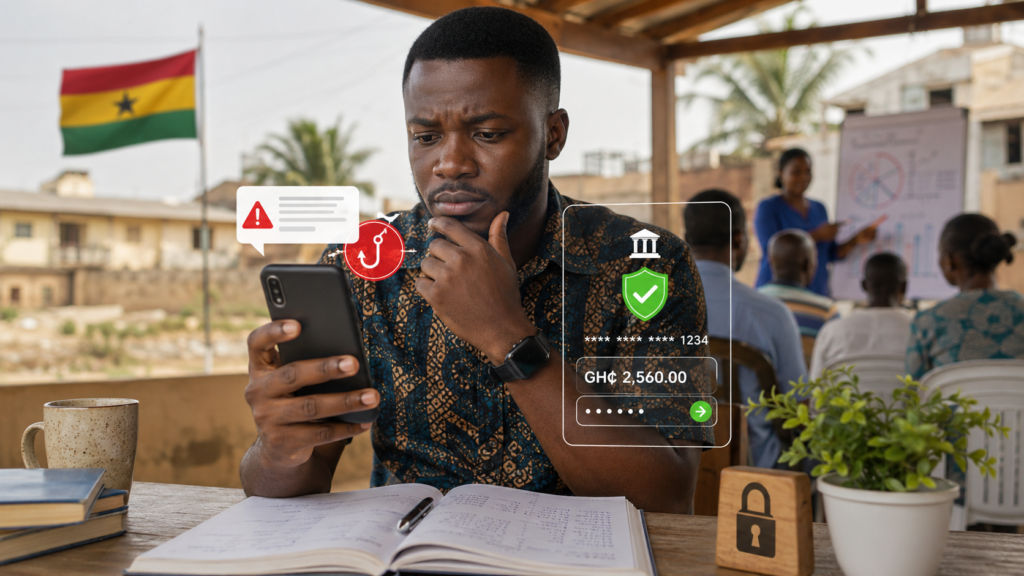

- Tiktok, Whatsapp and Momo: TrustGH Report Reveals How Scammers are Hunting Ghanaians
Ghana’s digital economy has a trust problem, and the latest disclosure by TrustGH offers one of the clearest signs yet that online fraud is no longer a fringe activity carried out by isolated criminals, but an increasingly organised system feeding on social media, mobile money and weak public verification habits.
TrustGH, described as Ghana’s first public scam-detection platform, says it has received more than 3,000 reports of suspicious phone numbers since its launch. The numbers, according to the platform, have been linked to e-commerce fraud, fake investment schemes, job scams, romance scams, impersonation and recruitment fraud.
That figure is important not only because of its size, but because of what it reveals about the changing nature of fraud in Ghana. The scammer is no longer only the anonymous caller claiming to have sent money to the wrong number. The modern scammer is now operating through TikTok pages, Facebook accounts, WhatsApp messages, fake Google Business profiles, SMS alerts and websites designed to look convincing enough to deceive ordinary users.
TrustGH’s data shows that TikTok accounts for the largest share of reported scam cases, at about 50.00%, followed by SMS and WhatsApp messages. More than 90.00% of reported cases involved attempts to demand mobile money payment or gain access to victims’ mobile money accounts.
This is where the issue becomes much bigger than cybercrime. It becomes a question of confidence in Ghana’s cash-lite economy.
For years, mobile money has been celebrated as one of Ghana’s strongest financial inclusion success stories. It has brought millions into the formal financial system, allowed small traders to receive payments, helped families transfer money quickly and supported the growth of digital commerce. But the same system that makes payments easier has also created a fast route for criminals to pressure victims into sending money before they can verify who they are dealing with.
TrustGH’s findings therefore point to a difficult truth: Ghana’s digital economy is growing faster than the public’s ability to protect itself.
The company said its platform allows members of the public to report suspicious phone numbers, which are checked against international scam-detection parameters. Each number is assigned a risk score from 0.00% to 100.00%, showing the likelihood that it is connected to fraudulent activity. According to the company, more than half of all numbers reported to the platform have received a risk score of 100.00%, suggesting a very high likelihood of scam involvement.
That should worry regulators, telecom companies, banks, fintech firms, e-commerce operators and the general public.
If more than half of reported numbers on a public scam-detection platform are being rated at the highest-risk level, then the country is not dealing with minor nuisance behaviour. It is dealing with a fraud ecosystem that has become bold, visible and adaptive.
“These numbers show just how widespread and organized scam activity has become in Ghana, particularly on social media,” a TrustGH spokesperson said. “Our goal is to give the public a reliable, data-driven way to verify a number before they engage with it, so they can protect themselves and their money.”
The quote captures the central value of platforms such as TrustGH: prevention.
Fraud investigations are important, but by the time many victims report a scam, the money has already moved. The phone number may have been abandoned, the social media page deleted, the mobile money account emptied, and the victim left with little more than screenshots and regret.
A public verification database changes the sequence. It gives potential victims a chance to check before they pay.
That is particularly important in Ghana, where many online transactions still depend on informal trust. A buyer sees an item on social media, chats with the seller on WhatsApp, receives a mobile money number and is asked to pay before delivery. There may be no invoice, no formal address, no verified merchant identity and no guarantee that the page belongs to a real business.
TrustGH says investigators have found that many scammers create fake pages that closely copy legitimate businesses across social media platforms in order to defraud unsuspecting people.
This form of impersonation is especially dangerous because it exploits brands that consumers already trust. A fake page using a familiar business name can create the impression of legitimacy. In many cases, victims do not realise they are dealing with a scammer until after payment has been made.
The risk extends beyond individual losses. If online buyers repeatedly fall victim to fraud, they become more reluctant to transact digitally. That hurts legitimate small businesses, weakens confidence in e-commerce and slows the growth of Ghana’s digital marketplace.
The problem also has implications for job seekers. Recruitment fraud has become increasingly common, with scammers demanding registration fees, medical fees, interview fees or processing charges from desperate applicants. In a labour market where many young people are searching for work, such schemes are particularly cruel. They turn unemployment into a business opportunity for criminals.
Investment scams are equally damaging. They often promise unusually high returns and use social media hype to create urgency. Victims are encouraged to send money through mobile money channels, sometimes after being added to WhatsApp or Telegram groups where fake testimonials are used to create confidence.
TrustGH’s report shows why Ghana needs a stronger culture of verification.
The company is urging the public to check unfamiliar phone numbers on trustgh.com before making payments, sharing personal information or entering into business transactions. It is also encouraging users to report suspicious numbers to help strengthen the platform’s database.
This crowd-sourced model is useful because fraud networks rely on speed and repetition. A number used to defraud one person today can be used to target dozens of others tomorrow. If victims and potential victims report quickly, the data can become a public defence system.
Telecom companies must improve SIM registration enforcement and suspicious activity monitoring. Mobile money operators must strengthen transaction risk controls and response mechanisms. Social media platforms must do more to detect and remove impersonation pages. Law enforcement agencies must be resourced to act quickly on credible reports. The public must also be trained to treat urgency, secrecy and upfront mobile money demands as warning signs.
TrustGH says it is licensed and works closely with the Cybersecurity Authority and the Cyber Crime Unit of the Ghana Police Service to fight scam activity and support ongoing investigations into reported numbers.
That collaboration is important. Cyber fraud cannot be solved by private platforms alone. It requires a coordinated system that brings together public reporting, law enforcement, regulatory supervision, telecom data, financial transaction intelligence and public education.
The rise in scam activity also forces a policy question: should Ghana create a more integrated national fraud alert system?
At present, victims often report fraud in fragmented ways. Some report to telecom providers, others to mobile money operators, the Cybersecurity Authority, the police or social media platforms. A more connected system could help identify repeat numbers, freeze suspicious accounts faster and warn the public before more people are affected.
The challenge is balancing privacy, due process and public protection. Not every reported number may belong to a confirmed scammer. That is why transparent scoring, proper verification and cooperation with official agencies matter.
TrustGH’s model, which assigns risk scores rather than simply publishing accusations, may help manage that balance.
Still, the bigger lesson is simple: Ghana’s next phase of digital growth will depend not only on innovation, but on trust.
Citizens will not fully embrace digital payments, online shopping, remote work, digital lending or platform-based services if they believe every transaction could expose them to fraud.
TrustGH’s 3,000 reported suspicious numbers are therefore more than a company milestone. They are a warning signal.
They show that Ghana’s digital economy is being tested by fraudsters who understand where people spend their time, where they keep their money and how easily trust can be manufactured online.
The response must be equally intelligent.
Verification must become a public habit. Reporting must become easier. Enforcement must become faster. Platforms must become more accountable. And citizens must learn that in the digital economy, trust should no longer be assumed simply because a page looks familiar, a number sounds official or a seller speaks with confidence.
The promise of Ghana’s digital economy remains strong. But if fraud continues to grow unchecked, the cost will not only be measured in stolen mobile money balances.
It will be measured in lost trust.

