

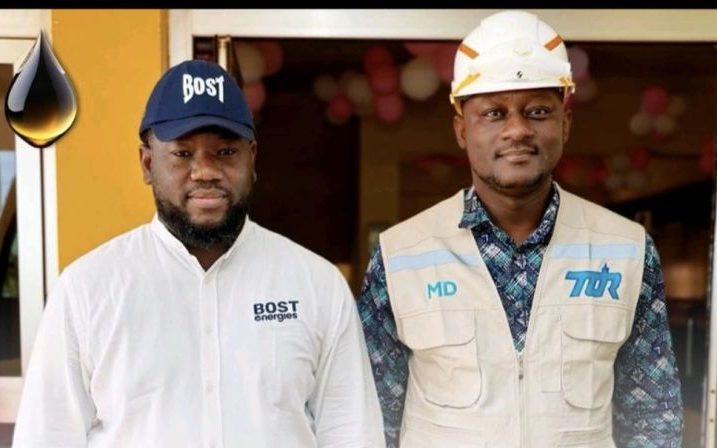

- TOR And GOIL Explore Deeper Alliance as Ghana Pushes to Strengthen Domestic Fuel Security
Tema Oil Refinery and Ghana Oil Company Limited are exploring a deeper commercial partnership aimed at improving the reliability of fuel supply, in a move that could become an important test of Ghana’s broader effort to rebuild domestic refining and reduce dependence on imported petroleum products.
The discussions bring together two strategically important state-linked companies operating at different ends of the downstream petroleum chain. TOR provides refining capacity, while GOIL offers an extensive distribution and retail network capable of translating locally refined products into nationwide market access.
The potential alliance comes as government seeks to revive TOR while expanding domestic refining capacity more broadly. Energy and Green Transition Minister John Abdulai Jinapor said in July that expanded operations at TOR and Sentuo Oil Refinery could eventually allow the two facilities to meet about 70.00% of Ghana’s refined petroleum-product demand.
For GOIL, closer integration with TOR could provide a more predictable source of locally refined products and improve supply planning across its retail network. For TOR, a strong commercial relationship with one of Ghana’s largest indigenous oil marketing companies could provide a dependable route to market for refined output.
That makes the proposed arrangement more significant than a conventional supplier-customer relationship. It touches on a longstanding weakness in Ghana’s petroleum economy: the limited integration between crude production, refining, storage, transport, distribution and retail marketing.
The commercial logic is straightforward. A refinery can only operate efficiently if it has reliable access to crude, sufficient working capital, adequate utilisation rates, storage capacity and predictable offtake for the products it produces.
An oil marketing company, meanwhile, depends on consistent access to competitively priced petroleum products in order to keep stations supplied and protect market share. Greater coordination between TOR and GOIL could therefore reduce some of the transaction and planning inefficiencies that arise when refining and distribution operate largely as separate commercial systems.
TOR remains central to Ghana’s ambition to retain more value from its petroleum industry domestically. Reviving the refinery is therefore not merely an industrial-policy objective but also a foreign-exchange, energy-security and supply-chain proposition.
Ghana remains exposed to international refined-product markets, meaning changes in global prices, shipping costs and supply disruptions can quickly affect domestic fuel conditions. Increasing local refining capacity could provide a partial hedge by shifting more value-added activity into the domestic economy.
But local refining is not automatically cheaper refining. TOR will need access to competitively priced crude, reliable operations, adequate capital and disciplined maintenance if it is to produce fuel at costs that can compete with imported alternatives.
This is where GOIL could become strategically important. The company has one of the largest retail footprints in Ghana and has been strengthening its competitive position in an increasingly contested downstream market.
GOIL says its sales volumes increased by about 45.90% between January and April 2026, recording the highest year-to-date growth among major oil marketing companies during the period. That expansion could make the company a valuable anchor buyer for locally refined products if TOR is able to maintain reliable and competitively priced production.
A structured offtake arrangement could give TOR greater visibility over demand while allowing GOIL to diversify supply sources. It could also improve inventory planning and reduce the uncertainty associated with relying heavily on international product markets.
The commercial terms, however, will be decisive. If locally refined products are consistently more expensive than imported alternatives, GOIL could end up carrying part of the cost of supporting a national industrial-policy objective.
The reverse risk is equally important. If TOR is required to supply products at prices that do not reflect its true operating and financing costs, the refinery could return to accumulating losses instead of building a commercially sustainable business.
Any partnership will therefore need transparent pricing, clear supply obligations and an explicit allocation of commercial risk. Without those elements, closer integration could simply transfer inefficiencies from one state-linked company to another.
The discussions also fit within government’s broader effort to deepen indigenous participation in the petroleum industry. GOIL has argued that greater local participation will require stronger investment in technology, knowledge transfer and access to longer-tenor financing.
Its Group Chief Executive and Managing Director, Edward Abambire Bawa, has identified the high cost and short tenure of capital in Ghana as a major constraint on indigenous companies seeking to expand. That financing challenge is particularly relevant for TOR, where crude procurement, maintenance, storage and technological upgrades can require substantial amounts of working and investment capital.
A sustainable TOR-GOIL relationship must therefore be commercially bankable rather than dependent on political direction. The arrangement will need to withstand changes in oil prices, governments, exchange rates and market conditions if it is to become a lasting feature of Ghana’s downstream sector.
There is also a foreign-exchange dimension. Greater domestic refining could reduce the amount of foreign currency required to import finished petroleum products, although the benefit should not be overstated if crude itself must still be purchased externally.
The more important economic gain would come from retaining a larger share of petroleum value addition in Ghana. Refining, storage, transportation, engineering, maintenance and distribution can all generate domestic economic activity even where crude feedstock continues to involve foreign-exchange expenditure.
Mr Jinapor has argued that this wider ecosystem should form part of Ghana’s energy strategy. “Every refinery is more than an industrial facility. It creates an ecosystem of economic activity, supporting transport and logistics companies, engineering services, local contractors, manufacturers, technology providers and thousands of skilled jobs,” he said.
For consumers, however, the final test will be simpler: whether closer TOR-GOIL integration improves fuel availability without increasing prices. Domestic refining will have limited public value if the resulting products cannot compete commercially or if inefficiencies are ultimately passed through to motorists.
For GOIL, success will depend on whether the relationship improves supply reliability, margins and competitiveness. For TOR, it will depend on whether the refinery can consistently produce specification-compliant products at viable prices and secure dependable offtake.
For government, the objective must go beyond getting TOR operational again. The more difficult task is creating a downstream petroleum system in which domestic refining can compete on commercial terms rather than survive primarily through state support.
The emerging strategy appears to be moving from state ownership towards greater value-chain integration, linking refining more directly with storage, distribution and retail. A stronger TOR-GOIL relationship could be an important part of that transition.
Ghana has announced ambitious refinery plans before, however, and execution remains the decisive test. The commercial value of the latest discussions will ultimately be measured not by the partnership itself but by whether it produces reliable supply, efficient operations, disciplined financing and competitively priced fuel for the Ghanaian market.

