

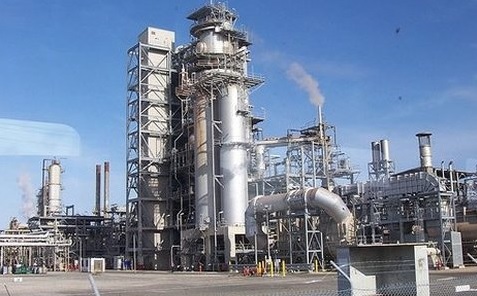

- TOR’s Revival Offers Ghana a Second Chance to Turn Crude Oil into Energy Security – IES
The recognition of Tema Oil Refinery Managing Director Edmond Kombat as Ghana’s Energy Sector Recovery Champion for 2026 is more than a corporate honour. It is an acknowledgement that one of the country’s most troubled industrial assets has begun moving back towards the role it was created to perform.
But the award also marks the beginning of a more difficult test.
Having completed critical turnaround maintenance and restored refinery operations, TOR must now demonstrate that its revival can survive beyond the present management’s initial interventions. The refinery will have to secure regular crude supplies, operate efficiently, control costs, manage debt and maintain the commercial discipline required to avoid returning to the cycle of shutdowns, political interference and financial distress that weakened it for years.
The Institute for Energy Security, which congratulated Mr Kombat following his recognition by the Ministry of Energy and Green Transition, described the refinery’s recovery as a milestone in Ghana’s pursuit of domestic refining capacity and greater protection from disruptions in international petroleum markets.
“The successful completion of critical Turnaround Maintenance works and the subsequent restoration of refinery operations represent a significant milestone in Ghana’s pursuit of greater energy security, domestic refining capacity, and reduced vulnerability to external market shocks,” IES said.
The institute’s statement is celebratory, but it also identifies the central policy question confronting Ghana: can TOR’s operational restart be converted into a commercially durable national asset?
The answer matters well beyond the refinery’s premises in Tema.
Ghana produces crude oil from fields including Jubilee and TEN but continues to rely heavily on imported refined petroleum products. This means the country exports part of its energy resources while spending foreign exchange importing petrol, diesel, aviation fuel and other finished products.
That structural contradiction exposes consumers, businesses and the cedi to fluctuations in international crude and refined-product prices, shipping costs and the availability of foreign currency.
A functioning TOR cannot completely insulate Ghana from global energy-market pressures. The refinery will still require crude feedstock priced against international benchmarks, replacement parts, technical expertise and working capital.
It could, however, retain more value within Ghana, shorten parts of the fuel supply chain, create industrial employment and reduce the country’s dependence on imported finished products.
IES attributed Mr Kombat’s recognition to the “vision, commitment, and determination” demonstrated by the Managing Director and the wider TOR team in advancing the refinery’s recovery.
That recovery has included the completion of turnaround maintenance and the restoration of refining operations after an extended period of limited or interrupted activity.
Turnaround maintenance is essential in refining. Processing units operate under high temperatures and pressures and must periodically be inspected, repaired and upgraded. Failure to undertake maintenance can reduce efficiency, increase unplanned outages and create serious safety risks.
Completing the work was therefore a necessary condition for restarting TOR. It was not, by itself, sufficient to secure the refinery’s long-term future.
A refinery can be technically capable of operating but remain commercially unviable if it lacks crude, working capital, reliable utilities or buyers for its products. It may also struggle if its processing costs consistently exceed the price at which imported products can be landed and sold.
TOR’s revival must consequently be assessed through a broader set of indicators: utilisation rates, refining margins, product yield, operational reliability, debt management and the refinery’s ability to finance subsequent maintenance without repeatedly depending on government intervention.
The award celebrates an important milestone. The more meaningful achievement would be the establishment of a refinery that operates predictably and profitably across several years.
The strongest evidence of TOR’s renewed strategic relevance is the receipt of locally produced Jubilee crude.
The refinery received one million barrels of Jubilee crude in July 2026, delivered aboard the tanker MT Apache. The shipment formed part of the government’s effort to expand local refining and strengthen national energy security.
President John Dramani Mahama subsequently commissioned TOR’s refurbished Crude Distillation Unit as the refinery prepared to process the locally produced feedstock.
IES said the transaction underscores the growing importance of co-operation across Ghana’s petroleum value chain.
“Beyond its operational recovery, TOR is re-emerging as a critical bridge between Ghana’s upstream petroleum resources and the downstream petroleum industry,” it said.
“The recent receipt of crude oil from the Jubilee partners underscores the growing significance of collaboration across the petroleum value chain.”
That bridge has often been missing from Ghana’s petroleum strategy.
Since commercial production began, the country’s upstream oil industry has generated export earnings, tax revenue, royalties and carried interests for the state. Yet the connection between those resources and Ghana’s domestic industrial base has remained weaker than expected.
The sale of Jubilee crude to TOR represents an opportunity to close part of that gap. It links offshore production to domestic refining and creates the prospect that a greater portion of the value chain—from extraction to processing and distribution—can occur within Ghana.
The value of the arrangement, however, will depend on its continuity.
One crude cargo can demonstrate technical capacity and political commitment. It cannot sustain a refinery indefinitely. TOR needs a predictable feedstock programme that allows management to schedule production, negotiate financing, plan maintenance and enter credible supply agreements with petroleum distributors.
Irregular crude deliveries would leave the refinery exposed to another stop-start operational cycle, which can be expensive and damaging to both equipment and market confidence.
Ghana must therefore determine whether locally produced crude will be supplied to TOR through occasional interventions or under a commercially structured, long-term arrangement.
There is a temptation to assume that because Jubilee crude is produced in Ghana, it should automatically be supplied to TOR at a significant discount and lead directly to cheaper fuel.
The economics are more complicated.
The oil belongs to a consortium of private and state partners with contractual rights and commercial obligations. Its value is generally linked to international prices. Selling it domestically does not erase the opportunity cost of exporting it.
The benefit of local refining must instead be found in the efficiency of the full supply chain.
Ghana could save some shipping, insurance, financing and logistical costs associated with importing finished products. Domestic refining could also reduce exposure to disruptions in international product markets, where refining margins may rise even when crude prices are relatively stable.
But those benefits will materialise only if TOR processes crude efficiently.
An old or underutilised refinery can sometimes produce fuel at a higher cost than efficient international plants. Ghana should therefore avoid presenting local refining as an automatic guarantee of cheaper products.
The more credible argument is that TOR can strengthen supply security and retain more economic activity domestically—provided its operating costs, product yields and financing arrangements are competitive.
Transparency will be important. The refinery should periodically disclose how much crude it processes, the quantity and quality of products recovered, capacity utilisation, operational costs and financial performance.
Without such information, the public may be asked to celebrate the symbolic value of local refining without being able to determine its actual economic return.
TOR’s recovery comes at a time of severe volatility in international energy markets.
Oil prices have risen sharply from their levels a year earlier amid geopolitical conflict and supply disruptions. Brent was trading above US$100 a barrel in October, while refined-product markets have also experienced significant pressure.
Higher petroleum prices affect Ghana through several channels.
Oil importers require more dollars to finance the same volume of fuel, increasing demand in the foreign-exchange market. A weaker cedi then raises the domestic cost of petroleum products further. Transport fares, food distribution and industrial production become more expensive, feeding inflation across the economy.
The government may face pressure to introduce subsidies or tax relief, shifting part of the cost to the public budget.
Against that background, IES argued that TOR’s revival could improve supply resilience and cushion the local market from some external pressure.
“This development also presents an important opportunity to strengthen domestic refining, improve supply resilience, and cushion the local market against the pressures of rising international crude oil prices,” the institute said.
The protection should not be overstated. TOR cannot shield Ghana from the international price of crude, and local refining will not eliminate the foreign exchange required for feedstock and imported components.
It could, however, reduce Ghana’s exposure to the additional volatility of refined-product prices and international supply bottlenecks.
Energy security is not simply about buying fuel at the lowest available price on a particular day. It is also about ensuring that fuel remains available during disruptions and that the country has enough domestic capacity to respond when external markets become unreliable.
A functioning refinery is therefore comparable to insurance. It may not always be the cheapest supply option, but it creates strategic flexibility.
The challenge is ensuring that the cost of maintaining that flexibility does not become an unlimited burden on taxpayers.
TOR’s history shows that technical restoration is easier than institutional reform.
The refinery has previously been weakened by debt, delayed maintenance, political intervention, weak working capital and uncertainty about its commercial direction. Ghana has repeatedly discussed revival plans, strategic investors and operational partnerships without securing a sufficiently durable settlement.
The current recovery will be sustained only if those underlying problems are addressed.
The first requirement is a workable crude-financing structure.
Purchasing one million barrels of oil can require tens of millions of dollars. TOR must either have substantial working capital or agreements under which suppliers, traders, banks or processing clients finance the crude.
Tolling arrangements—under which a third party supplies crude and pays the refinery a fee to process it—can reduce TOR’s immediate financing burden. But poorly designed agreements may limit the refinery’s earnings and leave it operating primarily for the benefit of intermediaries.
Direct crude purchases could give TOR greater control over product sales and margins but would expose the refinery to commodity-price, financing and inventory risks.
Management must therefore establish the right balance among tolling, state-supported supply and commercially financed purchases.
The second requirement is control over legacy liabilities. Operational cash flow should not disappear into accumulated debt, penalties and obligations unrelated to current production.
The third is procurement discipline. Refineries purchase specialised equipment, chemicals and technical services, creating significant opportunities for overpricing and political interference. Transparent and competitive procurement will be indispensable.
The fourth is professional independence. Management should be held accountable for results but protected from instructions that compel the refinery to process uneconomic crude, sell products below cost or enter contracts that undermine its financial health.
Mr Kombat’s recognition gives management political and public support. The true test will be whether that support is used to build systems that remain effective after individuals and governments change.
The domestic refining market is no longer the same as when TOR was Ghana’s principal refinery.
Private facilities have entered the sector, including Sentuo Oil Refinery, which received its first Jubilee crude cargo earlier in 2026.
Across Africa, refining capacity is also expanding. Nigeria’s Dangote refinery is processing increasing quantities of crude, while large new projects are being planned elsewhere on the continent. Dangote’s Nigerian plant secured at least 16 million barrels for October 2026, equivalent to about 520,000 barrels a day, as it ramped up operations.
This changing landscape creates both competition and opportunity.
TOR cannot rely indefinitely on its status as a state-owned strategic asset. It must compete for crude, customers, financing and technical talent.
At the same time, increased regional refining may open opportunities for product swaps, storage, blending and specialised processing. Ghana’s ports, location and downstream market could allow TOR to serve more than domestic consumption if the refinery becomes efficient and reliable.
The company therefore needs a clear commercial identity.
Will TOR focus primarily on processing Ghanaian crude for the domestic market? Will it operate as a tolling refinery for traders and upstream producers? Will it seek to export products within West Africa? Or will it become part of a wider petroleum-industrial complex incorporating storage, petrochemicals, lubricants and specialised fuels?
Expansion plans should answer these questions before significant new capital is committed.
Increasing capacity without resolving feedstock, financing and market access would simply enlarge the refinery’s risks.
IES described TOR’s recovery as an opportunity to translate Ghana’s petroleum resources into “greater domestic value, enhanced energy resilience, and broader economic benefits”.
Those wider benefits should become central to the refinery’s strategy.
A refinery is not only a producer of petrol and diesel. Crude processing generates products and intermediate materials that can support aviation, marine transport, construction, manufacturing, plastics, chemicals, lubricants and other industries.
The stronger economic case for TOR may therefore lie in its ability to anchor an industrial ecosystem.
Reliable refinery operations can support engineering services, maintenance companies, laboratories, logistics firms and training institutions. They can create demand for Ghanaian technicians, welders, chemical engineers, safety specialists and supply-chain professionals.
These linkages would help move Ghana’s petroleum sector beyond the export of crude and the import of finished products.
But local participation must go beyond simple procurement quotas. Ghanaian firms should be helped to acquire the standards, technology and financing required to supply a complex industrial facility safely and competitively.
A refinery failure can have serious environmental and human consequences. Local-content ambitions must therefore operate alongside uncompromising technical standards.
TOR’s revival is taking place as the world gradually moves towards lower-carbon energy systems.
Ghana will continue to require petroleum products for transport, industry and power generation for many years. Domestic refining can consequently remain economically relevant, particularly if demand continues growing.
Nevertheless, expansion plans must account for the global energy transition.
Electric mobility, fuel-efficiency standards and changes in shipping and aviation could affect long-term demand. International lenders are also becoming more cautious about financing fossil-fuel infrastructure.
TOR should therefore avoid investing on the assumption that petroleum demand will grow indefinitely.
Modernisation should prioritise efficiency, reduced emissions, improved product quality and operational flexibility. Environmental liabilities must be transparently assessed and financed rather than deferred.
The refinery should also be incorporated into Ghana’s broader energy-transition planning. Its technical assets, land, storage facilities and workforce could eventually support new fuels and petrochemical opportunities.
A recovery strategy focused only on restoring the past would miss the chance to prepare TOR for the future.
IES said it expects “the sustained and efficient operation of the refinery, prudent financial and operational management, and the realisation of its anticipated expansion plans”.
Those expectations provide an appropriate scorecard for Mr Kombat and the TOR management team.
First, operations must be sustained. The refinery should not return to prolonged shutdown after processing a limited number of cargoes.
Second, efficiency must improve. Production volumes are meaningful only if the refinery can convert crude into commercially valuable products at a competitive cost.
Third, financial management must be prudent. TOR’s revival should not generate another accumulation of opaque liabilities for the state.
Fourth, expansion must be commercially justified. New capacity should be based on credible crude-supply, financing and market assumptions.
Fifth, the refinery should deliver national value that can be measured through foreign-exchange savings, tax revenue, employment, local procurement and supply resilience.
The Energy Sector Recovery Champion award recognises progress already made. It should not become a substitute for these outcomes.
Mr Kombat and his team have helped return TOR to the centre of Ghana’s energy conversation. Their more consequential task is to ensure it does not leave that position again.
For decades, TOR has represented both Ghana’s industrial ambition and its failure to protect strategic state assets from financial weakness and inconsistent policy.
Its revival offers a second chance.
The country can build a refinery governed by commercial discipline, transparent management and a coherent relationship with domestic crude producers. Or it can allow the present momentum to dissolve into another cycle of irregular feedstock, political intervention and emergency rehabilitation.
The first path would make TOR an important component of Ghana’s energy security and industrialisation strategy.
The second would turn the latest turnaround maintenance into another expensive pause between shutdowns.
IES is right to celebrate the progress achieved under Mr Kombat. But the institute is equally right to emphasise sustained operations and prudent management.
The most meaningful confirmation of his recognition will not be the award itself. It will be a refinery that is still processing crude reliably, financing its maintenance and contributing to Ghana’s economy long after the ceremony has ended.

