


- UAE Deepens Africa Push With US$168bn in Announced Projects Across Ports, Mines and Energy
The United Arab Emirates has emerged as one of Africa’s most significant foreign investors, with Emirati entities announcing more than US$168 billion in projects across mining, ports, agriculture and green energy since 2017, intensifying competition for strategic assets and infrastructure across the continent.
The figure, however, represents an announced investment pipeline rather than capital already deployed. Some projects have faced delays or have not progressed, making the distinction between commitments and realised investment critical when assessing the economic significance of the UAE’s expanding African footprint.
What is increasingly important is not simply the scale of Gulf capital entering Africa, but the type of assets being targeted. UAE-backed companies are moving deeper into the infrastructure connecting mines, farms, factories and consumers to global markets, giving them an increasingly strategic position within African trade corridors.
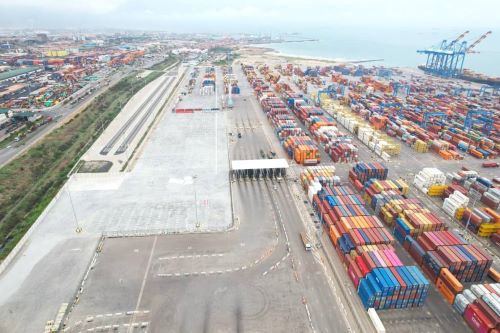
DP World, for example, operates or is developing ports, inland terminals and free zones across 13 African countries, according to the Financial Times analysis cited by Business Insider Africa. The company is expanding Mozambique’s Maputo port and developing the Democratic Republic of Congo’s first deep-water port, while other Emirati groups are pursuing energy and mining opportunities elsewhere on the continent.
For African governments, the attraction is straightforward. Ports, roads, logistics networks and power infrastructure can reduce trade costs, improve export competitiveness and unlock economic activity that domestic public finances may be unable to fund independently.
But the growing involvement of foreign investors in such strategic infrastructure creates a more difficult question: whether new capital will primarily accelerate the movement of African raw materials to international markets or help build domestic industries capable of capturing substantially more value before those goods leave the continent.
That distinction is particularly important in mining. African countries endowed with critical minerals are increasingly trying to move away from a historical model in which ores are extracted locally while refining, manufacturing and the highest-value stages of the supply chain take place elsewhere.
The terms attached to investment therefore matter almost as much as the headline financing. Governments can use negotiations over mining rights, port concessions and long-term supply contracts to seek commitments around local processing, skills development, reliable energy, employment and procurement from domestic companies.
Ports sit at the centre of that equation because infrastructure can be designed either as an extraction corridor or as a platform for broader industrialisation. A terminal constructed primarily to move output from a foreign-owned mine may make commodity exports more efficient without substantially changing the structure of the domestic economy.
A port integrated with industrial parks, railways, agricultural zones, manufacturers and local logistics companies has the potential to do considerably more. By lowering transport costs for multiple businesses, it can become shared economic infrastructure rather than merely an extension of a particular extractive investment.
This is why the UAE’s rapid expansion also changes Africa’s negotiating position. Gulf capital is increasingly competing with Chinese, European and US investors for ports, minerals and energy projects, giving governments potentially greater leverage to compare proposals rather than depend overwhelmingly on a single source of financing.
That competition could allow African states to negotiate more aggressively around ownership structures, employment commitments, technology transfer, local content and access to infrastructure. But competition between investors creates bargaining power only where governments themselves have clear national strategies and the institutional capacity to negotiate complex long-term contracts.
The risk is that governments focused predominantly on securing immediate financing could accept commercially attractive deals without fully accounting for their long-term consequences. Port concessions and mining agreements can last decades, meaning decisions taken today may determine who controls strategically important trade routes and commodity flows well into the future.
The UAE’s interest in Africa also reflects a broader reshaping of geopolitical competition on the continent. Gulf states are increasingly joining China, Europe and the United States as major sources of infrastructure finance and commercial investment, particularly in areas connected to food security, energy transition, logistics and critical minerals.
For Africa, having more sources of capital is potentially advantageous. Infrastructure financing remains difficult in many countries, and competition among investors can reduce dependence on any one geopolitical partner while widening access to funding and technical expertise.
Yet capital inflows do not automatically produce industrial development. A billion-dollar project can generate jobs and export earnings while still leaving limited domestic technological capability, weak supplier networks and little processing capacity once construction is complete.
The central question is therefore not whether UAE investment is good or bad for Africa. It is whether governments can structure individual deals so that foreign capital builds assets and capabilities that continue creating value for domestic economies long after the original investment has been recovered.
That requires transparency around concession terms, credible local-content rules, competitive procurement and clarity over how revenues, risks and infrastructure access are shared between investors and host countries. It also requires discipline to ensure politically attractive announcements are not confused with projects that have actually reached financial close, construction or operation.
The US$168 billion figure demonstrates that the UAE now has the financial ambition to become one of Africa’s most consequential investment partners. But the final economic impact will be determined project by project rather than by the size of the continental headline.
Africa’s opportunity is to use the growing contest for its ports, minerals and trade corridors to negotiate a different development bargain. The strongest deals will be those that leave behind not only infrastructure and export capacity, but also competitive local firms, processing industries, skilled workers and productive assets that remain valuable long after foreign investors have achieved their own commercial returns.

