


- UBA Ghana More Than Doubles Lending to GH¢1.50bn as Bad-Loan Ratio Falls to 1.70%
UBA Ghana more than doubled lending to customers during the first half of 2026 while sharply reducing its non-performing loan ratio, signalling an unusually strong expansion in credit without the deterioration in asset quality that often accompanies rapid loan-book growth.
The bank’s loans and advances rose 108.40% to GH¢1.50 billion at the end of June from GH¢721.70 million a year earlier, according to its unaudited half-year financial statements. At the same time, its gross non-performing loan ratio dropped to 1.70% from 17.30%, an improvement of 15.60 percentage points.
That combination is arguably the most important feature of UBA Ghana’s first-half performance.
Banks can increase lending relatively quickly by accepting greater credit risk. What is considerably harder is expanding a loan portfolio at triple-digit rates while simultaneously reducing the proportion of loans that are impaired.
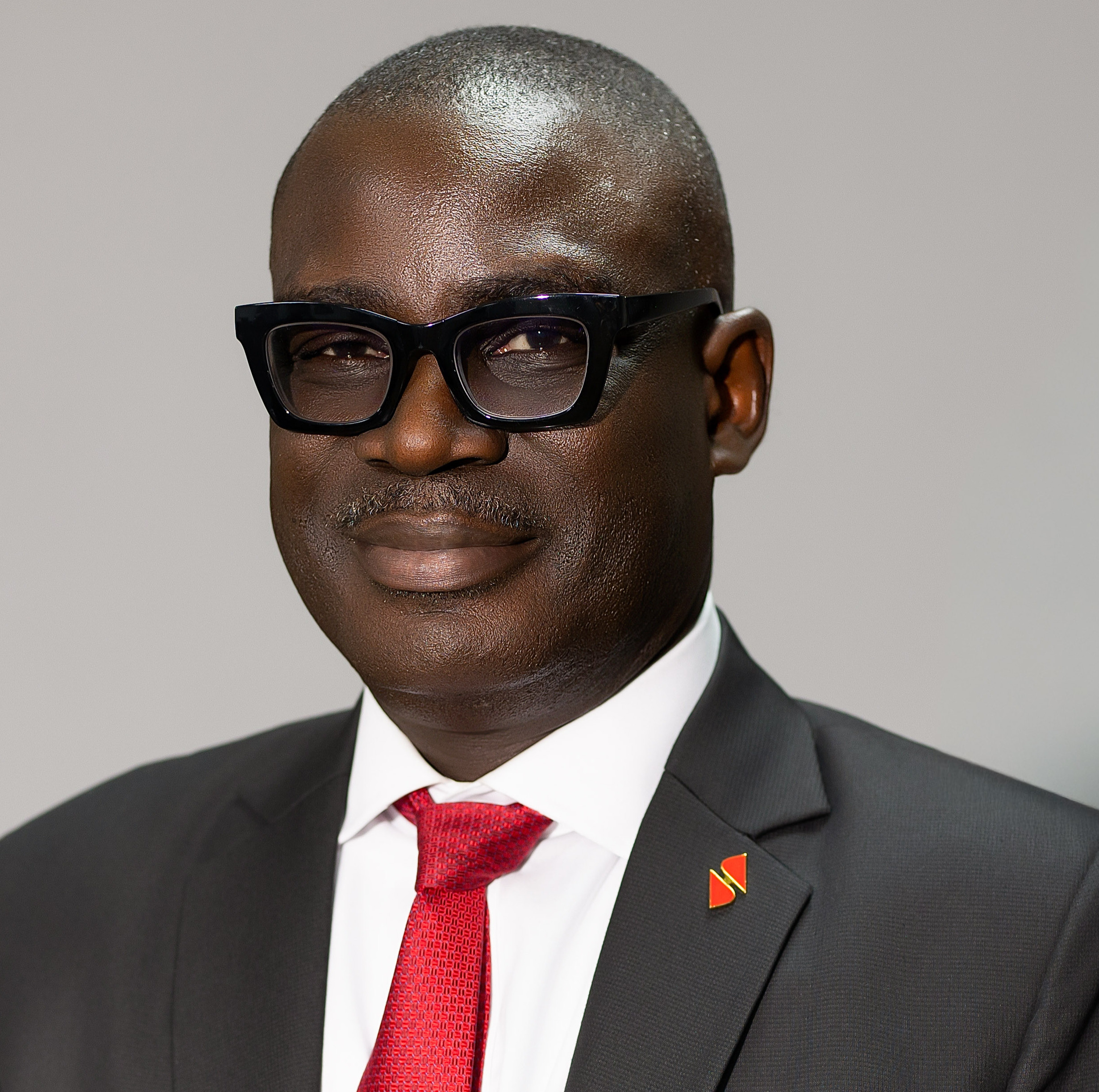
Bernard Gyebi, Managing Director and Chief Executive Officer of UBA Ghana, said the performance reflected an attempt to balance expansion with risk discipline.
“Our first-half performance reflects the strength and resilience of our franchise and, importantly, our determination to grow responsibly. We have more than doubled our lending to customers while significantly improving the quality of our loan book,” he said.
The numbers suggest UBA is deploying more of its balance sheet towards customer credit after a period in which Ghanaian banks generally maintained substantial holdings of liquid and government-related assets.
Total assets increased to GH¢13.27 billion from GH¢11.72 billion in June 2025, equivalent to growth of about 13.20%. The much faster pace of loan growth means credit is becoming a larger component of the bank’s asset mix.
That shift has wider economic significance.
Ghana’s recovery increasingly depends on whether improvements in inflation, currency stability and financial-sector conditions translate into actual credit for businesses. Banks can report strong capital and liquidity positions, but the broader economy benefits most when those buffers support viable companies seeking to expand production, invest in equipment or finance working capital.
UBA explicitly links its lending expansion to increased support for businesses and customers and to the government’s push for a 24-hour economy.
But rapid credit expansion also requires scrutiny.
The decline in the NPL ratio to 1.70% is striking, particularly against 17.30% a year earlier. Investors will want to understand how much of that improvement resulted from stronger recoveries, write-offs, restructuring, changes in the composition of the loan book or the denominator effect created by the rapid increase in new loans.
A low NPL ratio today does not automatically guarantee that a rapidly expanded portfolio will remain equally strong when newer facilities mature. The key test will be whether the improvement persists as the newly originated credit seasons.
UBA enters that test with substantially stronger capital buffers.
Total equity increased to GH¢2.03 billion from GH¢1.69 billion. Its Capital Adequacy Ratio rose to 21.40% from 14.80%, while the Common Equity Tier 1 ratio strengthened to 19.40% from 12.70%. The leverage ratio also improved to 10.20% from 8.00%.
Liquidity was similarly strong, with the ratio rising to 119.30% from 76.90%.
Those buffers matter because aggressive loan expansion consumes capital and exposes banks to potential future credit losses. A lender growing from a strong capital position has greater capacity to absorb unexpected deterioration than one already operating close to regulatory minimums.
“Our strong capital and liquidity positions give us greater capacity to support our customers and pursue opportunities in key sectors of the economy,” Mr Gyebi said.
The balance-sheet expansion, however, did not translate into higher profits.
UBA Ghana recorded profit before tax of GH¢238.10 million, compared with GH¢282.80 million in the first half of 2025, a decline of approximately 15.81%. Profit after tax stood at GH¢133.10 million, while net operating income reached GH¢383.60 million.
The profitability decline was partly driven by weaker net interest income, which fell from GH¢332.40 million to GH¢264.20 million, equivalent to a reduction of about 20.52%.
This creates an interesting contrast in the results.
UBA is lending substantially more, yet its net interest income is lower.
That could reflect the broader repricing taking place in Ghana’s financial system as interest rates moderate, reducing returns on interest-earning assets. It also means the bank will increasingly have to generate earnings through volume, efficiency and diversified income rather than relying on elevated yields.
There are signs of that diversification.
Net fees and commission income climbed 67.80% to GH¢58.80 million from GH¢35.10 million, suggesting transaction and fee-generating businesses are becoming more important as interest margins face pressure.
Customer deposits stood at GH¢9.21 billion, while cash and bank balances reached GH¢3.66 billion. UBA generated GH¢662.50 million in net cash from operating activities during the first six months.
The deposit base is particularly important to the sustainability of the lending push.
Credit expansion financed by stable customer deposits is structurally different from expansion dependent on expensive wholesale funding. For UBA, the second-half challenge will be to continue growing liabilities at a pace capable of supporting increased lending without creating pressure on funding costs.
Mr Gyebi said the bank would focus on customer acquisition, quality deposit growth, responsible lending and greater adoption of digital channels during the remainder of the year.
“Our priority for the second half is clear: deepen our relationships with customers, grow quality deposits, extend responsible credit to viable businesses and individuals, and continue making banking simpler and more accessible through our digital channels,” he said.
UBA Ghana’s first-half numbers therefore present two different stories.
The first is a balance-sheet growth story: assets are larger, loans have more than doubled, capital has strengthened and the bad-loan ratio has fallen dramatically.
The second is an earnings story: profit and net interest income have weakened even as fee income grows.
The strategic question is whether the first can eventually reinforce the second.
If UBA can preserve the quality of its rapidly expanding loan portfolio, the additional credit could generate stronger recurring income as businesses draw down and service facilities over time. If asset quality deteriorates as those loans season, however, today’s extraordinary NPL improvement could prove difficult to sustain.
For now, the bank enters the second half with considerable financial firepower.
But the most consequential number may not be the 108.40% increase in lending or even the 1.70% NPL ratio individually.
It is the relationship between them.
UBA Ghana has demonstrated that it can expand credit rapidly while reporting substantially better asset quality. The next test is whether it can maintain that combination long enough to convert balance-sheet growth into durable profitability.

