

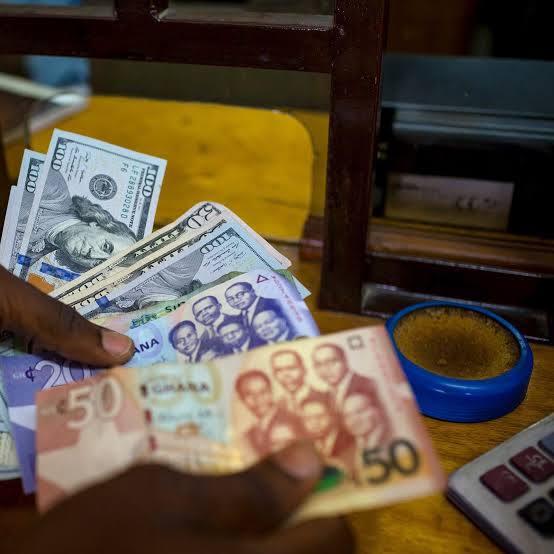

- Uganda’s Record FX Low Offers Warning for Ghana as Dollar Demand Intensifies
Uganda’s shilling has fallen to its weakest level on record as rising demand for dollars from energy and merchandise importers intensifies pressure on African economies exposed to high global fuel prices.
The currency traded as weak as Ush3,965–Ush3,975 against the dollar on October 1, compared with Ush3,925–Ush3,935 a week earlier. At the weaker end of the quoted range, the dollar gained about 1 per cent against the shilling in a week.
Traders expect the currency to depreciate further as importers build foreign-exchange positions ahead of the peak purchasing season and uncertainty surrounding fuel supplies sustains demand from energy companies.
Stephen Kaboyo, managing director of Kampala-based Alpha Capital Partners, said the shilling was under strain as businesses rushed to secure dollars before the peak import period.
The Bank of Uganda raised commercial banks’ cash reserve requirement in September as the currency weakened, tightening domestic liquidity. It has, however, indicated that it does not intend to defend the shilling through direct dollar sales.
That policy choice places greater responsibility on tighter local-currency liquidity to restrain dollar demand. But higher reserve requirements can also reduce banks’ capacity to lend, potentially weakening economic activity without fully addressing a foreign-exchange shortage driven by essential imports.
Uganda’s experience illustrates the policy dilemma confronting oil-importing African economies. Central banks can sell reserves to slow depreciation, raise interest rates or tighten liquidity. None of these measures can remove the underlying need to pay for fuel in dollars.
Ghana’s cedi is also expected to remain under pressure after weakening to about GH¢11.70 to the dollar from GH¢11.60 a week earlier.
The move represents a 0.86 per cent increase in USD/GHS over the period, equivalent to a decline of about 0.85 per cent in the cedi’s dollar value.
“The cedi traded with a weakening tone throughout the week as demand for the greenback remained resilient against a backdrop of tight market liquidity,” Ronald Mensah, a trader at Stanbic Bank Ghana, said.
“Barring a meaningful improvement in supply conditions, the cedi is likely to maintain its weakening bias,” he added.
The latest movement confirms that the cedi has entered the GH¢11.70 range identified in earlier NorvanReports monitoring as an important escalation zone.
The concern is not the weekly depreciation in isolation. It is the persistence of the underlying imbalance.
Corporate demand for dollars, particularly from commerce and the energy sector, has continued to exceed available interbank supply. Bank of Ghana foreign-exchange auctions during September were reportedly oversubscribed by more than three times, suggesting demand remained substantially greater than the central bank’s available allocation.
The cedi has moved from about GH¢11.48 in mid-September to GH¢11.70 at the beginning of October. This amounts to a roughly 1.9 per cent increase in the dollar exchange rate over the period.
The pace remains orderly rather than disorderly, but gradual depreciation can still become costly if businesses begin to accelerate dollar purchases in anticipation of further weakness.
Importers may front-load demand, while exporters could delay converting foreign-currency earnings. Such behaviour would deepen the shortage that market participants are attempting to avoid.
Zambia’s kwacha could also weaken after the country’s energy regulator raised petrol and diesel prices by about 24 per cent.
The regulator attributed the increase to higher global crude prices, the weaker domestic currency and the reinstatement of excise duties on fuel imports.
“Over the coming days, oil marketing companies are expected to start stocking up on hard currency for fuel purchases,” a financial analyst said.
The kwacha was trading at about ZK19.95 to the dollar, broadly unchanged from ZK19.94 a week earlier. But the fuel adjustment could generate additional dollar demand as petroleum importers finance larger import bills.
This marks a reversal in the short-term outlook for a currency that had previously benefited from stronger copper prices, improved agricultural production and progress following Zambia’s debt restructuring.
Higher fuel prices could also transmit exchange-rate pressure into domestic inflation. This would make it more difficult for the central bank to support economic growth through lower interest rates.
The Zambian case highlights how quickly favourable commodity and debt-restructuring signals can be overwhelmed by an external energy shock.
Kenya’s shilling is expected to remain broadly stable, with commercial banks quoting it at KSh129.45–KSh129.65 to the dollar, little changed from KSh129.35–KSh129.55 a week earlier.
Balanced foreign-exchange flows have helped insulate the currency from the pressure affecting Uganda, Ghana and Zambia.
However, stability does not imply immunity. A prolonged period of oil prices above US$100 a barrel would increase Kenya’s import bill and could eventually weaken the balance between dollar demand and supply.
The contrast between Kenya and the other three economies shows that international oil prices do not affect currencies mechanically. Domestic liquidity, reserve buffers, export receipts, central-bank intervention and the timing of importer demand all influence the extent of depreciation.
The common thread across the currencies under pressure is energy.
Ugandan importers are increasing dollar purchases amid concern about fuel availability. Zambia has raised pump prices by nearly one-quarter. Ghana continues to face strong foreign-currency demand from energy and commercial importers.
This creates a difficult feedback loop. Higher oil prices increase demand for dollars. Stronger dollar demand weakens local currencies. Depreciation then raises the local-currency cost of imported fuel, creating additional inflation and potentially requiring further foreign-exchange purchases.
For Ghana, the immediate test is whether the cedi stabilises around GH¢11.70 or moves towards GH¢11.75–GH¢11.80.
A sustained move into that range, accompanied by continued auction oversubscription or a wider gap between interbank and retail exchange rates, would signal that the market imbalance is becoming more serious.
The Bank of Ghana must balance three competing objectives: preserving reserves, providing enough liquidity to prevent market dysfunction and avoiding interventions so large that they postpone rather than correct the underlying adjustment.
Uganda’s record low shows what can happen when energy demand, seasonal imports and limited dollar supply converge. Ghana has not reached that point, but the direction of travel warrants attention.
The emerging African FX story is no longer simply one of a stronger dollar. It is about the vulnerability created when economies dependent on imported fuel encounter a global energy shock with shallow foreign-exchange markets and limited reserve capacity.

