


- US Reopens Talks on Rejected US$109m Ghana Health Compact After Sovereignty Dispute
The United States has asked Ghana to reopen negotiations over a proposed US$109m health financing agreement, offering to amend or remove provisions that led Cabinet to reject the compact over concerns about sensitive medical data, regulatory authority and national sovereignty.
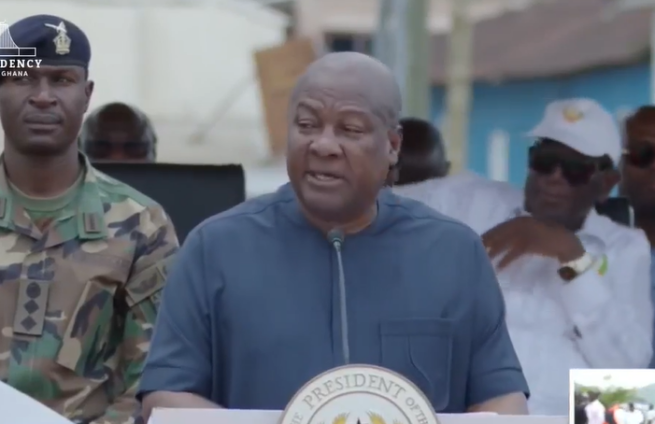
President John Dramani Mahama said Washington had requested further discussions following Ghana’s refusal to sign the agreement, which was intended to replace part of the health financing previously channelled through the United States Agency for International Development.
“The latest is that they have reached out to review the deal, and there is room for further discussions,” Mr Mahama said during a citizens’ engagement in Goaso in the Ahafo Region.
The President indicated that the US had expressed a willingness to discuss Ghana’s objections and potentially amend or remove the contested provisions.
“The health compact the Americans brought to us, I have talked about it when I was in New York, so everyone knows about it,” he said.
“Later, they came back and said they wanted us to sit down and discuss the clauses we object to in the compact, with a view to either amending or removing them. We will sit down with them and discuss.”
The reopening of talks is a significant development in a dispute that has become a wider test of how African countries negotiate health assistance in an era when data, biological information and regulatory access can be as strategically important as financial support.
The proposed compact would provide Ghana with about US$109m in American health assistance over five years, with Ghana expected to make additional domestic financial commitments.
The agreement was negotiated under the United States’ “America First Global Health Strategy”, which seeks to replace some traditional aid programmes with bilateral compacts requiring recipient governments to assume greater financial responsibility for healthcare.
Ghana rejected the initial proposal after raising concerns about provisions covering medical records, pathogen information, counterpart funding and the authority of the Food and Drugs Authority to inspect medicines and health products entering the country.
President Mahama previously said the agreement would have required Ghana to make information on endemic diseases and medical records available while restricting the country’s ability to inspect some medical products supplied under the arrangement.
The objection was therefore not simply about sharing anonymised disease-surveillance information. It centred on who would control sensitive health data, the purposes for which it could be used and whether Ghana’s national regulator would retain full authority over products used within its jurisdiction.
Health data can support disease surveillance, vaccine development, pharmaceutical research and emergency response. It can also carry substantial commercial and national-security value.
Patient records, disease patterns, genomic information and pathogen samples may reveal vulnerabilities within a population and contribute to the development of medicines or technologies with considerable commercial potential.
Any agreement governing such information must therefore establish clear limits on collection, ownership, storage, transfer, secondary use and access by third parties.
Ghana’s decision to reopen discussions reflects the difficult trade-off confronting the government.
The health sector needs external financing. The reduction of USAID-supported programmes has affected maternal healthcare, nutrition, malaria control and HIV/AIDS interventions, while domestic resources remain constrained by competing demands on the national budget.
Mr Mahama said earlier in 2026 that Ghana had lost about US$78m following the closure of USAID programmes, leaving funding gaps in critical health interventions.
Rejecting US$109mn in proposed assistance therefore carries a real opportunity cost. The money could support medicine procurement, disease prevention, laboratories, health-worker training and essential services.
But the value of a health agreement cannot be measured solely by the amount offered.
If the conditions weaken Ghana’s regulatory authority, expose identifiable medical data or create open-ended fiscal obligations, the long-term cost could exceed the immediate funding benefit.
The government must consequently negotiate an agreement that preserves useful cooperation without surrendering powers that should remain with Ghanaian institutions.
Recent negotiations between the US and Zambia suggest that controversial provisions are not necessarily immovable.
Zambia reached a revised health-financing agreement with Washington after provisions relating to patient data and biological specimens were removed. The revised arrangement preserved substantial health funding while addressing some of the sovereignty concerns raised during negotiations.
That precedent strengthens Ghana’s negotiating position.
It indicates that African governments can challenge unacceptable clauses without necessarily ending health cooperation. Ghana could seek comparable amendments ensuring that medical data and biological materials remain subject to domestic law, independent oversight and clearly defined consent requirements.
A revised agreement should expressly preserve the FDA’s authority to inspect and approve medicines, vaccines, diagnostic products and other health commodities entering the country.
No donor-funded product should bypass Ghana’s regulatory system merely because it is supplied under an international agreement. The source of financing does not remove the state’s responsibility to protect patients.
A workable agreement would need to resolve at least four areas.
First, any data-sharing provision should define precisely what information will be transferred. Aggregated public-health statistics should be distinguished from identifiable patient records, genomic data and pathogen samples.
Second, Ghana must retain ownership or clearly enforceable rights over information originating from its health system. Data should not be transferred onward, commercialised or used for unrelated research without Ghana’s approval.
Third, the compact must preserve the legal authority of the FDA, the Data Protection Commission, the Ministry of Health and relevant ethics-review bodies.
Fourth, counterpart-funding obligations must be realistic and transparent. Ghana should know how much it is expected to contribute each year, which budget lines will finance the commitment and what happens if economic shocks affect implementation.
The revised agreement should also specify dispute-resolution procedures, audit rights, data-retention periods and arrangements for terminating or modifying the compact.
Parliamentary scrutiny may be necessary if the final instrument creates binding international, financial or regulatory obligations. An agreement of this significance should not depend solely on executive assurances or remain confidential after signature.
Ghana’s insistence on sovereignty is justified, but it also creates obligations for the government.
A country cannot demand greater control over its health system while remaining indefinitely dependent on donors to finance essential medicines and disease-control programmes.
If negotiations fail or external assistance declines further, the government must explain how it will protect affected services. That could require increased domestic health allocations, stronger National Health Insurance Scheme financing, improved procurement and greater investment in local pharmaceutical production.
Health sovereignty is therefore not simply the power to reject unacceptable foreign conditions. It is the capacity to finance, regulate and operate a health system without exposing essential services to sudden disruption whenever donor priorities change.
The return to negotiations offers both governments an opportunity to design a more balanced arrangement.
The US can still support disease prevention and stronger health systems. Ghana can still benefit from financing and technical cooperation. But the compact must treat health data, regulatory authority and biological resources as sovereign assets rather than collateral for aid.
The eventual measure of success will not be whether Ghana accepts or rejects the US$109mn.
It will be whether the final agreement protects patients, preserves Ghanaian regulatory authority and ensures that international health cooperation strengthens rather than diminishes the country’s ability to govern its own health system.

