

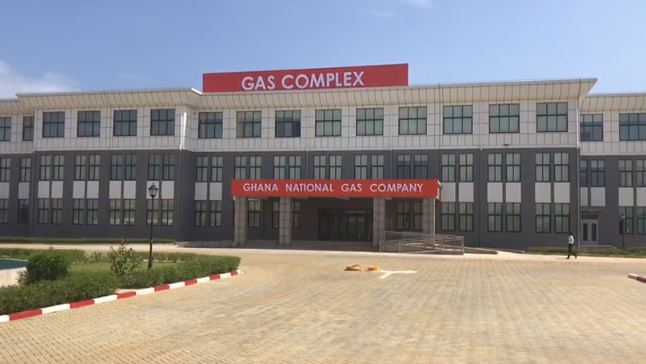

- US$500mn Gas Pipeline Moves Toward Investment Decision as Ghana Demand Rises 42%
Ghana Gas is moving towards a final investment decision on a US$500 million pipeline linking the country’s western gas-processing hub with industrial consumers in the east, as national gas consumption is projected to rise more than 42% by the end of the decade.
Chief Executive Judith Adjobah Blay said the state-owned company hopes to reach a decision and begin moving forward with the long-discussed project by the end of the first quarter of 2027, provided financing arrangements can be completed.
The proposed 278-kilometre West–East onshore pipeline would transport natural gas from processing facilities in western Ghana towards industrial and power consumers in the southeast, including the Tema industrial enclave, where demand for cheaper and more reliable energy is increasing.
“It’s a project that we hope to really embark on by the end of the first quarter of 2027,” Ms Blay told Reuters on the sidelines of the Gastech conference, adding that Ghana Gas was working to secure financing.
The project, which has been under discussion for almost a decade, is becoming more urgent as Ghana’s gas requirements begin to outgrow existing infrastructure.
Ghana Gas forecasts national consumption reaching about 715 million standard cubic feet per day by 2030, compared with approximately 502mmscfd in 2026. That represents an increase of about 42.4% in four years and would require substantial additional production, processing and transportation capacity.
The pipeline would also reduce Ghana’s dependence on the West African Gas Pipeline, which transports Nigerian gas through Benin and Togo into Ghana. The country currently imports about 70mmscfd of lean gas from Nigeria, according to Ghana Gas.
That reliance has long exposed the power sector to interruptions and supply uncertainty when upstream or pipeline constraints affect Nigerian deliveries.
A dedicated West–East pipeline would allow Ghana to move a larger share of domestically produced gas from western fields towards power stations and industries in Tema and other eastern demand centres, potentially reducing the need to transport gas through infrastructure shared with neighbouring countries.
The economics are particularly important for electricity generation.
Government policy is to prioritise natural gas for power production because gas-fired generation can reduce reliance on more expensive liquid fuels. Ghana has periodically had to burn crude oil, diesel and other alternatives at thermal plants when gas availability has been insufficient, raising generation costs and adding pressure to the electricity sector’s finances.
“The policy is to use gas primarily for power production,” Ms Blay said.
The demand outlook is being matched by plans to expand upstream supply.
Ghana Gas expects output from the Eni-operated Sankofa offshore project to increase to about 350mmscfd in 2028 from roughly 280mmscfd currently. The company also processes approximately 130mmscfd of associated gas from the Jubilee and TEN fields operated by Tullow.
Jubilee and TEN have an additional 50mmscfd of gas available, but capturing that volume will require further processing infrastructure.
Ghana is consequently considering a new gas-processing plant that would handle the additional supply. The project requires parliamentary approval before further details can be announced, Ms Blay said.
Under the proposed ownership structure for that separate processing-plant project, government would hold a 30% stake while private investors finance the remaining 70%. Reuters issued a clarification that the proposed public-private ownership arrangement relates to the processing plant rather than the US$500 million pipeline
Together, the pipeline and processing plant illustrate the next infrastructure challenge confronting Ghana’s gas industry.
The country has developed significant offshore resources, but discovering and producing gas does not automatically translate into reliable energy for businesses. Processing capacity must be sufficient to treat the resource, while transmission infrastructure must be capable of moving it from production centres in the west to demand centres elsewhere.
That mismatch is particularly visible in Tema, home to some of Ghana’s largest manufacturers and power installations.
For industry, reliable gas supply could offer an alternative to more expensive liquid fuels and help reduce production costs in energy-intensive businesses. For power generators, additional domestic gas could improve fuel security and reduce exposure to international petroleum-price volatility.
But the investment case will depend on more than projected demand.
Ghana Gas still has to secure financing for the pipeline and demonstrate that future gas volumes, tariffs and customer demand can support the project’s capital cost. Investors will also require clarity over transportation charges, supply agreements, regulatory arrangements and the financial health of major gas purchasers, particularly within the electricity value chain.
The final investment decision therefore represents a crucial dividing line between a project that has remained under consideration for years and one capable of proceeding towards construction.
The timing also matters because the projected supply increases from Sankofa and additional Jubilee and TEN gas would have greater economic value if transmission infrastructure is ready when those volumes become available.
Without sufficient processing and transportation capacity, Ghana could face the paradox of having additional domestic gas resources while industrial and power consumers in other parts of the country remain constrained by delivery infrastructure.
The proposed pipeline is consequently more than a US$500 million energy project.
It is part of a broader attempt to align Ghana’s domestic gas reserves with a rapidly expanding power and industrial economy, while reducing exposure to imported fuels and regional pipeline constraints.
With consumption expected to rise from 502mmscfd to 715mmscfd by 2030, the country’s gas challenge is increasingly shifting from whether resources exist offshore to whether sufficient infrastructure can be built to process and move them efficiently.
For Ghana Gas, the early-2027 investment decision will therefore test whether nearly a decade of planning can finally be converted into infrastructure capable of connecting the country’s growing gas supply with the industries and power plants that increasingly depend on it.

