


- Volta Lake Could Become Ghana’s New Logistics Spine Under Jobs And 24-Hour Economy Strategy
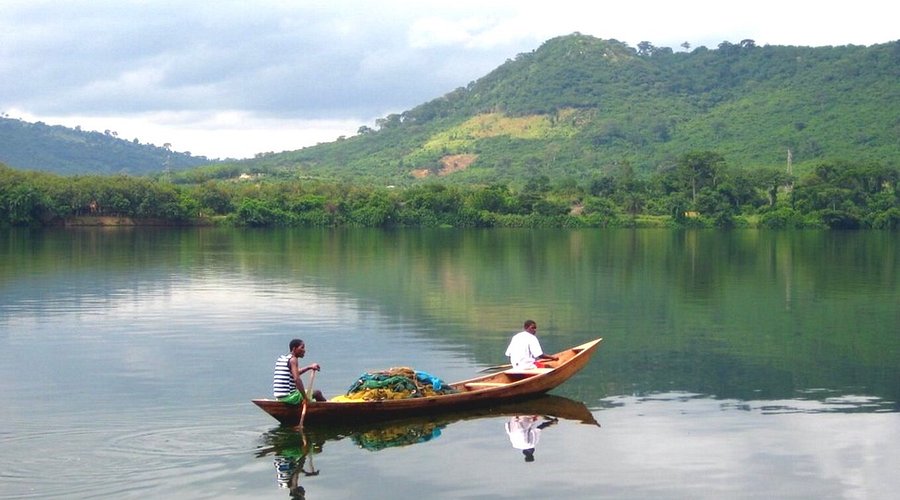
Ghana is seeking to turn one of its most significant but underexploited geographic assets into a new engine of trade, logistics and industrial development, with Vice-President Professor Naana Jane Opoku-Agyemang calling for the accelerated development of the Volta Lake as a commercial transport corridor.
The proposal, presented at the World Bank Western and Central Africa Senior Leadership Team Retreat in Accra on September 3, places inland water transport at the centre of a broader attempt to reshape Ghana’s economic geography. The model would move goods from Tema to Akosombo by road or rail, transfer them onto commercially operated barges on the lake and then connect them to inland terminals and onward road links towards Tamale, Burkina Faso, Mali and the wider Sahel.
“If properly developed, it can connect northern Ghana more efficiently to the south, support agriculture, facilitate trade, create industrial activity, and open opportunities for communities,” Professor Opoku-Agyemang said.
The significance goes well beyond increasing the number of vessels on the lake. What government is effectively proposing is a new national freight architecture that links roads, rail, ports, inland terminals and waterways into a multimodal logistics system capable of reducing Ghana’s heavy dependence on road transport.
That matters because domestic freight is still dominated by roads, exposing businesses to fuel costs, congestion, vehicle maintenance and delays. For producers of bulky commodities, especially agriculture and industrial inputs, those logistics costs can materially affect competitiveness.
An efficient inland-waterway system could offer an alternative for large-volume cargo. Barges are particularly suited to moving heavier goods over longer distances, while road and rail can handle first- and last-mile connections between production centres, terminals and final markets.
The commercial proposition is therefore stronger than a standalone lake transport project. The corridor would connect Tema and Akosombo with northern Ghana and potentially extend Ghana’s freight reach into landlocked Sahelian markets.
But the central economic question is whether sufficient cargo will move in both directions to make the system viable. Infrastructure can be strategically important and still fail commercially if utilisation rates remain too low to support operating costs, debt service and private investment.
Professor Opoku-Agyemang has deliberately framed the initiative as a “jobs corridor” rather than merely a transport project. That distinction is important because the real economic value would come from the businesses that emerge around the route.
Warehouses, cold-storage facilities, agro-processing plants, repair services, logistics companies, financial services and trading centres could develop around inland terminals. Agriculture could be one of the biggest beneficiaries if farmers and processors gain cheaper and more reliable access to southern markets.
The reverse flow would be equally important. Fertiliser, machinery, fuel, packaging materials and manufactured goods could move north through the same network, turning the lake into part of a circular supply chain rather than a one-directional route.
That is what could create the multiplier effect government is seeking. A corridor becomes economically transformative only when it connects production, consumption and investment in both directions.
The proposal also has clear implications for Ghana’s ambitions under the African Continental Free Trade Area. Ghana cannot fully exploit AfCFTA simply by lowering tariffs or signing protocols; businesses still need competitive logistics to reach customers across borders.
A functioning route through northern Ghana into Burkina Faso, Mali and other Sahelian markets could strengthen Ghana’s position as a gateway between coastal West Africa and landlocked economies. That would allow the country to compete not only as a producer but also as a logistics platform.
Capturing that opportunity would require much more than physical infrastructure. Customs procedures, digital systems, border efficiency, security, road quality and predictable regulation will all affect whether traders actually choose the corridor.
Private capital will therefore be central to the project’s credibility. The government has signalled openness to working with the International Finance Corporation to structure the Volta Lake Transport Project in a way that can attract investors, while the World Bank could support public infrastructure and institutional capacity and MIGA could potentially provide investment-risk mitigation.
That model reflects Ghana’s tighter fiscal reality. After years of debt pressure and fiscal adjustment, government cannot realistically finance every major infrastructure project directly from the public balance sheet.
The attraction of a public-private structure is that limited public resources could be used to mobilise substantially larger pools of private capital. But investors will ask harder questions than policymakers.
They will want credible estimates of cargo volumes, tariff structures, construction risk, demand guarantees, concession terms and regulatory stability. Those issues will determine whether the corridor becomes an investable infrastructure asset or remains an ambitious public-sector concept.
The project also fits into the government’s broader 24-Hour Economy strategy. A genuinely continuous economy requires infrastructure capable of moving inputs and finished goods reliably beyond conventional working hours.
Factories need predictable supplies, farmers need access to markets and exporters need logistics systems capable of operating continuously. Professor Opoku-Agyemang has argued that the government must connect infrastructure, enterprise, skills, finance and markets rather than treating them as separate interventions.
That may be the decisive test of the Volta Lake initiative. A barge service alone will not transform Ghana’s economy, but a barge service connected to industrial parks, farms, warehouses, roads, railways and regional export markets potentially could.
The lake offers Ghana an advantage many infrastructure projects do not: the basic geographical asset already exists. The challenge is to build the commercial ecosystem around it.
That will require investment in ports and landing facilities, navigation systems, terminals, barges, warehousing, cold storage, road and rail connections and digital logistics platforms.
Governance will matter just as much as engineering. Ghana must avoid constructing infrastructure that is politically attractive but commercially underused, meaning demand assessments need to be credible, procurement transparent and concessions structured so risks are carried by the parties best able to manage them.
There is also an environmental and social dimension. Expanding commercial activity on the lake must coexist with fishing communities, tourism, ecological considerations and existing livelihoods.
The deeper significance of the proposal is that it could alter Ghana’s economic geography. For decades, activity has been heavily concentrated around Accra, Tema, Kumasi and other southern centres, while producers farther inland have faced higher transport and market-access costs.
A functioning Volta Lake corridor could reduce that disadvantage by giving northern and middle-belt producers more efficient access to ports, industrial centres and regional markets.
If successful, it could encourage commercial agriculture, agro-processing and new logistics hubs outside Ghana’s traditional economic centres. It could also strengthen Ghana’s position as a regional gateway into the Sahel.
But the execution risk is substantial. Ghana has repeatedly demonstrated that announcing infrastructure is easier than operating it commercially.
The decisive question is whether government can turn the Volta Lake into a bankable, commercially operated and economically integrated transport system.
If it succeeds, the lake could become a new economic spine linking Tema to the north, farms to factories and domestic producers to wider African markets. If cargo volumes, investment and industrial activity fail to materialise, however, the country risks creating expensive infrastructure in search of an economic purpose.
For Ghana’s jobs and 24-Hour Economy agenda, the stakes are therefore high. The Volta Lake already provides the geography. Ghana now has to provide the economics.

