

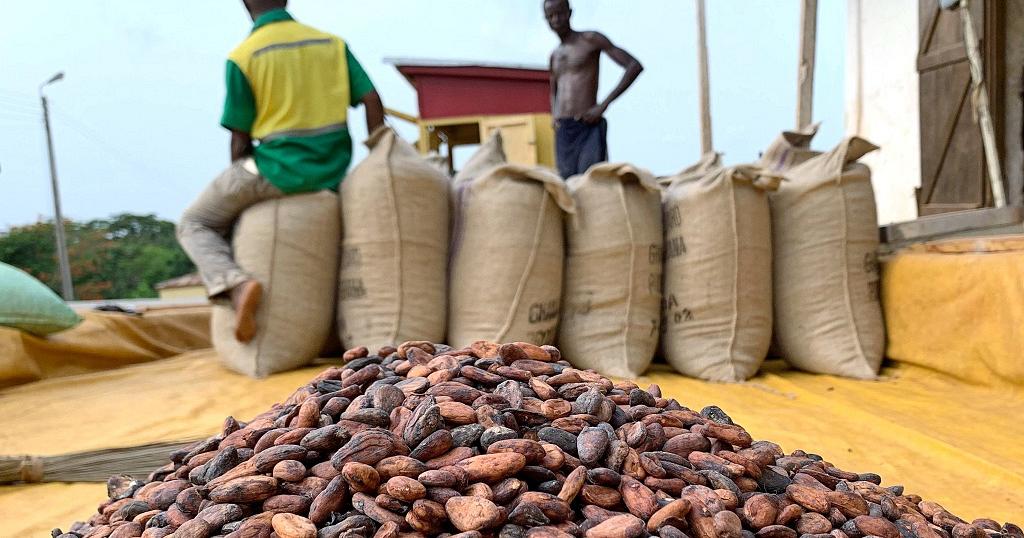

- Weather Shock Sends Cocoa Prices to Six-Month High as Ghana, Côte d’Ivoire Supply Risks Return
Global cocoa prices have rallied sharply to their highest levels in nearly six months after excessive rains across Ghana and Côte d’Ivoire revived concerns over supplies from the world’s most important cocoa-producing region.
The latest price surge highlights the cocoa market’s continued vulnerability to weather shocks, crop disease and climate uncertainty in West Africa, where Ghana and Côte d’Ivoire account for more than half of global cocoa production.
After months of expectations that global supplies could improve, traders are again pricing in the risk that adverse weather may reduce the size and quality of the upcoming crop.
Heavy rainfall in key cocoa-growing zones has flooded farm roads, disrupted transport routes and limited farmers’ access to plantations and ports. The excessive moisture has also increased the risk of black pod and brown rot diseases, both of which can damage pods and weaken crop quality.
Market reports show that cocoa futures have rallied strongly in recent weeks, with prices rising by more than 20.00% over a two-week period and touching 5.50-month highs as traders reacted to rainfall disruptions in Ghana and Côte d’Ivoire. Cocoa prices were also trading above US$6,000.00 per metric tonne in early July, reflecting renewed supply anxiety in the market.
The weather concern has been reinforced by warnings over a possible El Niño pattern, which could later bring hotter and drier conditions to parts of the cocoa belt. Such a shift would create a fresh threat to yields after the current phase of excessive rainfall.
For cocoa, both too much rain and too little rain can be damaging.
Excessive rainfall can cause disease, delay harvesting, flood access roads and reduce bean quality. Prolonged dry heat can weaken flowering, slow pod development and reduce yields. The market is therefore facing a double climate risk: immediate disruption from heavy rains and possible later stress from heat and dryness.
That uncertainty has reversed some of the optimism that had built up around stronger port arrivals and the possibility of improved global supply.
Analysts have consequently lowered expectations for the cocoa surplus, reflecting the concern that West Africa’s next crop may not deliver the relief buyers had hoped for.
For Ghana, the rally presents a complicated mix of opportunity and danger.
Higher international cocoa prices could boost export earnings, improve foreign exchange inflows and support one of the country’s most important commodity revenue streams. Cocoa remains central to Ghana’s rural economy, export base and balance-of-payments position.
A sustained rebound in prices could therefore strengthen the country’s external sector at a time when foreign exchange stability remains a key macroeconomic priority.
But higher prices only benefit Ghana fully if the country has enough cocoa to sell.
That is the hard lesson from recent seasons.
Ghana’s cocoa sector has been hit by a combination of adverse weather, crop disease, ageing trees, illegal mining, smuggling, low farm productivity and financing constraints. Even when global prices rise, production shortfalls can limit the country’s ability to capture the full windfall.
This is why the latest rally should not be read simply as good news. It is also a warning.
The market is paying more for cocoa partly because it is worried that Ghana and Côte d’Ivoire may struggle to deliver reliable supply. That kind of price increase reflects risk, not only value.
For farmers, the impact may also be uneven.
High world prices do not automatically translate into immediate income gains if producer prices are fixed, adjusted slowly or shaped by forward sales. In Ghana and Côte d’Ivoire, where cocoa marketing systems are heavily regulated, farmers may not fully benefit from short-term spikes in international futures prices.
At the same time, farmers are the first to suffer from climate shocks.
Flooded farms, diseased pods, blocked roads and deteriorating crop quality directly reduce their incomes. If rains destroy part of the harvest, a higher global price may not compensate for lost volumes.
This is the central contradiction in the cocoa market.
Climate stress can lift international prices while making farmers poorer.
That contradiction is becoming more visible as West Africa’s cocoa belt faces increasingly erratic rainfall patterns. The region is no longer dealing only with normal seasonal variability. It is dealing with climate volatility that affects production, disease pressure, logistics and quality.
The result is a more fragile global cocoa supply chain.
Chocolate manufacturers are already feeling the pressure. Many global processors and confectionery companies have been navigating elevated raw material costs after the historic cocoa price shock of recent years. A renewed rally raises the risk of further cost pressures for manufacturers, retailers and consumers.
Companies may respond by raising chocolate prices, reducing package sizes, reformulating products or absorbing some of the cost through narrower margins.
But there is a limit to how much cost can be passed on before consumer demand weakens.
This is why cocoa grind data, inventory levels and consumer demand are being watched closely. Some industry players believe the current conditions are different from the 2023–2024 crisis because stocks are stronger and companies have improved sourcing flexibility. But the market’s sharp reaction to West African rainfall shows that confidence remains fragile.
When Ghana and Côte d’Ivoire face weather problems, the entire global market reacts. No other region can quickly replace a major supply disruption from West Africa.
This concentration risk has long been known, but climate change is making it more dangerous.
A disease outbreak, transport disruption or production shortfall in Ghana and Côte d’Ivoire can quickly affect global prices, corporate procurement, export earnings and farmer livelihoods.
The country must move beyond treating cocoa price rallies as windfalls and begin treating climate resilience as core economic policy.
That means accelerated rehabilitation of old farms, stronger disease control, improved extension services, better farm drainage, climate-smart agronomy, replanting with higher-yielding and disease-resistant varieties, and stronger protection of cocoa-growing areas from illegal mining.
The current rains have again shown that cocoa is not only an agricultural crop. It is a logistics business. If farm roads are flooded and trucks cannot reach buying centres or ports, supply is disrupted even where beans are available.
A cocoa sector that cannot move produce efficiently during the rainy season becomes vulnerable to delays, quality deterioration and revenue loss.
The same applies to warehousing and post-harvest handling. Excess moisture can affect drying, storage and bean quality. Poorly dried beans can attract discounts, reduce export value or create additional processing costs.
Ghana must therefore strengthen the entire cocoa value chain, from farm productivity to post-harvest systems, logistics and export readiness.
The current price rally also raises questions about Ghana’s cocoa financing model.
If production risks remain elevated, forward sales, syndicated loans and pricing arrangements become more complex. Buyers, lenders and traders will demand greater confidence in crop forecasts and delivery capacity.
Satellite monitoring, weather analytics, farm mapping and real-time disease surveillance should become central tools in cocoa policy. Ghana cannot manage a climate-exposed cocoa economy with outdated production estimates and slow reporting systems.
Cocoa farmers under financial pressure may be tempted to abandon farms, shift into illegal mining or expand into forest areas. That creates long-term environmental and reputational risks, especially as global markets tighten sustainability and traceability standards.
If Ghana wants to benefit from high cocoa prices in a more demanding global market, it must prove not only that it can produce cocoa, but that it can produce traceable, climate-resilient and environmentally responsible cocoa.
Cocoa supports hundreds of thousands of households in Ghana and remains one of the country’s most important traditional exports. It is tied to rural livelihoods, foreign exchange earnings, fiscal revenue and national economic identity.
But the sector is now facing a structural climate test.
Weather disruptions are no longer isolated events. They are becoming recurring market-moving shocks.
For Côte d’Ivoire and Ghana, this creates both leverage and responsibility.
Their dominance means global buyers cannot ignore them. But it also means any production weakness in the two countries becomes a global market problem.
The latest rally shows that the world still depends heavily on West African cocoa.
But it also shows that West African cocoa is becoming more vulnerable.
That is why the current price movement should be interpreted carefully. It may strengthen near-term export earnings if volumes hold. It may support foreign exchange inflows if shipments remain strong. It may improve the revenue outlook for the sector if policy managers can capture the upside.
But if the rally is driven by crop damage, disease and disrupted logistics, then the price gain is also a signal of deeper stress.
It needs higher productivity, stronger resilience, better farmer incomes, improved disease control, upgraded logistics and a credible long-term adaptation strategy.
For global chocolate manufacturers, the message is equally clear.
The era of cheap, predictable cocoa supply from West Africa is over. Procurement strategies must now account for climate volatility, disease outbreaks and the rising cost of sustainability.
For consumers, the effect may eventually show up in higher chocolate prices or smaller product sizes.
For farmers, the hope is that higher prices will translate into better incomes, but that will depend on producer price policy, crop volumes and the ability to protect farms from disease and climate stress.
The cocoa market has rallied because the rains have reminded traders of a basic truth: the world’s chocolate supply still depends heavily on weather conditions in Ghana and Côte d’Ivoire.
That dependence is now becoming more expensive.
For Ghana, the opportunity is to earn more from a rising market.
The danger is that the same weather driving prices higher could also reduce the harvest that Ghana needs to sell.
That is the cocoa paradox.
The price is rising because the risk is rising.

