


- Where Did Ghana’s Cocoa Windfall Go? IERPP Challenges GH¢2,500 Farmgate Price
Ghana’s cocoa economy is facing renewed scrutiny after the Institute of Economic Research and Public Policy questioned why farmers received GH¢2,500 per 64kg bag at a time when cocoa export earnings nearly doubled and average realised international prices rose sharply.
According to figures cited by IERPP, Ghana’s cocoa export earnings increased from about US$1.94 billion in 2024 to US$3.86 billion in 2025, representing growth of roughly 98.97%. Over the same period, the average realised cocoa price increased from US$4,440 per tonne to US$5,877.40, a rise of approximately 32.37%.
Yet farmers were paid approximately GH¢2,500 per bag, prompting the institute to ask whether the pricing architecture operated by the Ghana Cocoa Board adequately explains the gap between international prices, export receipts and producer income. The central issue is not whether every cedi earned from exports should flow directly to farmers, but whether the distribution of value through the cocoa chain is sufficiently transparent.
IERPP’s most striking calculation is that the producer price could have been around GH¢4,104 per bag if it had moved proportionately with the increase in realised international cocoa prices. Using a previous producer price of GH¢3,100 and applying the 32.37% increase produces an indicative price of roughly GH¢4,104, creating a gap of about GH¢1,604 per bag against the actual GH¢2,500.
The institute also presented a second scenario using GH¢3,500 as the starting producer price, which would produce an indicative price of approximately GH¢4,633 after applying the same international-price increase. That would imply a difference of more than GH¢2,100 per bag.
Those calculations, however, are benchmarks rather than proof that COCOBOD legally or financially owed farmers either amount. IERPP itself acknowledges that international prices do not translate mechanically into farmgate prices because financing, transportation, quality control, storage, marketing, processing, incentives and COCOBOD’s operational commitments sit between the farmer and the final export receipt.
That distinction is crucial because the real policy question is not simply whether GH¢4,100 is the “correct” price. It is whether government and COCOBOD can demonstrate transparently why GH¢2,500 was the appropriate producer price given the movement in realised export prices and earnings.
The exchange rate complicates the calculation further. IERPP estimates that cocoa export earnings rose from approximately GH¢28.52 billion in 2024 to GH¢42.00 billion in 2025, using exchange rates of GH¢14.70 and GH¢10.88 to the dollar respectively, an increase of about GH¢13.48 billion or 47.27% in cedi terms.
The stronger cedi also illustrates why headline export receipts cannot simply be equated with farmer income. Cocoa purchases are financed before all final export proceeds are realised, while the regulated marketing system carries costs and obligations that have to be funded along the chain.
That is precisely why transparency in the producer-price formula matters.
If export earnings and realised international prices rise significantly while farmgate prices move differently, farmers and taxpayers should be able to see the financial bridge between those outcomes. Without that bridge, debate quickly becomes political rather than analytical.
The controversy also comes against the backdrop of financial pressure at COCOBOD. The institution has faced financing challenges around cocoa purchases and the wider cost of maintaining Ghana’s marketing system, making IERPP’s reference to reported GH¢5.11 billion in COCOBOD earnings an important part of the debate.
IERPP is not arguing that the entire amount should have been transferred to farmers. Its demand is that government and COCOBOD explain how value was allocated across financing, processing, transportation, marketing, production incentives and other deductions.
That is a stronger analytical position than simply comparing Ghana’s farmgate price with the London or New York cocoa market. A regulated cocoa system necessarily includes costs between farm and export, but the existence of those costs does not remove the obligation to disclose them clearly enough for the pricing outcome to be independently assessed.
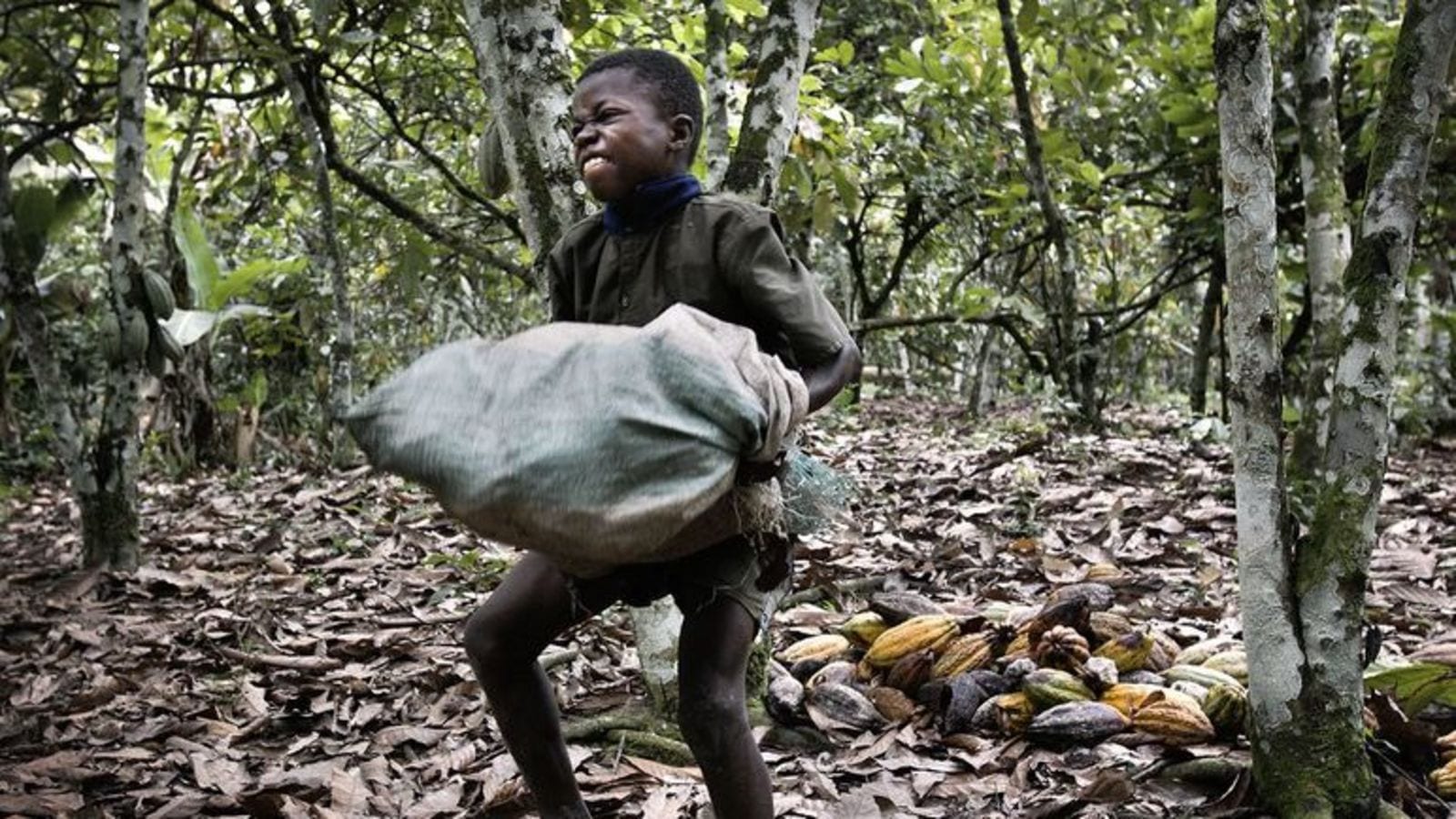
For farmers, the issue is economic rather than abstract. Cocoa production remains labour-intensive and exposed to rising fertiliser, transport, labour and other input costs, so a producer receiving GH¢2,500 per bag while observing sharply higher global prices may reasonably question how much of the upside is reaching the farmgate.
Ghana’s regulated pricing model is designed in part to protect farmers from international volatility by providing a guaranteed producer price. That protection has real value when global prices fall, but the model becomes harder to defend if farmers are insulated from downside risk while participating only weakly in significant upside movements.
IERPP has therefore called for a comprehensive disclosure of cocoa revenues and costs, including export earnings, realised prices, exchange-rate effects, COCOBOD revenues and expenditure, farmer payments and the methodology used to determine the producer price.
The institute’s challenge goes to the heart of cocoa-sector legitimacy.
A transparent formula would allow government to show how much of every dollar generated by Ghanaian cocoa goes to farmers, how much finances COCOBOD, how much covers borrowing and operating costs, and what remains after the full marketing chain is accounted for.
Until those numbers are published, the GH¢4,100 estimate should remain a benchmark rather than a definitive entitlement.
But the calculation has succeeded in raising a larger question: when Ghana earns more from cocoa, who captures the additional value?

