


- Why BoG’s GH¢5m Capital Reform Is Triggering Alarm Among Shareholders
A quiet disagreement is building inside Ghana’s now community banking industry over a Bank of Ghana reform that, depending on how it is implemented over the next five months, could either strengthen one of the country’s most important financial inclusion networks or produce a new round of painful consolidation across rural Ghana.
At the centre of the concerns is a new GH¢5 million minimum capital requirement for existing Community Banks, formerly known as Rural and Community Banks, which must be met by December 31, 2026.
The Bank of Ghana says the reform is necessary to build stronger institutions, improve governance, protect depositors and reposition community banking for the next stage of Ghana’s financial development.
But NorvanReports investigations indicate that some shareholders and industry participants are increasingly uncomfortable with both the amount and, most importantly, the speed at which institutions are being required to comply.
Their concern is not necessarily that Community Banks should remain weak or undercapitalised. Rather, the argument being made is that forcing hundreds of community shareholders to mobilise significant new capital within a relatively short period could produce unintended consequences, particularly for institutions that are fundamentally sound but operate in poorer rural economies where raising fresh equity is far more difficult than it is for a commercial bank in Accra.
Some shareholders fear that if the transition is handled too rigidly, Ghana could face widespread mergers, forced exits, job losses, disruption to credit in rural communities and, in a worst-case scenario, depositor anxiety.
Some have gone even further, warning privately that the consequences could become more socially disruptive than the financial-sector clean-up between 2017 and 2019.
That is a serious claim. The evidence available today does not support a conclusion that another clean-up of the same financial magnitude is inevitable. But the numbers show why the concerns cannot simply be dismissed.
Ghana’s now Community Banking sector consists of 147 licensed institutions, about 1,000 branches and more than eight million customers. As of May 2026, its total assets stood at approximately GH¢26 billion, according to Bank of Ghana Governor Dr Johnson Pandit Asiama. These are no longer small institutions sitting at the margins of Ghana’s financial system.
They are deeply embedded in communities. They hold the savings of farmers, traders, teachers, pensioners, small businesses and salaried workers. They lend to local businesses that may struggle to satisfy the credit requirements of large commercial banks. They provide banking services in towns where the nearest universal bank branch may be kilometres away. They finance agriculture, local commerce and household activity.
The question facing policymakers is therefore bigger than whether GH¢5 million is a reasonable number on a regulatory balance sheet. It is whether Ghana can strengthen these institutions without unintentionally weakening the very community-based financial system that the reform is supposed to protect.
Under the revised Microfinance Sector Framework, existing Rural Banks have been converted into Community Banks and are required to meet the GH¢5 million minimum capital requirement by December 31, 2026. A new urban Community Bank will require GH¢10 million. Institutions below the requirement were expected to notify the Bank of Ghana by June 30 about how they intended to recapitalise and provide a progress report by September 30.
Those requirements represent a substantial change.
The previous minimum capital requirement for Rural and Community Banks was GH¢1 million. BoG’s earlier framework allowed institutions to work progressively towards that amount, requiring GH¢300,000 by the end of 2015, GH¢500,000 by the end of 2016 and GH¢1 million by the end of 2017.
The new GH¢5 million threshold is therefore five times the previous GH¢1 million requirement, a 400.00% increase. The difference is not only the size of the capital increase. It is the nature of the shareholders expected to provide it.
A universal bank needing new capital may approach a large institutional investor, an international banking group, private equity investors or the capital market.
Many Community Banks have a very different ownership structure. Their shares can be spread among community members, traditional authorities, farmers, traders, business owners, churches, associations, professionals and relatively small individual investors. Many were deliberately designed that way.
The Rural Banking system was created in 1976 precisely because conventional commercial banking was not adequately reaching parts of rural Ghana. Fifty years later, BoG itself describes community ownership and the shared relationship between institutions and customers as one of the features behind the sector’s development.
That history matters. A shareholder of a large commercial bank and a farmer holding shares in a Community Bank may technically both be shareholders, but their capacity to respond to a capital call is not remotely the same. If a bank requires several million cedis of fresh capital over a few months, the problem becomes practical very quickly. Existing shareholders must either find more money, accept substantial dilution by new investors, combine the institution with another bank or prepare for another regulatory pathway.
That is where the growing tension sits.
The Bank of Ghana’s position is that doing nothing carries an even bigger risk. In its explanation of the reforms earlier this year, BoG said the broader microfinance sector had suffered from persistent fragmentation, weak capital bases, governance failures, operational inefficiencies and erosion of public confidence. Its share of banking-system assets declined from about 15.00% in 2017 to 8.00% in 2024, according to the central bank.
From the regulator’s perspective, therefore, higher capital is not punishment. It is part of an attempt to prevent another generation of weak deposit-taking institutions from developing into a future financial crisis.
But a letter from the Bank of Ghana to the Ghana Association of Savings and Loans Companies, sighted by NorvanReports, gives an important indication of how the regulator is thinking about concerns being raised across the wider microfinance reform.
In the letter, BoG acknowledges concerns about implementation timelines but argues that extending the transition for too long could prolong uncertainty, undermine stability and further weaken public confidence.
It says institutions are expected to meet key milestones that allow the regulator to track their progress and make informed decisions. Importantly, the Bank also says requests for an extension will be considered based on the actual progress of individual institutions and their potential to satisfy the new requirements.
That distinction could become critical as December approaches. It suggests that the regulatory debate may not finally be about whether every struggling institution receives a blanket extension. It may instead become a question of which institutions can demonstrate that they are financially viable, have credible recapitalisation programmes and simply need more time to complete them.
The difference between those two approaches could determine whether the reform strengthens the system or creates unnecessary casualties.
A Community Bank with GH¢4.7 million in unimpaired capital, strong profitability, good governance and a credible investor ready to provide the balance is fundamentally different from another institution with GH¢1 million, accumulated losses, serious non-performing loans and no credible recapitalisation plan.
A third institution may have only GH¢3 million but operate profitably in a poorer district where its community shareholders have limited financial capacity. It may serve thousands of depositors, have acceptable asset quality and fulfil an important economic function, yet still struggle to raise another GH¢2 million before the deadline.
If all three institutions are treated identically simply because none has crossed GH¢5 million by a particular day, regulators could inadvertently equate a timing problem with a solvency problem.
That would be dangerous. This is why shareholders pressing for flexibility have a case that deserves serious consideration although it does not follow that the capital requirement should simply be abandoned.
The central policy issue is proportionality.
How much capital should a bank serving predominantly farming communities need to operate safely? Should the same capital deadline apply to an institution that is already profitable and almost compliant and one that is deeply insolvent? Should geographical importance and the availability of alternative banking services in a district form part of regulatory transition decisions? How should BoG distinguish between a viable bank whose shareholders need additional time and one whose inability to raise capital reflects deeper financial weakness? These are not arguments against regulation. They are questions about how regulation should distinguish different types of risk.
BoG appears to recognise at least part of this problem. Its framework provides several routes rather than one. An institution can meet the minimum capital independently. It can merge with another institution or be acquired. It can transfer deposit liabilities and performing assets to another qualified institution capable of continuing banking services in the affected area. If it fails to pursue the available options within the required period, it can ultimately face regulatory action.
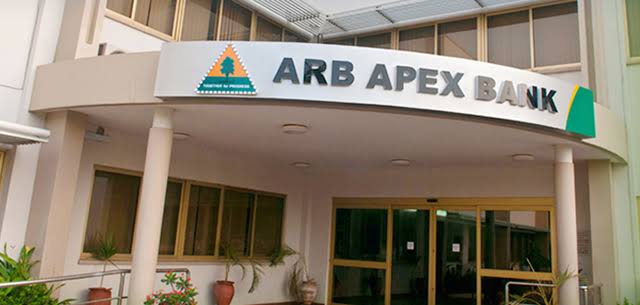
ARB Apex Bank has also warned Community Banks that non-compliance could attract operational restrictions, stronger supervisory intervention or even licence revocation. It has encouraged institutions to mobilise shareholders, pursue consolidation where appropriate or follow other approved options.
On paper, that makes the reform considerably more flexible than an immediate “GH¢5 million or close” policy. In practice, however, mergers and capital injections are not simple administrative exercises.
A bank cannot become strong merely because two weak balance sheets have been placed under one company name. If Bank A has poor loan quality, governance problems and insufficient capital, while Bank B has similar weaknesses, combining the two may produce a larger institution but not necessarily a healthier one.
A successful merger requires due diligence on loan books, bad debts, shareholder interests, pensions, staff liabilities, technology systems, branch networks, governance structures and related-party exposures.
There is also the difficult issue of who controls the merged institution.
Many Community Banks carry strong local identities built over decades. Communities can be emotionally attached to them. Board positions, share ownership, management arrangements and the location of headquarters may become politically and socially sensitive during mergers.
A transaction that makes perfect sense to a regulator in Accra may be considerably more complicated in two neighbouring communities that have spent 30 years building separate institutions.
That does not mean consolidation should be avoided. It means consolidation takes time. And time is precisely what some shareholders now believe they do not have enough of. The more serious concern, however, goes beyond shareholders. It is depositors.
Ghana has learnt during the previous financial-sector clean-up that banking problems can quickly become public-confidence problems.
Between 2017 and 2019, BoG revoked the licences of 420 financial institutions, including nine banks, 23 savings and loans and finance house companies, 347 microfinance companies, 39 microcredit companies, one remittance company and one leasing company. The assets of those institutions totalled about GH¢26.05 billion, according to the Ministry of Finance. Government subsequently committed significant resources to protecting depositors and managing the resolution process.
A Ministry of Finance account put direct government funding for repayment of affected depositors and establishment of Consolidated Bank Ghana at GH¢18.99 billion at the time, while subsequent government budget reporting shows that wider financial-sector resolution costs continued accumulating across banks, savings and loans companies, microfinance institutions and asset management companies.
The comparison with the Community Banking reforms therefore needs care. The 2017–2019 clean-up dealt mainly with institutions that BoG had determined were already insolvent or had serious regulatory problems. The current Community Bank recapitalisation exercise is a forward-looking regulatory reform. Falling below a new capital threshold does not automatically mean a bank is insolvent.
That distinction is extremely important. A bank can be solvent and profitable but fail temporarily to satisfy a new minimum paid-up capital requirement. Conversely, a bank can technically satisfy a capital figure while carrying deeper problems in its assets, governance or loan book.
Capital is therefore important, but capital alone cannot be allowed to become the sole definition of financial health. That is one reason claims that the current reform will inevitably produce a crisis bigger than the earlier clean-up are premature.
There is currently no public evidence showing that the 147 Community Banks are collectively insolvent or that the state faces bailout liabilities approaching those generated by the previous clean-up.
Such a conclusion would therefore be unsupported.
But there is another way in which the risk could become unusually significant. The previous clean-up was large financially. A disorderly Community Banking restructuring could be unusually large geographically and socially.
Eight million customers spread through around 1,000 branches means disruption could penetrate deeply into Ghana’s districts and smaller towns. Imagine, for example, that several banks in neighbouring districts are suddenly seen as unlikely to meet the December deadline.
Customers may not understand the difference between undercapitalisation under a new regulatory rule and insolvency.
For many depositors, the message may simply be that their bank is “in trouble”.
- Some may withdraw their savings.
- Businesses may transfer operating balances.
- Customers may move salary accounts.
- Rumours may spread on WhatsApp and community radio.
- What began as a capital problem could then become a liquidity problem.
- A viable institution struggling to raise additional equity could suddenly find itself losing deposits precisely when it needs confidence most.
This is how regulatory reform can produce unintended consequences if communication is poorly managed. The regulator therefore has two jobs. It must ensure that weak institutions are strengthened or resolved.
But it must also prevent the reform itself from generating panic around institutions that remain safe. This is particularly important because Community Banks often operate within close social networks. Information travels quickly. So does misinformation.
The Bank of Ghana’s July letter to GHASALC appears conscious of that confidence problem. It explicitly argues that an excessively long transition could itself weaken confidence and says the reform is intended to strengthen capital, governance and risk management while protecting deposits and preserving viable employment.
That argument has merit. A regulator cannot continuously postpone prudential requirements because shareholders say raising capital is difficult. Depositors, not shareholders, ultimately bear the greatest risk when a deposit-taking institution becomes weak. Community ownership cannot be used as protection against proper supervision.
The fact that an institution has existed for 30 or 40 years also does not automatically mean it should continue operating if it cannot protect depositors. The public-interest case for stronger capital is therefore compelling.
But equally compelling is the case for ensuring that strong and viable local institutions are not lost simply because the implementation structure does not sufficiently distinguish them from genuinely distressed ones.
The safest route may therefore lie between the two extreme positions.
One extreme would be for BoG to retreat and substantially weaken the reform because shareholders object. That could preserve institutions with weak capital and governance problems and postpone financial risks rather than resolve them.
The other extreme would be to treat December 31 as an absolute cliff edge, regardless of how close individual institutions are to compliance, their profitability, liquidity, asset quality or significance to their communities. That could force otherwise viable institutions into hurried mergers or closures.
Neither outcome would necessarily serve depositors. A more sophisticated approach would use the September progress reports to divide institutions into clear supervisory categories.
Community Banks already above GH¢5 million would simply continue. Ones very close to the threshold, financially sound and demonstrating credible capital mobilisation could be given tightly controlled additional time where justified.
Community Banks materially below the requirement but with strong underlying businesses could be directed towards credible investors or carefully designed mergers. Institutions that are undercapitalised because of deeper insolvency, poor governance or deteriorating asset quality should face stronger intervention.
This is broadly consistent with the case-by-case flexibility signalled by BoG in the confidential correspondence reviewed by NorvanReports.
There is also an ownership issue that deserves greater public discussion. If community shareholders cannot mobilise the required capital, somebody else may. That could open significant opportunities for strategic investors and better-capitalised financial groups.
Fresh investment is not in itself a problem. Stronger shareholders could provide technology, governance, products, risk-management expertise and expansion capital.
But repeated capital raising can dilute existing community ownership.
An institution that began as a locally controlled bank could eventually become controlled by outside investors. That raises a legitimate policy consideration: after the recapitalisation exercise, will Ghana still have a genuinely community-owned banking model, or merely a category of smaller commercial banks operating under the Community Bank name?
BoG says the new framework is designed to support local participation alongside appropriate foreign investment. Maintaining that balance could become more difficult than drafting it into a policy document.
There is also an employment dimension.
Community Banks have staff across about 1,000 branches. Consolidation normally produces efficiencies, but efficiencies in banking frequently mean fewer duplicate branches, smaller head offices and reductions in overlapping positions.
A merger between two institutions may not require two chief executives, two finance departments, two human resource departments, two internal audit teams and two branches in the same commercial area.
The Bank’s correspondence speaks of preserving “viable employment”, rather than guaranteeing every existing job. That wording is understandable, but it also reflects the reality that consolidation can carry employment costs.
There is then the bigger question of rural credit.
A Community Bank is not merely a place where customers keep deposits. Its value is partly based on local knowledge. A bank in a farming district may understand seasonal cash flows, crop cycles and the repayment patterns of customers that have banked with it for many years.
A national commercial bank using centralised credit scoring may not necessarily replace that relationship if the local institution disappears. The physical presence of another bank in a district therefore does not automatically mean that financial intermediation has been fully replaced.
That is why the reform must be judged not only by the number of licences remaining at the end of 2026 but by what happens afterwards to credit, deposits, branches and financial inclusion.
If Ghana ends the reform with fewer but stronger Community Banks that lend more, protect deposits better and operate with stronger governance, the policy will have succeeded.
If it produces fewer institutions but also fewer branches, less agricultural credit, greater concentration of ownership and weaker access to finance in underserved districts, then meeting the GH¢5 million requirement alone cannot be considered sufficient evidence of success.
The stakes are particularly high because the sector is currently growing. Governor Asiama said in July that Community Banks held approximately GH¢26 billion in assets as of May and described the segment as one of the fastest-growing parts of the banking industry.
That creates an unusual policy paradox. The regulator is trying to strengthen a sector that is simultaneously expanding. It needs to prevent growth from occurring on weak foundations without using regulation in a way that stops viable institutions from growing.
BoG’s wider reform philosophy appears to favour precisely that balance.
In its July correspondence, the central bank says institutions should have several opportunities to recapitalise, restructure or reposition. The options include fresh equity, retained earnings, mergers and acquisitions, asset-backed liability transfers and movement into alternative licensing categories. Residual problems, it says, would then be handled through regulatory action.
The message is clear: resolution is supposed to be the last stage, not the first. What will determine the outcome is implementation.
December 31 is now less than five months away. By the end of September, BoG should have a much clearer picture of which Community Banks are on course, which need additional capital, which are pursuing mergers and which may be heading towards regulatory intervention.
That information will be critical. The biggest mistake at this stage would be to allow the debate to become a simple fight between shareholders who want more time and a regulator determined to enforce a number.
Both sides have legitimate responsibilities. Shareholders who own deposit-taking institutions must accept that capital is not optional. If they want to retain ownership, they must be prepared to provide adequate financial backing or accept new investors.
Boards and management teams must also confront weaknesses rather than use community identity to avoid difficult restructuring.
But BoG must equally recognise that timing, sequencing and communication are not peripheral issues.
They are part of financial stability. A technically sound reform can still produce instability if implemented in a way that causes strong institutions, depositors and markets to react badly.
The lesson from the previous financial-sector clean-up should therefore not be that difficult decisions must never be taken. It should be that once public confidence is damaged, repairing it becomes enormously expensive. The earlier clean-up ultimately involved 420 institutions. Government intervention ran into tens of billions of cedis and parts of the resolution process continued for years.
Ghana should not need to repeat that experience before recognising the value of early, differentiated supervision. So, can the present Community Banking reforms create a crisis bigger than the financial-sector clean-up?
There is no factual basis today for saying that such an outcome is inevitable.
There is no evidence that all or even most Community Banks are insolvent. There is no published estimate showing that the government faces a bailout bill comparable to the previous exercise. And there is no justification for treating higher minimum capital requirements as equivalent to discovering hundreds of failed financial institutions.
But dismissing the warning entirely would also be a mistake.
With 147 institutions, approximately 1,000 branches, more than eight million customers and roughly GH¢26 billion in assets, an abrupt loss of confidence or disorderly consolidation would have consequences far beyond bank shareholders. It could reach farms, markets, small businesses, payrolls, local contractors and households across the country.
The danger is therefore not necessarily another clean-up in exactly the same form as 2017–2019. The danger is creating a different kind of crisis: one in which institutions that were created to bring finance closer to underserved communities disappear faster than alternative sources of finance can replace them.
BoG has already left itself room for case-by-case consideration. Its July letter says implementation will continue to be monitored, stakeholder feedback will be considered and adjustments can be made where necessary.
That flexibility may ultimately be the most important part of the reform. The coming months should therefore not be used merely to count how many banks have reached GH¢5 million.
They should be used to identify which banks are fundamentally strong, which need capital, which require consolidation, which serve communities where their disappearance would create financial-access gaps, and which genuinely pose risks to depositors.
That is the difference between recapitalisation as a regulatory deadline and recapitalisation as financial-sector reform. The real test facing the Bank of Ghana is not whether it can force every Community Bank to reach GH¢5 million by December 31.
It is whether it can emerge from this exercise with a sector that is better capitalised, better governed and safer for depositors without unnecessarily destroying institutions that have spent five decades bringing formal banking to communities that mainstream finance once struggled to reach.
If that balance is achieved, the reform could become one of the strongest legacies of Ghana’s post-clean-up financial regulation. If it is missed, the country may discover that preventing the next financial crisis requires more than raising minimum capital.
It requires knowing which institutions need saving, which need restructuring, which must exit, and how to do all three without making depositors afraid of the banking system itself.

