


- Why Ghana Is Right to Delay Its Return to International Capital Markets
Only a few years after Ghana’s debt default effectively shut the country out of global capital markets, offshore investors are again encouraging Accra to borrow internationally.
That reversal is a vote of confidence, but it is also a test.
Fund managers participating in engagements around the IMF–World Bank Annual Meetings in Bangkok have expressed interest in a Ghanaian Eurobond or syndicated loan. They point to improving economic stability, higher international reserves, credit-rating upgrades and the prospect of continued IMF oversight.
The government’s response has been unusually restrained: Ghana is not rushing back.
That caution matters because the question facing the country is no longer whether international investors will eventually lend to it. Investors will lend when the prospective return adequately compensates them for the risk. The more important question is whether Ghana can borrow without rebuilding the vulnerabilities that culminated in its 2022 crisis.
Some investors believe a new Ghanaian Eurobond could offer an average yield of about 8%, compared with returns of roughly 5% or lower in the United States. The difference is attractive to investors seeking higher yields and portfolio diversification.
For Ghana, however, that 8% is not an investment return. It is a borrowing cost payable in foreign currency, potentially for many years.
This distinction should anchor the debate. What appears to be renewed market confidence can become an expensive liability if the borrowed funds do not generate sufficient economic and foreign-exchange returns.
Ghana has travelled this road before. Repeated Eurobond issuance provided governments with large amounts of relatively convenient financing. But commercial external borrowing also expanded debt-service obligations and exposed the public finances to currency depreciation, global interest-rate shocks and shifting investor sentiment.
When the cedi weakened, the domestic cost of servicing dollar-denominated debt rose. When international financing conditions tightened, refinancing became more difficult. Once confidence deteriorated, market access disappeared precisely when Ghana needed it most.
The eventual default and debt restructuring imposed costs on investors, domestic financial institutions, pension funds, businesses and households. A return to international markets cannot therefore be treated simply as evidence that the crisis is over.
It must be approached as a decision about the structure of Ghana’s future economy.
The interest expressed in Bangkok nevertheless contains an encouraging message. Offshore investors appear increasingly willing to reconsider Ghana after the reputational damage caused by the default.
Their optimism rests partly on the country’s improved macroeconomic indicators and the Bank of Ghana’s rebuilding of foreign-exchange reserves. Stronger reserves provide a buffer against external shocks and can reinforce confidence in the central bank’s capacity to manage currency volatility.
Investors are also watching Ghana’s prospective transition from its financing programme with the IMF to a non-financing Policy Coordination Instrument. Such an arrangement would not provide fresh IMF money, but it could offer continued surveillance and policy discipline.
One fund manager argued that the PCI would reduce the likelihood of Ghana abandoning its recent gains. Another suggested that the framework could lower the risk of a repeat default.
That interpretation reveals what investors are really purchasing: not merely a bond, but confidence that Ghana’s policies will remain constrained by credible rules.
Bank of Ghana Governor Dr Johnson Pandit Asiama has sought to reinforce that assurance by committing the central bank to monetary measures that preserve currency stability and keep inflation low despite external threats.
Yet external supervision cannot substitute indefinitely for domestic institutions. Ghana’s long-term credibility will depend on whether fiscal discipline survives electoral cycles, commodity-price changes and political pressure after IMF-supported arrangements end.
Dr Theo Acheampong, technical adviser to the Finance Minister, confirmed that international banks and investors had raised the possibility of renewed external borrowing. But he said the government’s immediate priority was continued stabilisation and stronger international reserves.
“As we speak, there is no motivation to go to the international capital market,” he said.
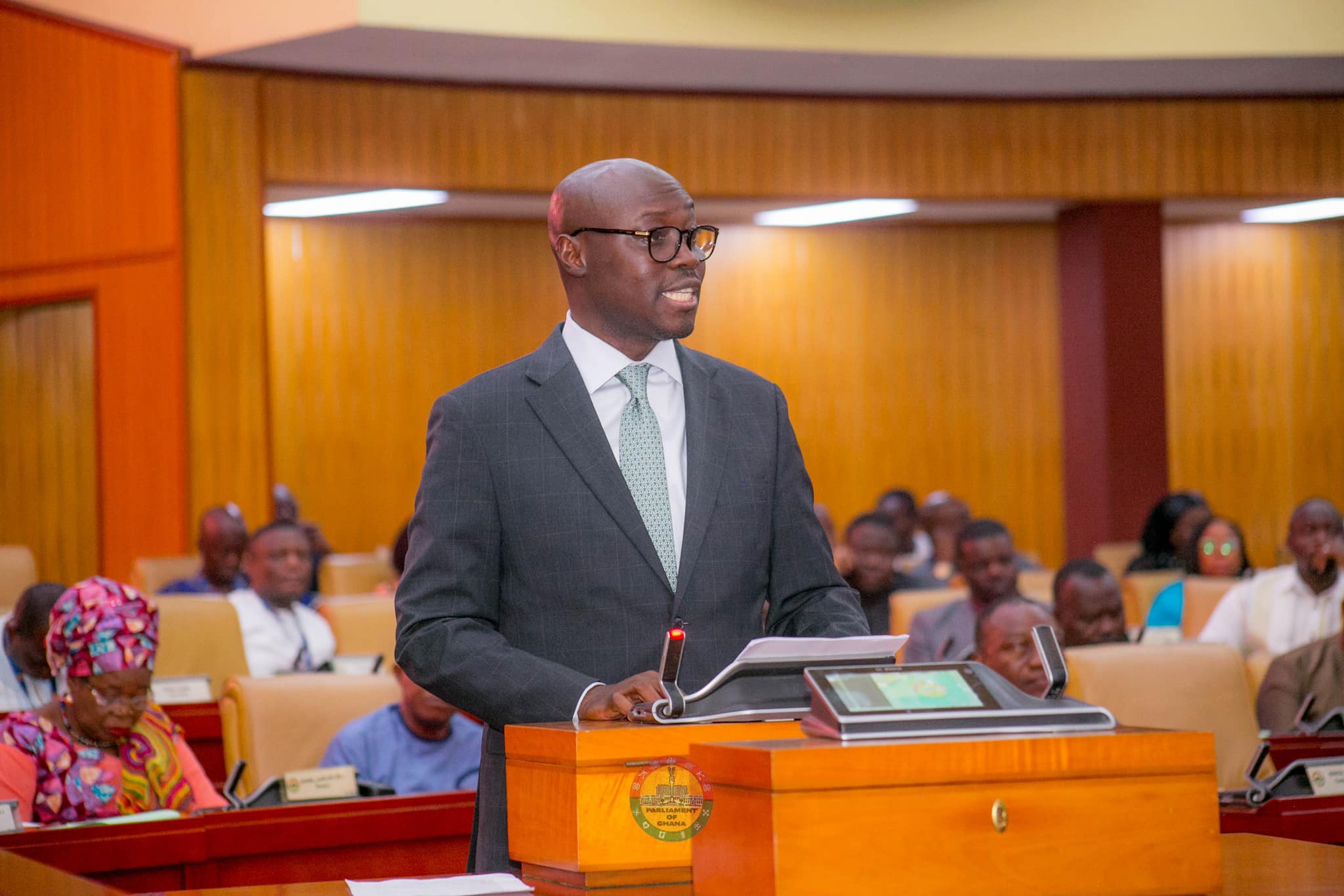
Finance Minister Dr Cassiel Ato Forson has similarly maintained that Eurobond borrowing is not included in the government’s 2026 financing plans.
“We are not in a hurry to go onto the international capital markets,” he said, adding that Ghanaians would be informed if the need arose.
This refusal to borrow simply because money is available may be one of the clearest demonstrations of Ghana’s post-crisis policy reset.
Governments often interpret restored market access as an achievement in itself. But market access is only a financing option. Its value depends on the price, maturity, currency, intended use and capacity of the financed project to repay the obligation.
The strongest negotiating position belongs to a borrower that can walk away. By demonstrating that it does not urgently need Eurobond financing, Ghana can wait for its credit rating to improve, global rates to become more favourable and its domestic finances to strengthen.
Premature issuance could lock taxpayers into an unnecessarily high coupon and establish an expensive benchmark for subsequent borrowing by the government and Ghanaian companies.
The IMF says Ghana’s debt outlook has improved substantially, with its risk of debt distress moving from high to moderate. Central government debt has reportedly declined to about 45% of gross domestic product a level previously expected only around 2034.
That progress strengthens the argument that fiscal adjustment and debt restructuring are working. It does not mean the country has unlimited borrowing space.
Debt-to-GDP ratios can improve because of economic growth, inflation, exchange-rate movements or restructuring. The durability of the improvement therefore depends on the quality of fiscal policy, the government’s financing mix and its ability to prevent new arrears and contingent liabilities.
Energy-sector shortfalls, state-owned enterprise losses and unpaid obligations can accumulate outside headline debt figures before eventually returning to the public balance sheet.
Professor Peter Quartey, Director of the Institute of Statistical, Social and Economic Research, has consequently warned against a hasty return to Eurobonds and renewed dependence on external commercial debt.
His concern reflects the central lesson of Ghana’s crisis: debt becomes most dangerous when borrowing is disconnected from productive investment and repayment capacity.
Ghana should not permanently reject global capital markets. International bonds can support long-term infrastructure, diversify financing and establish benchmarks for private-sector issuers.
But any return must follow a different model.
Borrowing should finance projects capable of generating measurable growth, export earnings, fiscal revenue or foreign-exchange savings. The government should disclose the intended use of proceeds, expected returns and repayment arrangements before issuance.
Currency risk must also be treated as a central cost rather than an afterthought. A project earning cedis while its debt is serviced in dollars can become financially unsustainable after depreciation.
Greater parliamentary scrutiny, transparent debt reporting and independent project evaluation would help ensure that external borrowing does not again become a substitute for revenue mobilisation or expenditure control.
The immediate investor pressure is therefore good news, but declining to act on it may be even better news.
It shows that Ghana is beginning to understand the difference between being able to borrow and being ready to borrow.
The real proof of recovery will not be the day Ghana issues another Eurobond. It will be whether the country can enter global markets on its own terms, invest the proceeds productively and repay without forcing another generation to restructure yesterday’s optimism.

