


- Women Take More Than 60.00% Of DBG Lending as Ghana Redirects Capital Towards Productive Sectors
Development Bank Ghana is emerging as an increasingly important channel for Ghana’s effort to redirect finance towards sectors capable of generating jobs, expanding domestic production and reducing the economy’s exposure to import dependence, with women-led and women-owned businesses accounting for more than 60.00% of its lending since inception.
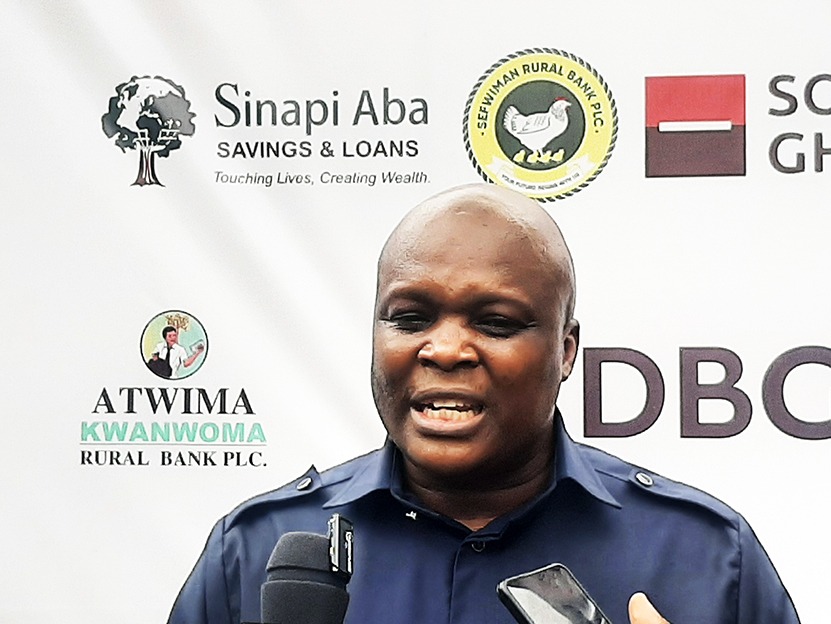
DBG has disbursed more than GH¢2.50 billion to almost 1,000 enterprises, according to Chief Executive Officer Prof Randolph Nsor-Ambala. About half of the businesses reached are located outside the Greater Accra Region, suggesting that development finance is beginning to move beyond Ghana’s dominant commercial centre.
The composition of the portfolio is significant. More than half of DBG’s disbursements have gone into agriculture, agribusiness and manufacturing, while about 40.00% has been directed towards micro, small and medium-sized enterprises.
“There are components of those disbursements that have gone into energy transition. There are components; about 40% of that disbursement has gone into micro, small, and medium enterprises,” Prof Nsor-Ambala said.
The figures point to a deliberate attempt to address one of Ghana’s longstanding economic weaknesses: the shortage of patient and affordable capital for businesses operating in sectors where commercial banks may view risks as too high or returns as too long-dated.
DBG was established to play a different role from a conventional commercial lender. Its purpose is not simply to maximise short-term lending volumes but to channel capital towards activities with the potential to create wider economic benefits.
That distinction matters in an economy where access to finance remains one of the most persistent constraints facing smaller businesses. Ghanaian enterprises frequently contend with high borrowing costs, collateral requirements and limited access to long-term funding, making it difficult to invest in machinery, expand production or formalise operations.
DBG’s strategy is aimed directly at that financing gap. “Our focus areas are essentially agriculture, manufacturing, ICT, and what we call high-value services,” Prof Nsor-Ambala said, identifying education, health, transport and tourism among the service sectors targeted.
The economic logic is straightforward: finance should be directed towards productive capacity rather than consumption alone.
Prof Nsor-Ambala said the bank’s priorities were informed by evidence about where Ghana could achieve the greatest economic transformation. “This speaks to the heart of what Ghana requires to be able to achieve its aspiration around a massive industrialisation footprint.”
The GH¢2.50 billion figure should therefore be viewed as an input rather than an end result. The real measure of the programme will be whether the businesses receiving finance increase production, productivity, employment, exports and tax contributions.
The gender composition of the lending is particularly striking. More than 60.00% of DBG’s disbursements have gone to women-led and women-owned enterprises, placing women at the centre of the bank’s development-finance strategy.
That matters because women entrepreneurs remain disproportionately represented in smaller businesses and sectors where access to formal finance can be particularly difficult. Redirecting capital towards them could therefore have effects beyond the immediate beneficiaries.
If financing allows women-owned firms to acquire machinery, hire workers, enter formal supply chains and expand into larger markets, the impact can multiply through households and local communities.
But the headline percentage alone is not enough to establish success. Development finance ultimately has to be judged by outcomes such as business survival, revenue growth, repayment performance, employment creation, productivity and the ability of firms to scale.
That will be one of DBG’s most important tests as its portfolio expands.
Agriculture and agribusiness form another central part of the strategy. DBG has identified value chains including maize, rice, cassava, sorghum and poultry for targeted intervention.
This approach is more significant than simply providing loans to farmers. Ghana’s agricultural constraints often lie across entire value chains, from production and inputs through storage, processing, logistics and distribution.
Financing a farmer without financing the processor, warehouse operator or distributor downstream can leave large parts of the value chain underdeveloped. DBG’s emphasis on interconnected value chains therefore represents a more integrated approach to agricultural finance.
Prof Nsor-Ambala linked the strategy directly to employment. “Top among those reasons are jobs that need to be created. And we are here, we are talking about decent jobs that deliver on upward social mobility and economic empowerment,” he said.
He also connected agriculture to macroeconomic stability. “Aside from the jobs, there’s the other element around food security, and that food security translates into lower economic pressures, i.e., inflation, exchange rate problems because of high levels of imports,” he said.
That argument is important for Ghana. When domestic production fails to keep pace with consumption, food imports increase foreign-exchange demand and expose consumers to international commodity prices, freight costs and currency depreciation.
Expanding domestic agricultural output can therefore function as both industrial policy and macroeconomic policy.
The geographical spread of DBG’s lending is equally relevant. Around half of the enterprises reached are outside Greater Accra, while Prof Nsor-Ambala said the bank has established a footprint in every region except one.
That decentralisation matters because Ghana’s economic activity remains heavily concentrated in Accra and a small number of major cities. For development finance to contribute to structural transformation, capital must reach regions where agriculture, manufacturing, tourism and logistics opportunities are located.
An agribusiness in northern Ghana or a manufacturing company in Ashanti can generate productive activity without relocating to Accra. The distribution of financing across regions may therefore become as important as the total amount disbursed.
The bigger question is what happens after the loans are made.
DBG can address the financing constraint, but it cannot independently solve unreliable electricity, poor logistics, taxation uncertainty, weak infrastructure or regulatory bottlenecks. Those factors will determine whether financed businesses can grow beyond survival.
That means the performance of the bank should increasingly be assessed through the economic activity generated by its portfolio rather than simply the volume of capital deployed.
A strong development bank is not one that lends the most. It is one whose capital helps build firms that eventually become more productive, more competitive and less dependent on continued intervention.
For now, the direction of travel is clear. Women-owned businesses are taking the majority share of financing, agriculture and manufacturing account for more than half of disbursements, MSMEs receive about 40.00%, and roughly half of beneficiary businesses are outside Greater Accra.
Those numbers suggest DBG is positioning itself as more than a lender. It is becoming an instrument of Ghana’s industrial and regional-development policy.
The ultimate test will be whether the GH¢2.50 billion produces businesses capable of standing on their own, expanding output and competing with imported products. If that happens, the significance of DBG’s portfolio will lie not in how much it has lent, but in how much productive capacity that capital has created.

