


- World Bank blames fiscal controls for delays in Ghana’s US$350 million flood project
The World Bank has blamed fiscal controls introduced by the Ministry of Finance for major delays in the implementation of Ghana’s US$350 million Greater Accra Resilient and Integrated Development Project, warning that funding restrictions have slowed critical flood mitigation works despite the project remaining fully financed.
The Bank’s latest project restructuring paper shows that implementation of the GARID Project has been “significantly constrained” by fiscal measures introduced in 2025, including a ceiling on project disbursements and the temporary transfer of GH¢13.80 million from the project’s designated account.
The restrictions created severe cash-flow shortages, resulting in delayed contractor payments, unpaid Interim Payment Certificates and slower execution of civil works designed to improve flood risk management in the Odaw River Basin and other vulnerable areas of the Greater Accra Metropolitan Area.
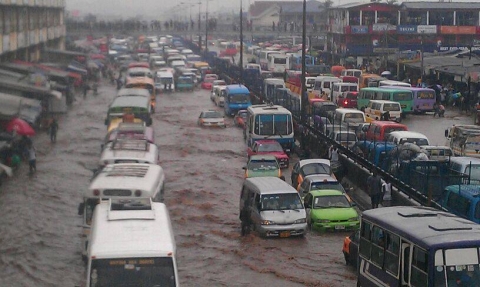
The findings have taken on renewed urgency following the June 29 floods in Accra, which killed at least 12 people and again exposed the capital’s long-running failure to deal with drainage, stormwater management, settlement planning and flood preparedness.
GARID is one of Ghana’s flagship urban resilience programmes. It was approved in 2019 with original World Bank financing of US$200 million, before additional financing of US$150 million was approved to expand flood mitigation, solid waste management and urban upgrading interventions.
The project is intended to improve flood risk management and solid waste management in the Odaw River Basin, while expanding access to basic infrastructure and services in selected flood-prone communities.
But while the project’s development objectives remain broadly achievable, implementation on the ground has slowed.
According to the World Bank, detailed engineering designs for most approved civil works have been completed, except for the Ayidan landfill, but construction has lagged. Several contractors are behind schedule, and decisions on whether to terminate or restructure persistently underperforming contracts have not yet been taken by government.
The World Bank has downgraded the project’s implementation performance to “Moderately Unsatisfactory,” reflecting concerns over funding disruptions, weak execution momentum and mounting contract-management risks.
The Bank warned that prolonged delays could increase project costs through contractor claims, price adjustments, penalties, procurement delays and resettlement-related complications.
Although GARID retains enough total financing to achieve its objectives, the Bank said the interruption in funding flows has had “material operational consequences.”
The report said the original works category under the first financing had been exhausted because ongoing civil works continued to be paid from the original credit, even after the additional financing became effective. This happened because the project had not received the required Ministry of Finance authorisation to disburse against the additional financing.
Following a World Bank implementation support mission in February 2026, the Ministry of Finance processed a US$10.50 million withdrawal application, the first such withdrawal since November 2023. The Ministry also returned the previously transferred GH¢13.80 million to the project account in March 2026 and submitted a formal restructuring request to allow funds to be reallocated across expenditure categories.
However, the Bank said these actions have only partially eased the liquidity constraints and have not fully addressed the financing gap affecting works implementation.
For 2026 alone, the Project Coordination Unit estimates financing needs of about US$40.80 million. The Ministry of Finance has so far allocated only about US$17.50 million, leaving a significant shortfall.
In addition, a commitment authorisation request covering US$79.80 million in civil works contracts remains pending approval.
The World Bank warned that continued delays in securing authorisations could undermine implementation momentum and lead to further contract disruptions.
The financing bottlenecks are also visible in the project’s disbursement record. As of April 14, 2026, cumulative disbursements stood at US$137.66 million, representing about 40.00% of the total US$350 million project financing.
The Bank noted that disbursement activity had been limited through 2024 and 2025, with the April 2026 withdrawal marking a resumption after an extended pause. The project experienced virtually no disbursements for about 16 months, from November 2023 to March 2026, due to government fiscal controls affecting access to project funds.
The Ministry of Finance has indicated that additional fiscal space for GARID will be reassessed during the 2026 Mid-Year Budget Review, subject to overall budget conditions. It has also signalled plans to resume commitment authorisations gradually as fiscal conditions improve.
The World Bank, however, has stressed that predictable funding will be essential if the project is to continue satisfactorily through to its December 2027 closing date.
Beyond financing, the project also faces environmental, social and resettlement challenges. The report said environmental and social performance is rated Moderately Unsatisfactory, with some contractors yet to deploy the full complement of required specialists or secure all mandatory national environmental permits. Site observations also identified gaps in community health and safety, including inadequate warning signage and traffic management at active worksites.
Resettlement has also progressed more slowly than expected due to funding constraints. More than 3,370 project-affected persons have been profiled but remain in limbo because compensation payments have not yet been completed.
These delays are affecting the sequencing of civil works because affected households have not been physically relocated, creating scheduling difficulties for linked infrastructure works.
Despite the setbacks, the World Bank said some key results have been achieved. The flood early warning system has been fully established and is operational, while solid waste collection from underserved low-income communities has exceeded annual targets.
However, the absence of a visible public warning before the June 29 floods has raised fresh questions about whether the early warning infrastructure is being deployed effectively enough to protect lives and property during severe rainfall events.
The World Bank said a more comprehensive review of GARID may become necessary once predictable funding flows are restored. Such a review would reassess timelines, reflect the cost implications of past delays and determine whether the project can still be completed in a manner consistent with its development objectives.
The country has secured substantial financing for one of its most important flood resilience projects, yet fiscal controls and administrative bottlenecks have slowed the delivery of the very infrastructure needed to reduce the human and economic cost of flooding in Accra.
With the capital continuing to suffer annual flood disasters, the challenge is no longer only about funding availability. It is about execution, coordination, discipline and the political will to ensure that financed projects translate into drains, waste systems, resettlement, early warning and safer communities before the next rains arrive.

