


- Africa Must Build Businesses That Outlive Their Founders to Compete Globally — KGL Chairman
Africa must fundamentally rethink how it develops and sustains businesses, moving beyond the proliferation of small and medium-sized enterprises to building large, globally competitive companies capable of surviving successive generations, KGL Group Executive Chairman Alex Apau Dadey has argued.
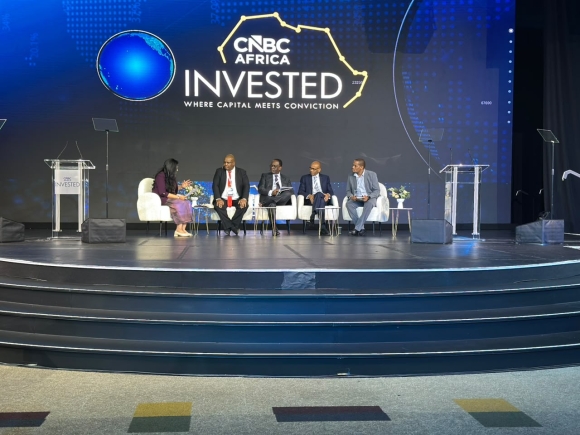
Speaking at CNBC Africa’s inaugural INVESTED 2026 Forum in Gauteng, South Africa, Mr Dadey warned that the continent’s economic transformation would remain constrained unless governments, investors and entrepreneurs deliberately create an environment that allows African-owned businesses to grow into multinational corporations.
His intervention raises a central question confronting Africa’s private sector: why does a continent with considerable entrepreneurial activity continue to produce relatively few indigenous corporations capable of competing globally and enduring beyond their founders?
Mr Dadey maintained that while small and medium-sized enterprises remain essential to employment creation and economic participation, their proliferation alone should not constitute the ultimate measure of entrepreneurial success.
Instead, Africa must develop systems that enable successful businesses to progress from small enterprises into medium-sized companies, large corporations and eventually diversified conglomerates.
“One thing that I’m also very passionate about, as you mentioned, is building transgenerational African champions.”
He described the emergence of such institutions as fundamental to Africa’s long-term development ambitions.
His argument points to a structural weakness in the continent’s business landscape: the difficulty of converting entrepreneurial success into enduring corporate institutions.
Across many African economies, enterprises begin with strong founders, promising commercial models and identifiable market opportunities but face difficulties expanding beyond their initial markets.
Limited access to patient capital, infrastructure constraints, regulatory uncertainty, weak succession planning and inadequate corporate governance can restrict their ability to scale.
While these obstacles differ across countries and industries, they collectively influence whether domestic enterprises can compete with multinational corporations that enjoy deeper financing networks, established management systems and access to international markets.
For Ghana, the discussion is particularly relevant as the country seeks to strengthen indigenous participation in industrial production, technological innovation and regional trade.
Ghana has produced successful businesses across financial services, manufacturing, telecommunications and other sectors, yet building more internationally competitive Ghanaian-owned corporations remains a long-term economic challenge.
The question is not simply how many companies are established each year, but how many can sustain profitability, mobilise investment, enter new markets and remain operational when their founders relinquish control.
Mr Dadey identified capital, government policy, infrastructure, corporate governance and business strategy as critical areas requiring reform.
The inclusion of governance is particularly significant because companies seeking to operate across generations must develop institutional structures that extend beyond the personalities and commercial relationships of their founders.
Professional management, independent oversight, transparent financial reporting and effective succession arrangements can improve organisational resilience and support access to long-term investment.
These mechanisms are also important for attracting institutional investors, who often require evidence that a business can operate sustainably without depending excessively on one individual.
A founder-led business may achieve considerable commercial success, but sustaining that success through multiple leadership transitions requires a different level of organisational discipline.
The challenge becomes even more pronounced when companies seek to operate across multiple African jurisdictions, each with different regulatory frameworks, tax systems, infrastructure conditions and market characteristics.
Mr Dadey’s remarks were delivered during a panel discussion titled Gauteng as Africa’s Business Bridge: Infrastructure, Logistics and the Race to Remain Competitive.
The discussion examined Gauteng’s role as an investment and commercial centre and its potential contribution to strengthening regional trade and economic integration.
Moderated by Renuka Methil, Managing Editor of Forbes Africa, the panel included Jacob Mamabolo, Gauteng’s Member of the Executive Council responsible for Infrastructure Development; Teddy Daka, Chief Executive Officer of Zutari; and Mpho Kubelo, Chief Risk Officer of South Africa’s Industrial Development Corporation.
The participation of infrastructure, investment and private-sector executives reflected the interconnected requirements of building competitive African enterprises.
For companies seeking to expand regionally, access to capital alone is insufficient if poor transport connections, inefficient logistics and fragmented regulations increase the cost of cross-border operations.
Mr Dadey therefore placed considerable emphasis on strengthening commercial relationships between Ghana and South Africa.
He argued that both countries possess complementary opportunities in technology, infrastructure, investment and business development that could support the emergence of stronger African-owned enterprises.
Ghana’s position as host of the African Continental Free Trade Area Secretariat provides a platform for advancing such cooperation.
However, the existence of a continental trade framework does not automatically eliminate the commercial barriers confronting businesses.
Different regulatory requirements, financing conditions and operating costs can continue to complicate expansion, even where formal trade arrangements seek to improve market access.
For Ghanaian companies, greater collaboration with South African businesses could create opportunities to access technology, specialised expertise and more developed financing networks.
South African businesses could also benefit from partnerships that provide access to Ghanaian markets and wider opportunities in West Africa.
The larger economic objective would be to develop regional value chains in which African companies participate not merely as suppliers of raw materials but as producers, processors, distributors and owners of commercially valuable technologies.
Such cooperation could strengthen the practical benefits of the AfCFTA by supporting business relationships that translate regional integration into actual production and investment.
Mr Dadey drew on KGL Group’s own experience to illustrate the potential for African businesses to expand through technological innovation.
He explained that after relocating permanently to Ghana approximately 11 years ago, he and his team developed KGL into a major business operation by revenue, using technology to modernise activities within established sectors.
He cited Ghana’s lottery industry as an example of how digital technology can transform traditional commercial operations, improve efficiency and create opportunities for wider market participation.
KGL’s technology-driven activities have subsequently extended into Côte d’Ivoire and other African markets, demonstrating the company’s ambition to export business models and technological capabilities beyond Ghana.
The example reinforces a broader argument that Africa’s economic competitiveness increasingly depends on its ability to develop and commercialise locally generated solutions.
Technological innovation offers companies opportunities to expand without necessarily replicating the physical infrastructure required by conventional business models.
However, successful regional expansion still requires investment in operational systems, regulatory compliance, cybersecurity, customer relationships and management capacity.
The ability to scale a business across borders therefore depends on combining innovation with strong institutional foundations.
Beyond enterprise growth, Mr Dadey challenged a narrow interpretation of public-private partnerships.
He argued that cooperation between governments and businesses should not be confined to commercial infrastructure projects or investments designed primarily to generate financial returns.
Private-sector institutions, he maintained, also have a role in supporting social development through investments in healthcare, education and community infrastructure.
He highlighted KGL’s involvement in healthcare projects, educational initiatives and scholarship programmes as examples of private-sector contributions to broader development objectives.
The argument broadens the responsibilities of successful African corporations beyond their immediate commercial activities.
Companies capable of operating across generations require stable societies, educated workforces, functioning infrastructure and institutions that support productive economic activity.
Investment in these areas can therefore complement commercial expansion while contributing to improvements in human capital and community welfare.
However, effective public-private collaboration also requires accountability, transparency and clarity about the responsibilities of participating institutions.
Social investments should complement public development priorities without weakening government’s obligation to provide essential services.
For Ghana, the discussion comes at a time when policymakers are increasingly emphasising private-sector participation in economic transformation.
The government’s proposed US$10 billion New Economy Programme for 2027–2030, for example, places considerable emphasis on investment in productive sectors and the expansion of domestic industrial capacity.
Yet achieving those objectives will require businesses capable of mobilising substantial financing, managing complex operations and undertaking investment projects over extended periods.
This is where Mr Dadey’s emphasis on trans-generational institutions becomes particularly relevant.
Economic transformation cannot depend exclusively on short-lived entrepreneurial ventures or businesses whose survival is tied to the continued involvement of individual founders.
It requires companies that accumulate expertise, reinvest profits, develop management capabilities and maintain long-term strategies despite changes in leadership or ownership.
Such institutions can also provide continuity in employment, supplier relationships, technological development and export activity.
The implications extend to Africa’s capital markets and financial systems.
Businesses seeking to move from medium-sized enterprises into large corporations frequently require financing arrangements that extend beyond conventional short-term bank lending.
Equity investment, corporate bonds, private capital and other long-term financing structures can support expansion, provided companies meet appropriate standards of governance and financial disclosure.
Improving access to these financing channels could therefore become an important component of building more competitive African-owned businesses.
Nevertheless, financing reforms alone will not resolve the challenge.
Corporate leaders must also demonstrate a willingness to professionalise management, share ownership where commercially appropriate and establish succession arrangements capable of preserving business continuity.
Governments, meanwhile, must provide predictable regulatory frameworks, effective infrastructure and investment policies that reward productivity and innovation.
The central challenge confronting Africa is not a shortage of entrepreneurs but the difficulty of converting entrepreneurial activity into durable institutions with the scale, governance and financial strength to compete internationally.
Mr Dadey’s intervention at the INVESTED 2026 Forum therefore shifts attention from business formation to business longevity.
For Ghana and other African economies, success should increasingly be measured not only by the number of new enterprises created, but by how many develop into substantial employers, expand across borders and sustain their operations for decades.
The continent’s long-term economic transformation will depend on building companies that can survive their founders, compete beyond national boundaries and retain a greater share of the value generated from African markets.
That is the challenge Mr Dadey has placed before governments, investors and business leaders: to move beyond celebrating entrepreneurship and begin building enduring African corporate institutions.

