

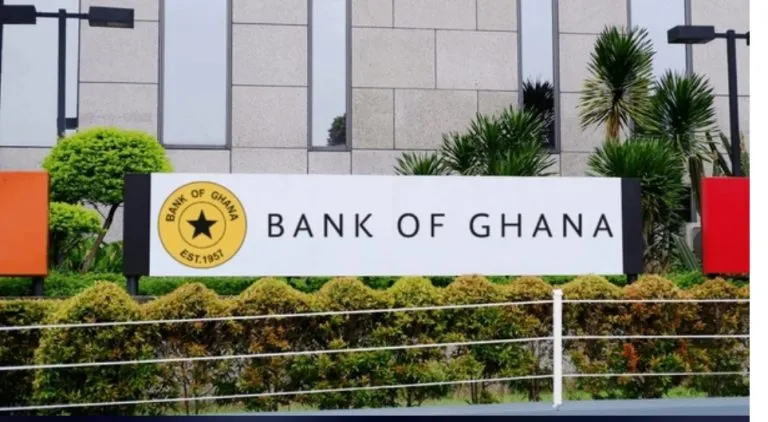

- Bank Of Ghana Names 19 Unlicensed Loan Apps, Warns Financial Institutions Against Processing Transactions
The Bank of Ghana has identified 19 mobile lending applications operating without the required regulatory licence or authorisation, escalating its efforts to address unauthorised digital lending and protect consumers from potential abuses involving personal data, lending practices and financial transactions.
The central bank, in a notice dated November 17, 2026, disclosed that the applications were operating contrary to the Directive for Digital Credit Service Providers in Ghana, introduced in September 2025.
The announcement, issued under Notice No. BG/GOV/SEC/2026/45, forms part of a coordinated regulatory intervention involving the Bank of Ghana and the Cyber Security Authority to address activities in Ghana’s expanding digital credit market.
Beyond warning members of the public against dealing with the identified operators, the central bank has extended its regulatory caution to banks, specialised deposit-taking institutions and payment service providers, raising the prospect of broader enforcement action against unlicensed digital lenders and the financial channels through which they operate.
The Bank of Ghana stated, “The Bank of Ghana, in collaboration with the CyberSecurity Authority, continues to take steps to sanitise the digital credit space and protect the public from entities providing digital credit services without the requisite licence or authorisation.”
The notice identifies the following 19 mobile lending applications as operating without the requisite authorisation, Cedi Trust, CediCredit, Codo, Easy Moni, EasyRate Loan, Focus Loan, Gaga Credit, Hold Cash, Hope Funds, Mondi Money, Monifi, Pulse Cash, Quick Loan – Easy Cash Loan, Score Cash, Sika Bosea, Sika Prime, SikaPadi, SmoothCash, and SoarCredit.
The disclosure marks a significant regulatory warning in Ghana’s financial technology industry, where digital platforms increasingly provide consumers with access to short-term credit outside conventional bank branches.
While digital lending has the potential to improve financial inclusion and provide access to emergency financing, the expansion of the industry also creates challenges relating to consumer protection, responsible lending, customer information and regulatory accountability.
The Bank of Ghana’s latest intervention highlights the importance of distinguishing legitimate digital credit providers from operators conducting lending activities without the necessary regulatory approval.
In its notice, the central bank expressed particular concern about the implications of unauthorised lending operations for customer data privacy and consumer protection.
It stated that the operations of the identified entities constitute significant violations of customer data privacy, consumer protection requirements and established regulatory standards.
The allegations are serious because digital lending applications can require users to submit personal and financial information as part of credit assessments and loan applications.
Such information may include identification details, telephone numbers, transaction histories and other sensitive customer data, depending on an application’s design and permissions.
Where lending operators operate outside the regulatory framework, questions arise about how customer information is collected, stored, processed and protected.
Consumers may also encounter difficulties seeking redress where disputes arise concerning loan terms, repayments or the handling of personal information.
However, the central bank’s notice does not provide individual findings against each application or specify the particular data practices attributed to the operators.
Its disclosure should therefore be understood as an official regulatory identification of unlicensed providers rather than evidence establishing every possible form of misconduct by each named application.
The September 2025 directive provides the regulatory framework through which digital credit service providers are expected to obtain the necessary authorisation and comply with applicable requirements.
The broader objective is to ensure that technological innovation in lending develops within a financial system that protects consumers and maintains accountability.
For Ghana, the issue is particularly relevant because the rapid expansion of mobile money and electronic payment services has created opportunities for lenders to reach customers through mobile phones.
The Bank of Ghana’s November Summary of Economic and Financial Data shows that registered mobile money accounts reached 87.50 million in October 2026, while active accounts stood at 27.10 million.
Mobile money transactions also reached 1.09 billion during October, with a reported transaction value of GH¢552.10 billion.
These figures demonstrate the scale of Ghana’s digital payments ecosystem, although they do not establish how many mobile money users borrow through digital lending applications.
The growth of digital payment infrastructure can support innovation in credit delivery, but it also increases the importance of ensuring that financial products offered through digital channels comply with regulatory requirements.
The latest warning therefore carries implications beyond the 19 applications identified.
One of the most consequential elements of the Bank of Ghana’s notice is the warning directed at regulated financial institutions.
The central bank explicitly cautioned banks, specialised deposit-taking institutions and payment service providers against facilitating or processing transactions on behalf of unlicensed loan providers.
This shifts the regulatory focus beyond the lending applications themselves to the wider financial infrastructure supporting their transactions.
Digital credit businesses may rely on payment platforms and financial institutions to receive funds, disburse loans and collect repayments.
Restricting the involvement of regulated financial institutions could therefore affect the ability of unauthorised operators to conduct financial transactions.
The notice does not, however, announce that any named provider’s accounts have already been frozen or that payment channels have been shut down.
Instead, it establishes a clear regulatory warning to financial institutions concerning their dealings with unlicensed lenders.
For banks and payment service providers, the development reinforces the importance of customer due diligence, regulatory compliance and appropriate monitoring of business relationships.
Financial institutions may need to ensure that entities accessing their services for digital lending activities hold the necessary authorisation.
The warning also raises broader questions about the responsibilities of financial technology companies operating payment infrastructure.
As digital financial services become increasingly interconnected, regulatory failures involving one participant can create risks for customers interacting with other service providers.
Effective supervision therefore requires coordination across banks, non-bank financial institutions, payment service providers and cybersecurity authorities.
The Bank of Ghana has indicated that this coordination will continue.
It stated, “The Bank of Ghana will continue to collaborate with relevant state institutions to identify, investigate, and take appropriate enforcement action against such entities.”
The statement suggests that the publication of the 19 applications forms part of an ongoing enforcement process rather than the conclusion of regulatory intervention.
However, the notice does not specify penalties already imposed, investigations completed or a timetable for additional enforcement measures.
The central bank has also urged consumers to verify the licensing status of digital credit providers before using their services.
Members of the public have been advised against engaging with unlicensed loan providers and encouraged to report suspected unauthorised operations.
Reports can be submitted to the Bank of Ghana’s Fintech and Innovation Department through its designated communication channels, including telephone or text number 292 and the email addresses fintech@bog.gov.gh and digitalcredit@bog.gov.gh.
Reports may also be submitted to the Cyber Security Authority at report@csa.gov.gh.
For consumers already dealing with digital credit applications, the warning underscores the importance of verifying regulatory status through the official Bank of Ghana website rather than relying solely on an application’s availability on a mobile platform.
The central bank’s action also raises an important policy question about the future of digital credit in Ghana.
Digital lending can provide useful financing alternatives for individuals and small businesses that face difficulties accessing conventional banking products.
However, expanding access to credit without adequate safeguards can expose borrowers to inappropriate lending practices, information security risks and difficulties obtaining regulatory protection.
The challenge for regulators is therefore not simply to restrict unauthorised lenders but to establish an environment in which properly licensed providers can innovate competitively while maintaining appropriate consumer safeguards.
For financial technology businesses, regulatory compliance should be viewed as a central requirement for sustainable operations rather than a secondary administrative obligation.
For consumers, access to fast credit must be balanced against the need for transparent terms, secure handling of personal information and access to reliable complaints mechanisms.
The Bank of Ghana’s latest intervention ultimately reinforces a fundamental principle: the convenience of digital lending does not remove the obligation to comply with financial regulation.
As Ghana’s digital finance ecosystem expands, the credibility of its lending market will increasingly depend on the ability of regulators to distinguish authorised providers from unlicensed operators and ensure that financial institutions do not facilitate unauthorised activities.
The identification of 19 mobile loan applications represents another step in that process.
The longer-term test will be whether enforcement measures strengthen consumer confidence, improve industry compliance and allow responsible digital credit services to expand without exposing borrowers to unnecessary financial and data protection risks.

