

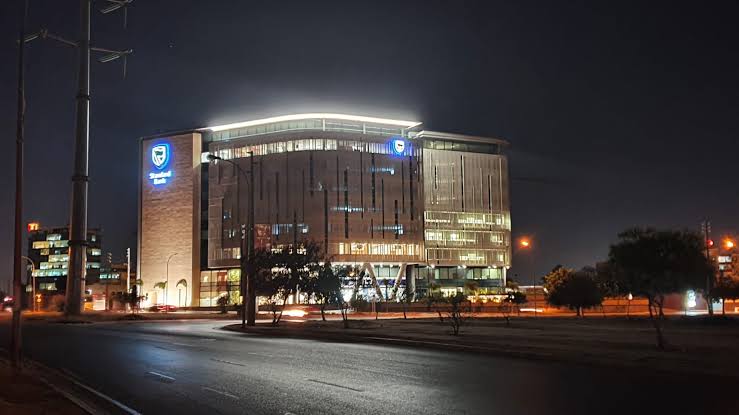

- Angola Puts 34.00% Standard Bank De Angola Stake on Market in US$215.00m–US$261.00m Offering
Angola is preparing to sell a 34.00% stake in Standard Bank de Angola through a public share offering that could raise between US$215.00 million and US$261.00 million, converting part of an asset seized from former insurance executive Carlos São Vicente into publicly traded stock.
The country’s Capital Market Commission has approved the sale of 4.76 million shares, with the offer scheduled to run from September 11 to September 25. Trading on the Angola Debt and Securities Exchange, BODIVA, is expected to begin on September 30.
Shares will be offered at between Kz41,220 and Kz50,000 each, meaning the final proceeds will depend on the price selected and the number of shares taken up by investors. At the bottom of the range, the transaction could generate roughly US$215.00 million, rising to about US$261.00 million if the full offer clears at the top end.
The transaction is significant not only because of its size, but because it combines three policy objectives: privatisation, expansion of Angola’s domestic capital market and a potential increase in foreign strategic ownership of one of the country’s established banks.
South Africa-based Standard Bank Group already owns 51.00% of Standard Bank de Angola and has the right to acquire an additional 24 percentage points through the offering. If it takes up its full entitlement, its ownership would increase to 75.00%, while another 10 percentage points in the sale would be available to other investors and the Angolan state would retain a 15.00% interest.
That structure creates an important policy tension.
On one hand, a larger Standard Bank Group stake could bring greater strategic commitment, capital and integration into a pan-African banking network. On the other, if most of the offer is absorbed by the existing majority shareholder, the transaction may deepen private ownership without necessarily creating a broad new class of domestic shareholders.
The shares form part of a 49.00% interest previously controlled by Carlos São Vicente, the former chairman of AAA Seguros. Angolan authorities seized the stake before he was convicted in 2022 of offences including embezzlement, tax fraud and money laundering and sentenced to nine years in prison.
That background should be separated carefully from the economics of the present sale.
The US$215.00 million to US$261.00 million valuation is derived from the number of shares being offered and the published price range. It should not be interpreted as the amount recovered in São Vicente’s criminal case or the value of funds he was convicted of misappropriating.
The offering follows Angola’s successful listing of telecommunications company Unitel, which raised about US$329.00 million from the sale of a 15.00% stake in July. Investor applications exceeded the number of shares on offer, producing a subscription rate of about 121.00%.
That makes the Standard Bank transaction an important second test of whether investor appetite can extend beyond telecommunications into financial services.
According to Angola’s Capital Market Commission, all 14 million shares in Standard Bank de Angola, rather than only the 4.76 million shares included in the offering, are expected to be admitted to trading. That could improve transparency and price discovery around the bank even though only part of the equity is changing hands through the current transaction.
The sale also fits into Angola’s broader strategy of reducing direct state ownership in commercial assets while attempting to deepen a capital market that remains small compared with exchanges in Johannesburg, Cairo, Casablanca and Lagos.
For Angola, the longer-term question is whether privatisation can do more than transfer assets from the state to existing strategic investors.
A deeper capital market requires broader participation by pension funds, institutional investors and households, as well as sufficient free float and trading activity after listing. Without that, even large offerings can remain relatively concentrated ownership transactions rather than catalysts for genuinely liquid public markets.
There is also a governance dimension.
Turning a previously seized private stake into a transparent public offering gives the government an opportunity to demonstrate that recovered assets can be returned to productive economic use rather than simply remaining on the state balance sheet.
But the credibility of that process depends on transparent pricing, equal access for eligible investors and clear disclosure of risks.
The Standard Bank deal could therefore become an important measure of whether Angola’s privatisation agenda is evolving into a broader capital-market development strategy.
If the offering attracts strong demand from a wide investor base, it could reinforce confidence generated by the Unitel IPO and encourage further listings. If most of the stake is absorbed by Standard Bank Group, the transaction may still be commercially successful but will deliver a narrower contribution to market broadening.
The headline amount is consequently only part of the story.
Angola may raise as much as US$261.00 million from the sale, but the deeper test is whether the transaction can convert a seized asset into a more transparent, investible and genuinely broader public market.

