
- BoG Mops Up GH¢19.06bn Through 14-Day Bills
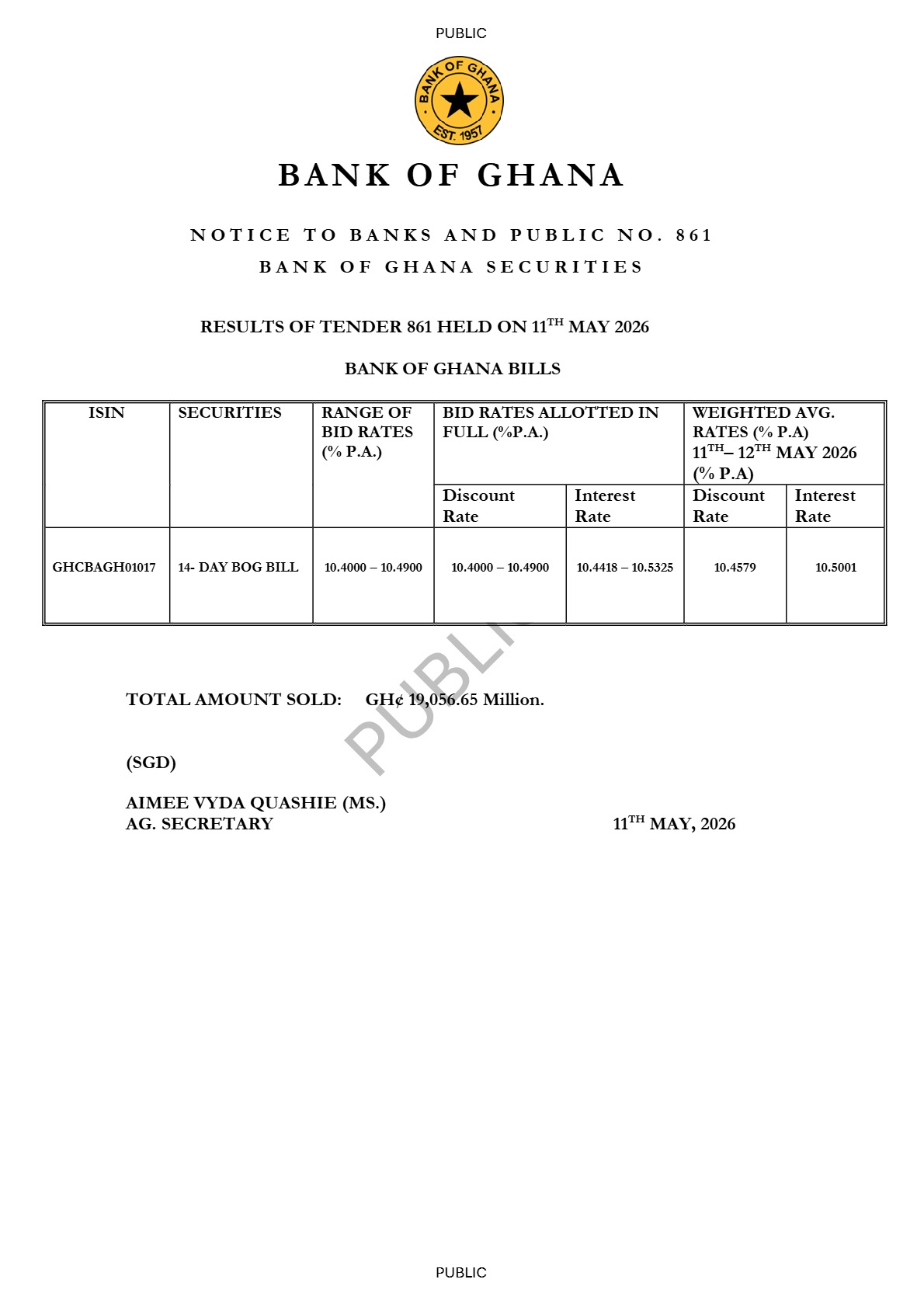
The Bank of Ghana sold GH¢19.06 billion in short-term securities through its latest 14-day Bank of Ghana Bill auction, as the central bank continued to manage liquidity conditions in the domestic money market. According to results of Tender 861, held on May 11, 2026, the central bank allotted the 14-day bills at a weighted average discount rate of 10.4579%, equivalent to an interest rate of 10.50% for the period May 11 to May 12, 2026.
The range of bid rates submitted for the instrument was between 10.4000% and 10.4900%, while bid rates allotted in full were also within the same band. The interest rate range allotted in full stood between 10.44% and 10.53%. The total amount sold was GH¢19.06 billion, making the auction one of the more significant short-term liquidity operations by the central bank in recent weeks.
Bank of Ghana bills are typically used as a monetary policy instrument to absorb excess liquidity from the banking system and support short-term interest rate management. The latest auction comes at a time when Ghana’s short-term interest rate environment has adjusted sharply lower, following a significant decline in inflation and a series of monetary policy easing decisions.
However, the size of the auction suggests that liquidity management remains an important part of the central bank’s policy operations, even as inflation has eased and money market rates have compressed.
For banks and money market participants, the 14-day bill offers a short-duration investment instrument, while helping the central bank sterilise excess liquidity that could otherwise create pressure in the foreign exchange or inflation environment.
The auction also points to continued demand for low-risk short-term instruments, especially within a market still adjusting to lower yields across Treasury bills and government securities.
Overall, the May 11 auction reinforces the Bank of Ghana’s active liquidity management stance, with the central bank using short-tenor bills to anchor money market conditions while preserving flexibility in a rapidly changing macroeconomic environment.