- Cambodia Notice Sparks Concern Among African Migrants as Authenticity Questions Emerge
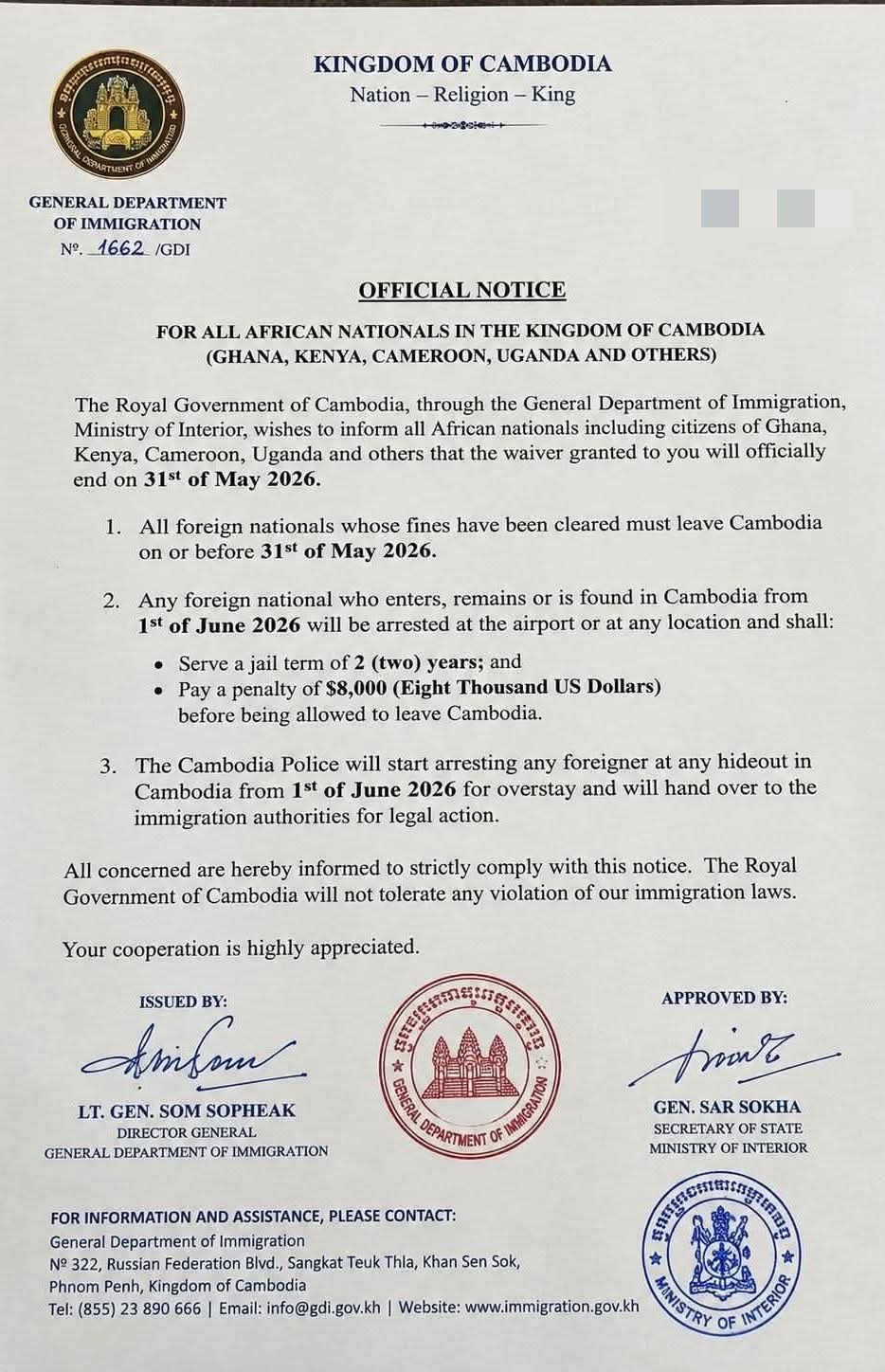
A purported immigration notice circulating online has sparked concern among African nationals in Cambodia after warning citizens of Ghana, Kenya, Cameroon, Uganda and other African countries to leave the Southeast Asian country by May 31, 2026, or risk arrest, imprisonment and heavy financial penalties. The document, attributed to Cambodia’s General Department of Immigration under the Ministry of Interior, states that a waiver granted to affected African nationals will officially end on May 31, 2026.
According to the notice, “all foreign nationals whose fines have been cleared must leave Cambodia on or before 31st of May 2026.”
It further warns that any foreign national who remains in Cambodia from June 1, 2026, could be arrested at the airport or any other location, serve a two-year jail term, and pay a penalty of $8,000 before being allowed to leave.
The notice also claims that Cambodian police will begin arresting foreigners at “any hideout” from June 1 for overstaying and hand them over to immigration authorities for legal action.
Several Ghanaian media outlets have reported the directive as an official Cambodian immigration order. The media reported that the notice orders African nationals, including Ghanaians, Kenyans, Cameroonians and Ugandans, to leave Cambodia by May 31 or face arrest and prosecution.
Pulse Ghana also reported that affected African nationals risk imprisonment and an $8,000 fine if they remain in Cambodia after the deadline.
However, caution remains necessary. Techeconomy reported that it could not independently verify the authenticity of the viral notice and said checks on official Cambodian government and immigration websites did not immediately show a corresponding advisory. It also noted that questions had emerged online about the formatting and wording of the document, with some commentators suggesting it could be fake or unofficial.
That uncertainty is important because the document contains visible irregularities, including the heading “Kingdom of Camboulia” instead of Cambodia, a spelling error that would be unusual in a formal state notice.
The notice also appears to single out African nationals as a category, a move that would raise serious diplomatic, legal and human rights concerns if confirmed as official policy.
For Ghana, the development comes at a sensitive time, following recent evacuations of Ghanaian nationals from South Africa amid xenophobic tensions. It may place fresh pressure on the Ministry of Foreign Affairs to verify the notice urgently and advise Ghanaian citizens in Cambodia on the proper course of action.
If the notice is genuine, affected Ghanaians and other African nationals would face an extremely short compliance window before enforcement begins. If it is fake, the circulation of the document could still create panic among migrant communities and expose citizens to misinformation, exploitation or rushed travel decisions.
Cambodia has in recent years faced international scrutiny over illegal migration, online scam operations and human trafficking networks involving foreign nationals. Techeconomy noted that the country has intensified enforcement actions linked to illegal immigration and cybercrime-related activities involving foreigners.
The issue now requires immediate clarification from Cambodian authorities and African diplomatic missions accredited to Cambodia.
Until then, affected citizens should treat the matter seriously but verify all instructions through official channels, including Ghana’s Ministry of Foreign Affairs, Ghana’s nearest diplomatic mission with responsibility for Cambodia, and Cambodia’s official immigration authorities.