

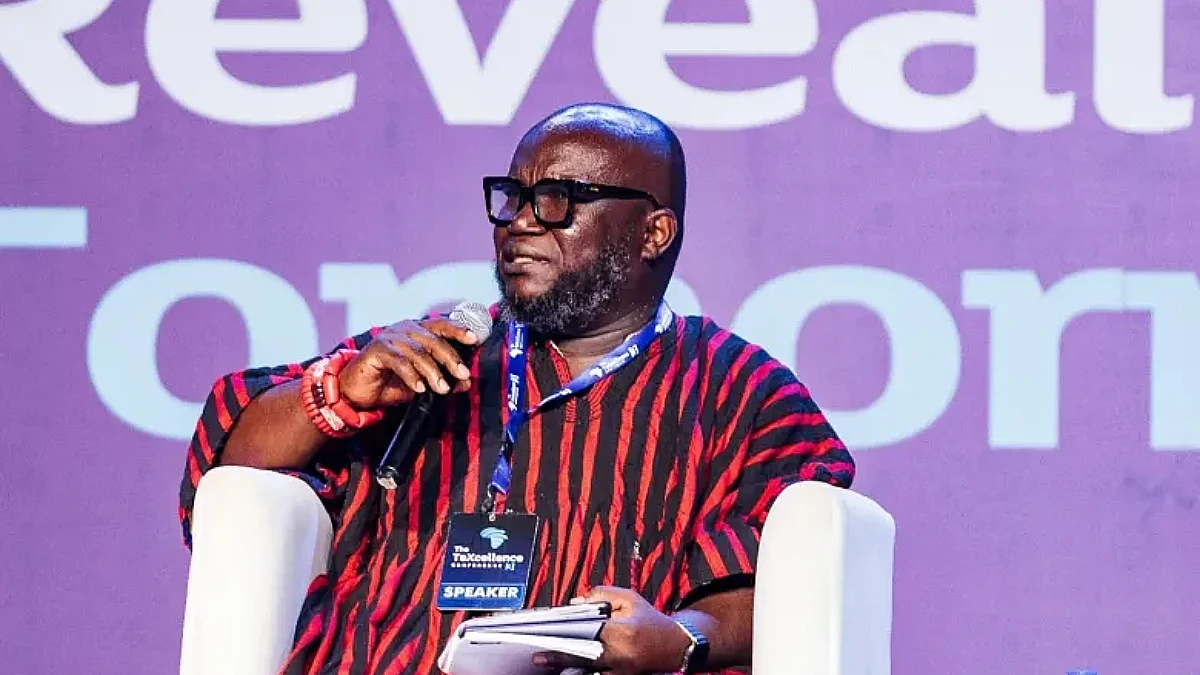

- Chamber of Mines backs private-sector mining model, demands bigger royalty share for host communities
Ghana should resist renewed calls for full state ownership of mines and instead strengthen partnerships with private investors while ensuring that host communities receive a larger share of mining revenues, Chief Executive Officer of the Ghana Chamber of Mines, Dr Kenneth Ashigbey, has said.
Speaking at the Chamber’s Mining for Development Forum in Accra, Dr Ashigbey said Ghana’s mining history offers important lessons on what works and what does not.
According to him, the period of full state ownership under the former State Gold Mining Corporation failed to deliver the level of growth, investment and production needed to transform the sector. By contrast, reforms that opened the industry to private-sector participation helped attract capital, expand production and improve Ghana’s position as a leading gold producer.
“We have tried full state ownership before,” he said. “The evidence shows that partnership between the state and the private sector works better.”
Dr Ashigbey said mining requires large-scale investment, technical expertise and long-term risk capital that governments alone are often unable to provide. Exploration and mine development, he noted, can require billions of dollars in upfront capital, with no guarantee of commercial success.
He argued that the more practical role of the state is to create a stable, transparent and predictable regulatory environment while allowing private investors to assume the geological, operational and commercial risks associated with mine development.
His comments come amid renewed debate over how Ghana can retain more value from its mineral resources at a time when gold continues to play a major role in export earnings, fiscal revenue and foreign exchange inflows.
Dr Ashigbey rejected claims that Ghana receives only a marginal share of mining revenues, saying such arguments often focus narrowly on royalties while ignoring the broader fiscal regime applied to the sector.
He said government earnings from mining extend beyond royalties to include 35.00% corporate income tax, free-carried interest, growth and sustainability levies, withholding taxes and other fiscal instruments.
According to figures presented at the forum, Ghana’s total government share from mining ranges between 51.00% and 57.80%, placing the country broadly in line with, or ahead of, several African mining jurisdictions, including Côte d’Ivoire, Guinea, South Africa, Burkina Faso and Tanzania.
“The conversation should not be limited to royalties,” he said.
Dr Ashigbey, however, stressed that Ghana must remain competitive if it is to attract the capital required to develop its mineral potential. He said investors also need reasonable returns to justify the risks involved in exploration and mine development, especially given the long gestation period of mining projects.
Despite defending the existing private-sector-led investment framework, the Chamber CEO said host mining communities continue to receive an inadequate share of the wealth generated from their lands.
He explained that mining revenues paid into the Minerals Holding Account are distributed with 78.00% transferred to the Consolidated Fund, 20.00% allocated to the Minerals Development Fund and 2.00% directed to the Minerals Income Investment Fund.
However, only about 8.00% of the Minerals Development Fund ultimately reaches traditional authorities and district assemblies, a situation he said does not sufficiently support development in mining districts.
The Chamber is therefore advocating that at least 30.00% of royalty revenues be channelled directly into host communities through dedicated development programmes with clearly defined spending priorities.
Dr Ashigbey questioned how much of the tax revenue generated by major mining operations ultimately returns to the communities that bear the direct social, environmental and infrastructure pressures associated with mining.
He said increasing the community share of mining revenues would help strengthen local infrastructure, improve social services, support livelihood programmes and reduce the sense of exclusion that often fuels tension in mining areas.
Dr Ashigbey also raised concerns about the structure of Ghana’s gold production, particularly the imbalance between output and fiscal contribution in the artisanal and small-scale mining sector.
According to figures presented by the Chamber, artisanal and small-scale miners account for approximately 52.00% of Ghana’s gold output, yet contributed only GH¢500,000 in royalties in 2025. This compares with roughly GH¢22 billion paid by the large-scale mining sector.
He said the figures highlight the urgent need to formalise small-scale mining, improve regulation, reduce smuggling, increase fiscal revenues and address the environmental damage associated with unregulated operations.
The Chamber, he noted, is working on a framework to help integrate small-scale miners into the formal economy while improving environmental, safety and responsible sourcing standards.
Dr Ashigbey said formalisation should not be understood only as enforcement, but as a development process that includes access to finance, training, geological support, mercury-free technology, traceability and market access.
For him, Ghana’s mining challenge is not simply about who owns the mines. It is about how the country builds a sector that attracts capital, retains value, protects communities and contributes more directly to industrial transformation.
“The goal is not simply to extract more gold,” he said. “The goal is to ensure that mining becomes a catalyst for industrialisation, local enterprise development and long-term national transformation.”
The Chamber’s position reflects a broader debate over the future of Ghana’s mining economy. While calls for greater national control over mineral resources continue to gain public attention, industry actors argue that the country must avoid policy choices that weaken investor confidence or reduce the flow of capital into exploration and production.
At the same time, there is growing consensus that the current model must deliver more visible benefits to communities where mining takes place.
For Ghana, the policy challenge is therefore to strike a balance: maintain a competitive investment climate, formalise the small-scale mining sector, increase local participation and ensure that host communities see a fairer share of the wealth extracted from their lands.

