
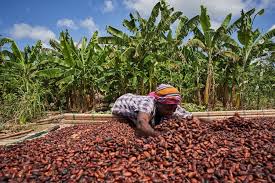

- Cocoa Rebounds to $4,099 Per Tonne, Offering Relief to Ghana’s Export Earnings
Cocoa prices have rallied about 20 per cent over the past month, offering a potential boost to Ghana’s export outlook and earnings prospects for the Ghana Cocoa Board if the recovery is sustained. The most active cocoa contract recently traded around $4,099 per tonne, reflecting a strong rebound from earlier lows as traders responded to weather-related supply concerns in West Africa and a rapid unwinding of bearish market positions.
The rally has been driven partly by adverse weather in Côte d’Ivoire, the world’s largest cocoa producer, where heavy rains and localised flooding have disrupted farming activity, transport and near-term supply flows.
The market has also become increasingly sensitive to broader climate risks, with concerns that changing rainfall patterns could affect crop development across West Africa in the coming months.
At the same time, short covering by speculators has added momentum to the price recovery, amplifying gains even in the absence of a major structural supply shock. For Ghana, the world’s second-largest cocoa producer, the rebound comes at a sensitive moment for the sector.
Government recently set the farmgate price at GH¢41,392 per tonne, equivalent to GH¢2,587 per 64-kilogramme bag, for the 2025/26 season, reflecting efforts to stabilise farmer incomes after earlier weakness in global prices.
If the international price recovery holds, it could improve COCOBOD’s earnings outlook, ease pressure on future farmgate pricing decisions and strengthen export revenue inflows.
The price rally could also offer some relief to Ghana’s cocoa financing position as the government considers reforms to the traditional cocoa funding model, including greater reliance on domestic capital market instruments to finance crop purchases.
Higher global cocoa prices, if matched by adequate production volumes, could improve foreign exchange inflows and support the broader external sector at a time when Ghana is working to preserve recent gains in cedi stability.
However, the benefit to Ghana will depend on more than price alone. The cocoa sector continues to face structural pressures, including output volatility, smuggling risks, ageing farms, disease, climate stress and financing constraints across parts of the licensed buying system.
A price rally without a strong production recovery may therefore provide only limited relief.
For farmers, sustained higher prices could strengthen the case for improved producer prices in future crop seasons. For COCOBOD, the key question will be whether stronger international prices translate into healthier margins, better liquidity and more predictable financing.
The latest rally nevertheless marks an important shift in market sentiment after months of pressure.
For Ghana, it presents an opportunity but also a warning. Global cocoa prices can recover quickly, but long-term sector resilience will depend on productivity, farm rehabilitation, climate adaptation and a financing model that does not leave the industry exposed whenever market conditions turn.

