


- Creating the Conditions for Lasting Diversification in Algeria
Algeria is one of Africa’s biggest energy exporters, with close ties to European energy markets. Hydrocarbons have long supplied most exports and much of public revenue, and have helped finance infrastructure, skills, and other priority investments. The opportunity now is to build on those strengths while creating new sources of growth that make the economy more resilient, as noted in the IMF’s recent Article IV assessment of the Algerian economy.
The authorities’ economic strategy rests on large investment projects and on nonhydrocarbon production and exports. The projects range from mining, food and water security to major upgrades in transport and trade infrastructure. To facilitate them, the authorities have streamlined procedures, strengthened governance, and made trade easier, including through recent investment, land and mining reforms, and a one-stop digital platform for investment, with the goal of helping firms invest, expand, and compete.
There are encouraging signs that these efforts are beginning to bear fruit. The nonhydrocarbon shares of real GDP and goods exports have risen gradually, and nonhydrocarbon export revenues have grown over the past decade. Even so, hydrocarbons still dominate exports; and the remainder is dominated by a handful of other products. The export base is broadening, but slowly.
Helping investment deliver lasting gains
Large projects can expand productive capacity, improve connectivity, and open new opportunities. They also require significant financing. In recent years, investment expansion has added to import demand and broader fiscal and external pressures. Getting the biggest return from these projects will require careful planning, prioritization, and implementation.
That makes the choice of projects as important as the amount spent. Directing money to those with the greatest economic impact would deliver stronger and more durable gains and help keep priority projects affordable. The full benefits of today’s investment will depend on whether it raises productivity, creates jobs, and helps build a more dynamic private sector.

Chart showing Algeria’s export mix is gradually broadening
Expanding opportunities for private enterprise
Public investment can lay the foundation for a dynamic private sector, which is essential. A more competitive private sector would expand exports, including in less carbon-intensive activities, and would strengthen resilience as global demand shifts toward lower-carbon products. To become more competitive, Algerian firms need efficient infrastructure, access to finance, appropriate skills, and effective institutions.
A more supportive business environment is central to this effort. Firms invest more readily when rules are predictable and when private companies and state-owned enterprises compete on a level playing field. Better access to finance and skills would help companies grow, adopt new technologies, and seize new opportunities. Continued support for entrepreneurship could enable more young businesses to scale up.
Together, these reforms would support private investment and activity that can be sustained over time.
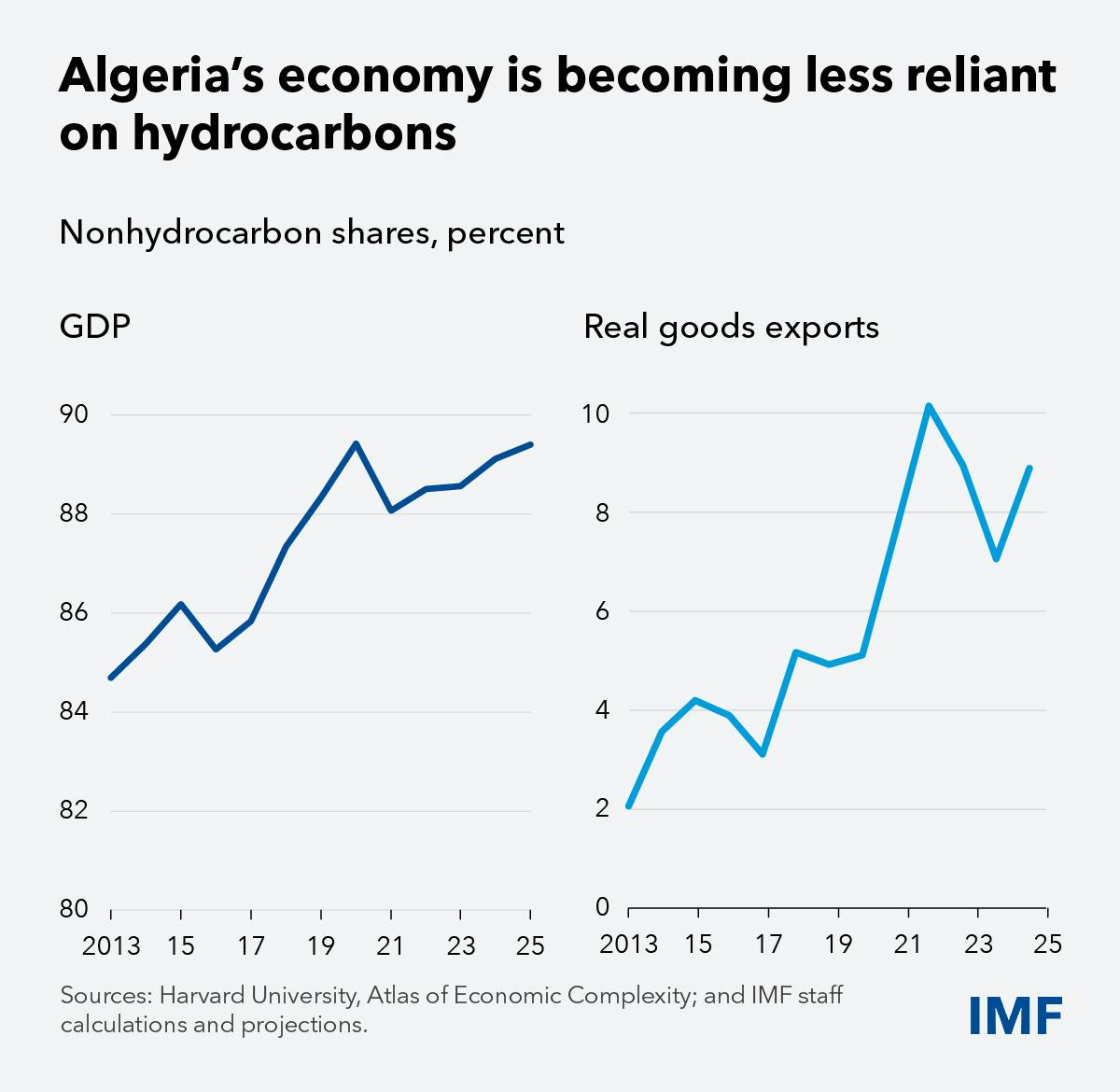
Chart showing Algeria’s economy is becoming less reliant on hydrocarbons
Sustaining momentum
Keeping growth on track also requires strengthening public finances and external buffers and easing financing pressures. Public investment can support diversification, but persistent fiscal deficits and financing pressures could make the broader investment program harder to sustain over time. Gradual fiscal consolidation can help, supported by more efficient spending and stronger nonhydrocarbon revenue. Done carefully, it can preserve priority investment and protect vulnerable households.
Hydrocarbon prices swing, and so do revenues. Stronger buffers and a more predictable approach to saving windfalls would help keep public investment steady when hydrocarbon prices fall. Higher hydrocarbon revenue now offers a chance to rebuild buffers.
Algeria has made encouraging progress toward a more diversified economy. Its natural resources, investments, reforms, and links with African and European markets provide important strengths on which to build. The challenge now is to turn today’s investments and reforms into lasting gains in jobs, productivity, and exports by unlocking a more dynamic private sector and building a more resilient economy.

