

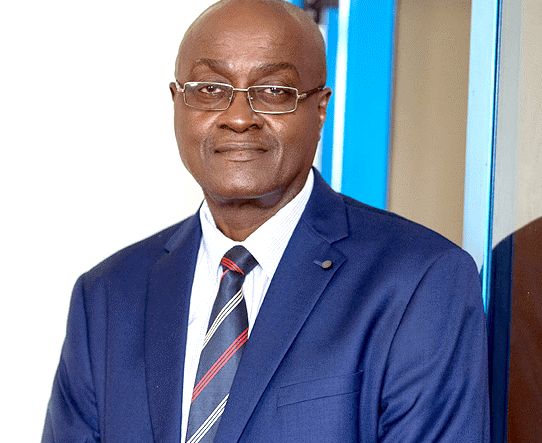

- Dr Atuahene Calls for BoG Fraud Compensation Framework to Protect MoMo Users
Financial sector analyst Dr Richmond Atuahene has called on the Bank of Ghana to establish a formal digital fraud compensation framework to protect mobile money users, warning that rising fraud in Ghana’s digital payments ecosystem threatens to weaken public trust and reverse years of progress in financial inclusion.
In a detailed paper titled “Combating Mobile Money/Digital Fraud in Ghana: Strategies for Securing Digital Payments,” Dr Atuahene argues that Ghana’s mobile money success story is now facing a serious test. According to him, the same digital platforms that have brought millions of people into the formal financial system are increasingly being exploited by fraudsters using social engineering, SIM-swap attacks, account takeover techniques and weaknesses in authentication systems.
“Digital payment fraud is a critical threat to Ghana’s financial inclusion gains,” Dr Atuahene warned, stressing that the country can no longer treat mobile money fraud as isolated incidents affecting only careless customers.
His central argument is simple but powerful: if consumers are losing money through system weaknesses, poor identity controls, SIM-swap vulnerabilities or unauthorised digital transactions, then banks, mobile network operators and fintech providers must bear clear responsibility where their systems fail.
That is why he is proposing a fraud compensation framework that will define the liability of service providers, create transparent channels for customer complaints, and ensure that victims of valid fraud claims are compensated within a defined timeframe.
For millions of Ghanaians, mobile money is no longer just a convenience. It is a bank account, a business tool, a savings platform and the main channel through which they receive, send and store money.
From market women and transport operators to salaried workers, small traders and rural households, mobile money has become deeply embedded in Ghana’s economy. It has supported financial inclusion, reduced dependence on cash and helped connect the unbanked to the formal financial system.
But Dr Atuahene says the sector’s rapid growth has created a dangerous gap between adoption and protection.
Ghana has built one of the most advanced mobile money ecosystems in the ECOWAS sub-region, supported by strong mobile penetration, agent networks and interoperability between wallets, banks and card products. Customers can now move funds between wallets and bank accounts with minimal friction.
However, he warns that this convenience has also broadened the attack surface for criminals.
“As digital volumes grow, fraud attempts have increased,” he noted, adding that criminal networks are targeting mobile channels because transactions move quickly and customer onboarding is often remote.
Dr Atuahene identifies the main fraud threats as SIM-swap fraud, social engineering, impersonation scams, mobile money agent fraud, mobile banking account takeover, synthetic identity fraud, false promotion fraud, agent impersonation, cash suppression and telecommunications fraud.
Among these, SIM-swap fraud stands out as one of the most damaging.
This occurs when fraudsters fraudulently take control of a customer’s phone number by transferring it to a new SIM card under their control. Once they control the number, they can intercept calls, text messages, one-time passwords and two-factor authentication codes.
That gives them access to mobile wallets, mobile banking applications and linked bank accounts.
“SIM-swap fraud is among Ghana’s most damaging scams,” Dr Atuahene wrote.
He explained that attackers may trick or bribe mobile agents to transfer a customer’s number to a new SIM. With control of the number, fraudsters can reset PINs, intercept OTPs and drain mobile money and linked bank accounts.
This is why the proposed compensation framework matters.
Many victims of mobile money fraud currently struggle to recover stolen funds. In several cases, the victim is blamed for negligence, even where the fraud involved weak internal controls, poor agent supervision, compromised authentication systems or delayed response by service providers.
Dr Atuahene’s argument is that the burden cannot always be pushed onto customers.
Where the failure comes from a bank, mobile money operator, telecom provider or fintech platform, the customer must have a clear path to redress.
He says the Bank of Ghana must adopt a formal framework that shifts liability onto financial providers and mobile network operators for internal security breaches and system vulnerabilities.
“Mobile Network Operators and Banks must be held directly accountable for security breaches occurring within their networks,” he stated.
Such a framework, he argues, would compel providers to invest more aggressively in identity verification, encryption, fraud monitoring, transaction controls and customer protection systems.
It would also force institutions to treat fraud prevention not as a public relations issue, but as a core operational obligation.
The scale of the problem is already significant.
Dr Atuahene notes that the Bank of Ghana records over 13,000 fraud incidents annually, with millions of cedis lost to scams that frequently rely on social engineering and digital platforms.
He also cites Cyber Security Authority data showing cyber fraud losses rising from GH¢2.4 million to nearly GH¢15 million within a single-year period, while combined fraud across banks and fintechs previously reached highs of GH¢88 million in a year.
According to the Ghana Bankers Association industry fraud report for January to March 2026, cited in his paper, mobile money fraud accounted for the highest number of cases, with 23 cases representing 31.50% of reported incidents.
Although the financial loss from mobile money fraud was relatively lower than some other categories, with GHS 143,108 attempted and GHS 142,038 in net losses, Dr Atuahene argues that the frequency and operational burden make it one of the most important fraud categories.
This is a critical point.
Mobile money fraud may not always involve one large spectacular loss. Instead, it often happens in repeated smaller attacks affecting ordinary users. The cumulative damage is financial, psychological and institutional.
Every successful scam reduces trust. Every unresolved complaint teaches consumers that the system may not protect them. Every victim who cannot recover funds becomes a warning to others.
That is why Dr Atuahene insists that Ghana’s digital finance agenda must move from access to resilience.
He makes the case that Ghana cannot continue celebrating mobile money growth while leaving consumers exposed to fraudsters who exploit system weaknesses.
Social engineering remains the most common route.
Fraudsters impersonate bank officials, telecom staff, mobile money agents or promotion officers. They call or text victims, claiming that their wallets have been blocked, that a wrong transfer must be reversed, that they have won a prize or that their account requires urgent verification.
The fraudster then pressures the victim to reveal a PIN, share an OTP or authorise a transaction.
Dr Atuahene describes this as psychological deception, not just technical fraud.
“The digital economy’s shift away from brute-force hacking toward psychological deception means everyday users bear the brunt of these crimes,” he observed.
The problem is now even reaching bank staff. In one case cited in the paper, a fraudster impersonated a bank staff member and contacted a branch directly, instructing a teller to process an urgent transfer. The request appeared official and was executed before the fraud was detected.
For Dr Atuahene, this shows that fraudsters are not only targeting customers. They are targeting institutional processes, staff judgement, internal communication channels and authority structures.
The proposed fraud compensation framework would therefore be only one part of a wider reform agenda.
Dr Atuahene also calls for stronger identity assurance at onboarding. Every wallet, he argues, must be opened under a verified identity, supported by real-time identity validation, biometric liveness checks and screening against high-risk profiles.
This would make it harder for criminals to create fake accounts or mule wallets for laundering stolen money.
He also recommends real-time transaction risk scoring. Under such a system, every transaction would be assessed before completion based on risk indicators such as unusual customer behaviour, new device use, recent SIM change, transaction size, account age and location.
High-risk transactions would trigger alerts, delays, blocks or additional verification.
Another key recommendation is SIM-swap detection integration. Banks and payment providers should be able to check directly with mobile network operators before approving large transactions. If a SIM swap occurred within the last 24 to 48 hours, the transaction should be flagged or held for additional checks.
This would help prevent the common fraud pattern where criminals drain accounts shortly after taking control of a victim’s SIM.
Dr Atuahene further recommends stronger monitoring of mobile money agents. Agents remain essential to financial inclusion, especially in rural and peri-urban communities, but rogue agents can facilitate fraud through fake reversals, inflated withdrawals, collusion and suspicious cash-out patterns.
He wants agent channels monitored using velocity checks, transaction pattern analysis and anomaly detection to identify suspicious behaviour early.
Artificial intelligence is central to his proposed solution.
He argues that banks, fintechs and mobile network operators must move from basic rule-based controls to AI-powered behavioural analysis. AI systems can study a customer’s normal digital behaviour, including typing patterns, device use, transaction history and app navigation, then flag unusual activity in real time.
“AI adoption in Ghana’s financial and telecom sectors had evolved from merely being an extra security layer to a central, heavily regulated foundation for proactive defence,” he wrote.
For him, the point is clear: fraudsters are becoming faster, more organised and more technologically sophisticated. The defence system must therefore become faster and smarter.
But technology alone will not solve the problem.
Dr Atuahene says the Bank of Ghana, Cyber Security Authority, National Communications Authority, banks, fintechs and telecom operators must build a stronger intelligence-sharing system. Fraud reports, suspicious numbers, rogue agents, compromised devices and blacklisted national ID numbers must be shared quickly across the ecosystem.
He also wants direct reporting channels for customers to report suspicious numbers, fraudulent transactions and agent misconduct to the relevant authorities.
Customer education must also be continuous. Users must be reminded never to share PINs or OTPs, never to respond to pressure tactics, and never to hand over their phones to unverified agents.
But Dr Atuahene’s strongest message is that customer education cannot replace institutional accountability.
If the system is weak, the customer should not carry the full cost of failure.
That is the heart of his call for a BoG-led fraud compensation framework.
Such a framework would send a strong message to the market: digital finance providers must protect customers, investigate complaints quickly, compensate valid claims and build systems strong enough to prevent avoidable fraud.
It would also help restore confidence among users who increasingly feel exposed in the fast-moving digital payments space.
Ghana’s mobile money revolution has been one of the country’s most important financial inclusion achievements. But as Dr Atuahene’s analysis makes clear, the next phase cannot be measured only by transaction volumes, wallet numbers or digital adoption.
It must be measured by safety, trust and accountability.
If Ghana wants to remain a leader in digital finance, it must protect the ordinary user who depends on mobile money every day.
Dr Atuahene’s proposal is therefore not just about fraud compensation. It is about the future credibility of Ghana’s digital financial system.
The country has built the rails for digital payments. Now it must build the safeguards.
Without trust, mobile money growth will become fragile. With trust, Ghana can deepen financial inclusion, expand digital commerce and protect consumers from the criminals seeking to profit from the very system built to empower them.

