


- Ethiopian Airlines Tops Africa’s 2026 Ranking as Continent’s Aviation Race Intensifies
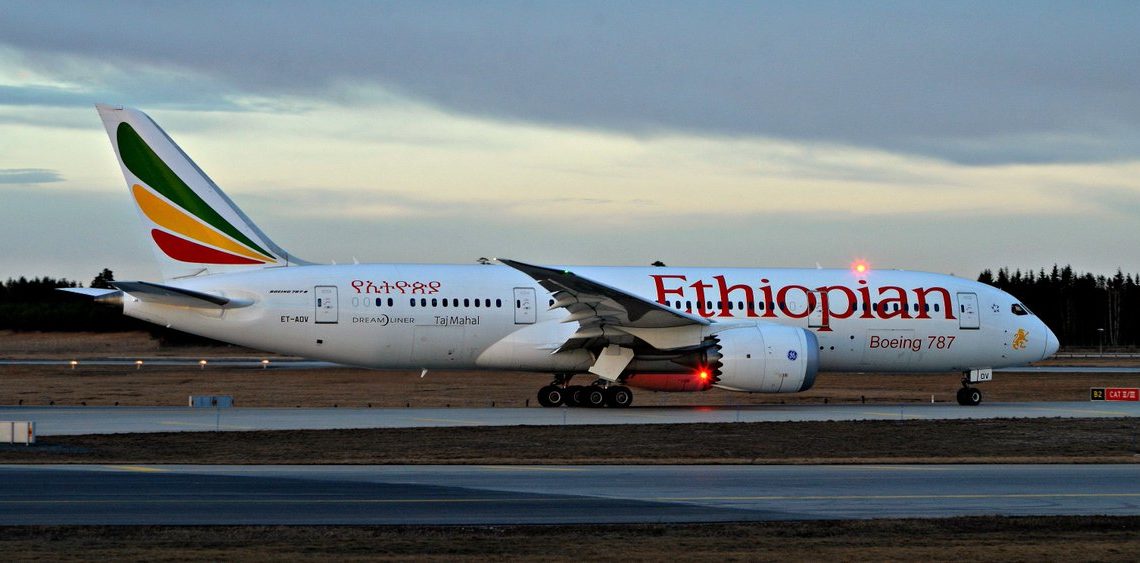
Ethiopian Airlines has been named Africa’s best airline for 2026, leading a Skytrax ranking that highlights the growing competition among carriers seeking to turn the continent’s expanding passenger market into stronger regional and global networks.
EgyptAir placed second and Air Mauritius third, followed by Royal Air Maroc and RwandAir, while South African Airways, Kenya Airways, FlySafair, Fastjet and LIFT completed the regional top 10.
The ranking comes as African aviation continues to contend with high operating costs, fragmented connectivity and infrastructure constraints even as passenger demand and international links expand.
The results form part of the 2026 World Airline Awards, which Skytrax describes as its “Passenger’s Choice Awards” because the rankings are determined by customer voting rather than assessments limited to a predetermined group of airlines.
The 2025/26 survey ran from September 2025 to August 2026 and involved travellers from more than 100 nationalities, with any airline globally eligible to be nominated. Skytrax says the survey includes value for money among its assessment components and screens entries to remove duplicate or ineligible submissions.
Ethiopian Airlines’ first-place position reinforces Addis Ababa’s emergence as one of Africa’s most important aviation hubs. The carrier has grown into the continent’s largest airline group and operates a fleet that includes Airbus A350s and Boeing 787s, 777s and 737s, with
Media reporting an owned commercial fleet of 147 aircraft and another 109 on order. Its network connects African cities with Europe, Asia, the Middle East and the Americas, while its scale allows Addis Ababa to function increasingly as a transfer point for journeys that might otherwise require connections outside the continent.
EgyptAir’s second-place ranking reflects the strategic importance of Cairo as another gateway between Africa and international markets.
The carrier has operated for more than eight decades and maintains passenger and cargo services across Africa, Europe, Asia, the Middle East and the Americas using aircraft including Airbus A330s and A320-family jets alongside Boeing 737s, 777s and 787s.
Skytrax also named EgyptAir Africa’s best economy-class airline in 2026, strengthening its showing beyond the overall regional ranking.
Air Mauritius took third place, highlighting the ability of a comparatively small island carrier to compete against airlines with considerably larger home markets.
Its fleet includes Airbus A350-900s, A330-900neos and ATR turboprops, while direct services and codeshare arrangements extend passenger access well beyond the destinations served by its own aircraft.
The airline’s position also reflects Mauritius’s geographic role linking Africa with Asia, Europe, Australia and the wider Indian Ocean region.
Royal Air Maroc ranked fourth and RwandAir fifth, with both carriers pursuing hub strategies built around connecting African traffic to wider international networks.
Casablanca gives Royal Air Maroc geographic reach into Europe, North America, the Middle East and West and Central Africa, while Kigali has become an increasingly important East and Central African connecting point for RwandAir.
Royal Air Maroc was separately named Skytrax’s best regional airline in Africa, while RwandAir won the award for best airline staff in Africa.
South African Airways placed sixth, continuing its effort to rebuild following years of financial distress and a business-rescue process that reshaped the carrier.
SAA emerged from business rescue in 2021 and has since been rebuilding routes and fleet capacity from Johannesburg and Cape Town, focusing on African destinations and selected international markets.
Skytrax’s 2026 awards also named SAA Africa’s cleanest airline, providing a service-quality distinction alongside its sixth-place regional ranking.
Kenya Airways ranked seventh, preserving Nairobi’s place among the continent’s major aviation hubs despite continuing financial and operational pressures.
The carrier served 47 destinations across Africa and international markets at the end of 2025 using a fleet of 37 owned or leased aircraft, including Boeing 787s, 737s, Embraer regional jets, freighters and Dash 8 turboprops.
Its position illustrates the strategic value of Nairobi’s location for East African connectivity even as the airline continues working through balance-sheet and operating challenges.
The final three positions demonstrate that Africa’s aviation competition is no longer confined to full-service flag carriers.
South Africa’s FlySafair ranked eighth, Zimbabwe-focused Fastjet ninth and South Africa’s LIFT tenth, showing that low-cost and newer-generation airlines are increasingly influencing customer perceptions of the continent’s best operators.
Skytrax separately ranked FlySafair first, Fastjet second and LIFT third among Africa’s low-cost airlines in 2026, making their appearance in the overall regional top 10 particularly notable.
FlySafair has built its business around high-frequency Boeing 737 services across South Africa while progressively adding regional destinations, including a Johannesburg-Lusaka route launched in September.
Fastjet has concentrated on Southern African connectivity, particularly routes linking Zimbabwe with South Africa, and in 2026 deployed an Airbus A320 on high-demand Johannesburg services from Harare and Victoria Falls.
LIFT remains mainly focused on Johannesburg, Cape Town and Durban, competing through flexible fares and a customer-oriented domestic model.
The ranking nevertheless exposes a continuing structural feature of African aviation: the continent’s strongest airlines are concentrated around a relatively small number of successful hubs rather than an integrated network of frequent direct connections between African cities.
Addis Ababa, Cairo, Casablanca, Kigali, Johannesburg and Nairobi provide important gateways, but passengers travelling between some African markets still face circuitous journeys, limited frequencies and comparatively high fares.
That weakness remains one of the major obstacles to using aviation more effectively to support intra-African trade, tourism and business mobility.
It is also important to treat the Skytrax order as a passenger-satisfaction ranking rather than a measure of airline profitability, financial strength, safety performance or network size. Customer perception can reward service quality, staff performance, comfort and value, while an airline facing financial difficulties can still score highly with travellers.
The rankings therefore reveal how passengers assess their experience, not which carriers necessarily have the strongest balance sheets or most sustainable commercial models.
Globally, Singapore Airlines was named the world’s best airline for 2026, ahead of Qatar Airways and Cathay Pacific, underscoring the distance African carriers still face in competing with the largest Asian and Middle Eastern operators for global prestige.
Yet Ethiopian’s regional leadership, the continued strength of EgyptAir and Royal Air Maroc and the rise of African low-cost carriers show a market becoming more diverse rather than less competitive.
For Africa, the bigger test will be whether stronger airlines can translate passenger approval into cheaper connectivity, larger route networks and a more integrated continental aviation market.

