


- Galamsey Fight Must Move Beyond Seizures to Financiers and Equipment Networks — Chamber of Mines
Ghana’s campaign against illegal mining is entering a more consequential phase: whether the state can move beyond arresting operators at mining sites to identifying the financiers, importers and commercial interests that supply the equipment sustaining the country’s galamsey economy.
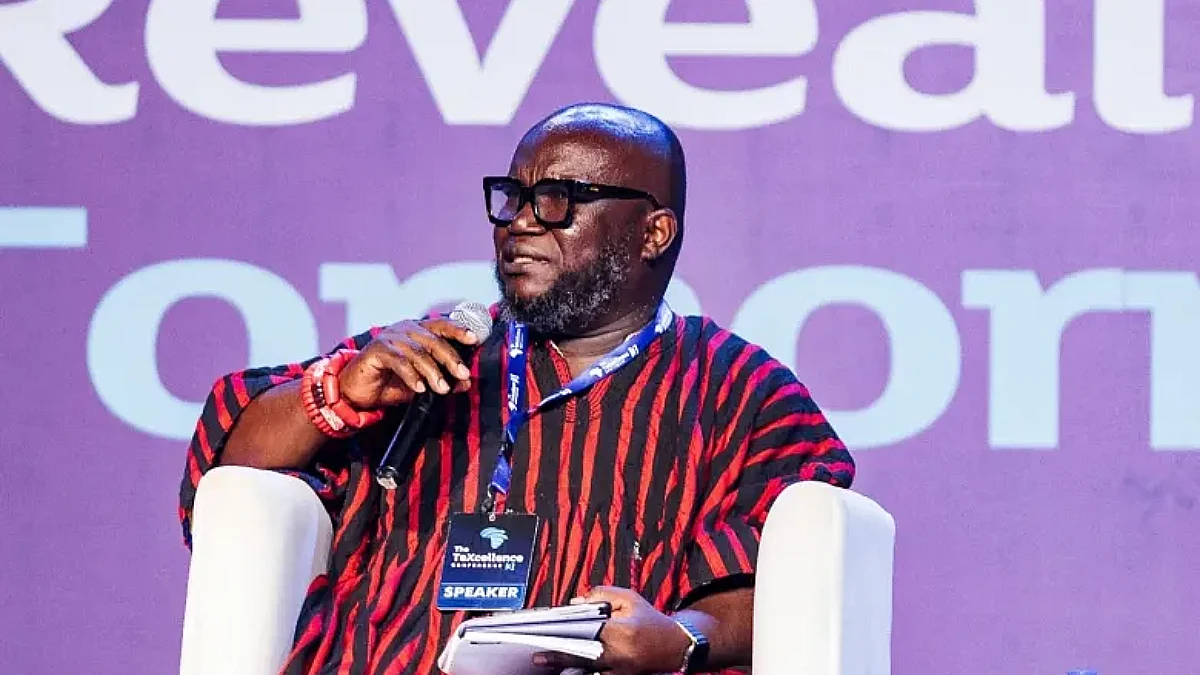
Dr Kenneth Ashigbey, Chief Executive of the Ghana Chamber of Mines, has urged security and intelligence agencies to investigate those importing excavators used in illegal mining and establish who ultimately pays for them.
“The Minister for Lands and Natural Resources has talked about excavators that have been seized and the next phase of the fight is trying to expose these people who have been importing them,” he said.
His intervention highlights a central weakness in Ghana’s enforcement strategy. Excavators and mine operators are visible at the scene of illegal mining, but the capital that finances machinery, logistics and operations is far less visible.
The document argues that excavators are not incidental tools but capital deployed into an illicit production system, making the machinery itself a potential route to those financing the wider operation.
Mr Ashigbey’s comments also come against the backdrop of growing concern over the wider economic damage caused by illegal mining. Communications Minister Samuel Nartey George has said galamsey accounted for 25.00% of fibre cuts recorded in 2026, with more than 8,000 cuts contributing to repair costs exceeding US$20 million. The figures underline that the cost of galamsey extends beyond polluted rivers and degraded farmland into telecommunications infrastructure and other parts of the economy.
For businesses, repeated damage to fibre infrastructure can translate into higher maintenance costs, service interruptions and additional spending on network resilience.
For government, it creates an uncomfortable fiscal contradiction because taxpayers may ultimately bear part of the cost of repairing infrastructure damaged by illegal activity that generates private profits. That asymmetry strengthens the case for targeting the commercial architecture behind galamsey rather than focusing only on visible operators at mining sites.
Mr Ashigbey’s proposed shift towards the excavator supply chain reflects a wider principle in economic-crime enforcement: disrupt the infrastructure and financing that make the underlying offence commercially viable.
“If you look at this, who were the people who imported them? Who paid for them? We should be able to track these people and deal with them,” he said. “They are bringing equipment that are used at the theatre of the crime that is being committed.”
Those questions could provide investigators with a framework for tracing an illegal mining network from machinery acquisition to production. Customs records could reveal who imported particular excavators, financial records could indicate who paid for them, corporate registries could identify beneficial owners and equipment records could help establish who ultimately controlled the machinery.
The source document argues that combining those strands could allow investigators to connect capital providers, suppliers, operators and the eventual proceeds generated from illegally mined gold.
That would represent a more sophisticated enforcement strategy than site-level arrests alone. Removing an excavator operator may interrupt one operation, but identifying and prosecuting the financier behind several machines could potentially affect an entire network. The economic logic is simple: where the supply of capital remains intact, seized equipment can be replaced and arrested operators can be substituted.
Mr Ashigbey also questioned whether Ghana’s intelligence architecture is sufficiently coordinated to pursue those financial connections. “What is happening to the intelligence community, so we urge the Minister for National Security and Interior, and again the intelligence community,” he said.
His criticism points to a coordination challenge in which relevant information may exist across several institutions but is not necessarily being connected rapidly enough to support investigations and prosecutions.
Illegal mining increasingly resembles an organised economic ecosystem rather than a collection of isolated informal operations. Heavy machinery requires financing and importation; mining requires access to land, fuel, labour and logistics; and the gold produced must ultimately find a buyer and enter formal or informal markets.
Each stage creates data that can potentially be investigated, provided state institutions have the legal authority, analytical capacity and willingness to connect it.
Banks and payment systems may contain financial trails, customs systems can identify importers, corporate registries can show beneficial ownership and telecommunications or logistics records may reveal relationships among participants, subject to the appropriate legal procedures.
The challenge is therefore not necessarily a complete absence of information. It is whether intelligence, customs, financial, corporate and law-enforcement agencies can integrate that information into cases strong enough to survive judicial scrutiny.
Excavator seizures remain operationally useful and politically visible, but the document cautions that seizures alone do not dismantle the business model. “If an excavator is removed while its financier remains unidentified, another machine can potentially replace it.
If an operator is arrested but the capital behind the operation remains available, the incentive structure survives,” it states. That makes the prosecution of financiers and knowing facilitators particularly important.
Any such approach would also need to protect legitimate businesses and uphold due process. Excavators have lawful uses in construction, agriculture, infrastructure and licensed mining, so ownership or importation cannot by itself be treated as evidence of criminal conduct.
The source stresses that enforcement should be intelligence-led and based on evidence of knowing facilitation, suspicious transactions, repeated equipment movements or demonstrable links to illegal mining operations.
The broader economic stakes extend far beyond environmental protection. Illegal mining creates a shadow economy in which private participants capture the proceeds while environmental and infrastructure costs are transferred to communities, companies and the state.
Polluted water increases treatment costs, damaged farmland reduces agricultural productivity, infrastructure repairs consume public and private resources, and regulators spend money pursuing operators.
That is why Mr Ashigbey’s core questions, who imported the machines and who paid for them, could become central to the next phase of Ghana’s anti-galamsey campaign.
The source concludes that success may ultimately be measured not by the number of excavators seized but by whether authorities can identify and dismantle the financial networks capable of replacing them. “The next phase, therefore, is not merely about finding the miners. It is about following the money to the people who make the mining possible.”

