


- Ghana Can Use Non-Interest Finance to Unlock Infrastructure Capital — Dr Shaibu Ali
Ghana’s emerging non-interest banking industry is confronting a challenge that may prove as important as regulation itself: convincing the public that a financial model historically associated with Islamic banking can become a mainstream source of capital for businesses, investors and development projects across the country.
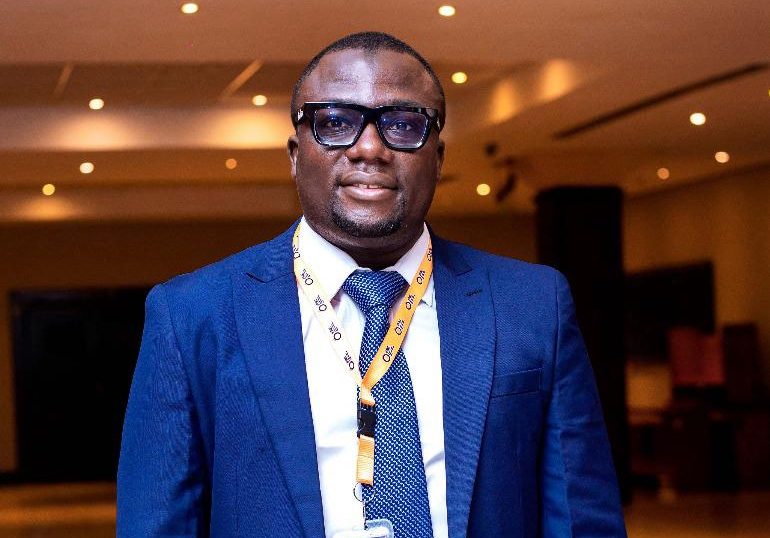
That was a central message from Dr Shaibu Ali, Director General of the Institute for Islamic Finance Research and Guidance Ghana, whose remarks at IFRIG’s National Dialogue combined a diagnosis of public scepticism with a broader case for treating non-interest finance as part of Ghana’s mainstream financial architecture rather than a niche product for one religious community.
The discussion comes as Ghana moves from policy debate towards implementation. The Bank of Ghana issued guidelines for the regulation and supervision of non-interest banking in January 2026, while the wider financial sector continues to develop the regulatory and institutional ecosystem needed to support the industry.
Dr Ali argues that the first obstacle is not necessarily a lack of demand for alternative financial products, but limited public understanding of how non-interest finance operates.
“From our experience at IFRIG, I think for the past close to almost a decade in this particular advocacy, I would like to say that one of the main reasons people have this perception is personally I would say lack of information, and again how non-interest banking, how they understand non-interest banking and finance and its operationalization,” he said.
That knowledge gap is particularly significant because the label “Islamic banking” can easily create the impression that the products are intended principally for Muslims. Dr Ali argues that international experience demonstrates that this interpretation is too narrow.
He pointed to the United Kingdom, where Muslims constitute a minority of the population but Islamic finance has become part of the broader financial system, and to Nigeria, where non-interest finance has similarly developed within a secular financial framework.
For Ghana, the distinction is increasingly relevant because the country is attempting to widen access to capital while conventional borrowing options remain constrained. The document notes that Ghana is emerging from a severe debt crisis and restructuring programme while infrastructure needs remain substantial, increasing the importance of private capital, public-private partnerships and other non-sovereign financing mechanisms.
Non-interest finance could therefore provide an additional pool of capital rather than simply replicate existing banking products.
Its potential extends beyond deposits and lending. Sukuk, an instrument that can be structured around identifiable assets or projects, could provide another avenue for financing infrastructure while attracting investors seeking alternative risk and return structures.
Dr Ali cited Qatar, Egypt, Senegal, Uganda, Sudan, Morocco, Kuwait, the United Arab Emirates and Nigeria as countries that have used Sukuk and related instruments to finance infrastructure and development.
He pointed to Qatar’s use of Sukuk in financing associated with the 2022 World Cup and cited Egypt’s US$1.5 billion Sukuk issuance in 2023, which he said supported transport, health and education.
Senegal, he added, raised roughly US$208 million through Sukuk for highway and urban development projects.
For Ghana, the significance of those examples is not simply that other countries have issued Sukuk. It is that these instruments can be tied to specific economic assets and development priorities, potentially giving governments another mechanism for mobilising long-term capital.
That matters for a country whose infrastructure requirements are unlikely to disappear even as concerns about debt sustainability limit the room for repeated conventional sovereign borrowing.
A properly regulated non-interest finance market could therefore widen the investor base without requiring every infrastructure transaction to follow the same debt structure.
Dr Ali described Nigeria’s experience as particularly instructive.
“You take Nigeria, our close-by neighbors that we fight on jollof within, you realize that almost about they raised so much to fund almost about 44 roads across their geopolitical zones,” he said.
He added that Nigeria’s recent issuances had been oversubscribed, suggesting that investors are increasingly judging non-interest instruments according to their financial characteristics rather than religious affiliation.
That observation goes to the centre of Ghana’s public-education challenge. If non-interest finance is marketed simply as Islamic banking, its potential customer and investor base may appear unnecessarily narrow. If it is presented instead as an alternative financial architecture built around distinct principles governing investment, ownership, risk and returns, the potential market becomes considerably wider.
Dr Ali said IFRIG’s research had found that many Ghanaians had heard of non-interest banking but possessed limited understanding of how the products operate.
“When people do not have enough information about something, they tend to naturally make assumptions about it,” he said.
The same challenge applies to investors, for whom confidence depends on more than branding. Financial innovation requires credible contracts, clear regulatory protections, disclosure standards and workable mechanisms for resolving disputes.
Ghana’s regulators therefore face the dual task of building rules and market credibility.
The Bank of Ghana’s January framework provides an important starting point by allowing the sector to move from conceptual debate towards regulated products and institutions. But the wider financial ecosystem, including capital markets and insurance, will determine whether non-interest finance becomes genuinely integrated into Ghana’s financial architecture.
Dr Ali also sees direct applications within Ghana’s infrastructure programme, including roads and schools.
He argued that non-interest bonds could potentially support the government’s infrastructure priorities, including plans for educational facilities, while expanding the range of financing mechanisms available to policymakers.
There is, however, an important caveat. Non-interest finance is not free money, and changing the contractual structure does not eliminate financial risk. Projects still require viable economics, credible sponsors, transparent procurement and predictable revenue streams. Investors will still demand compensation for risk, just as they do in conventional markets.
The opportunity therefore lies not in avoiding the discipline of finance, but in widening the mechanisms through which capital and risk can be organised.
For Ghana, the emerging question is less about whether non-interest banking belongs to one religious group and more about whether the country can build a commercially credible, transparently regulated and broadly accessible investment ecosystem.
Dr Ali’s conclusion was direct: “It’s happening everywhere, and I believe that yes, Ghana, we can do same.”
For a country searching for new sources of long-term development capital, the larger test is now whether Ghana can turn international experience into a credible domestic market — one in which religion is neither a prerequisite for participation nor a barrier to investment.

