

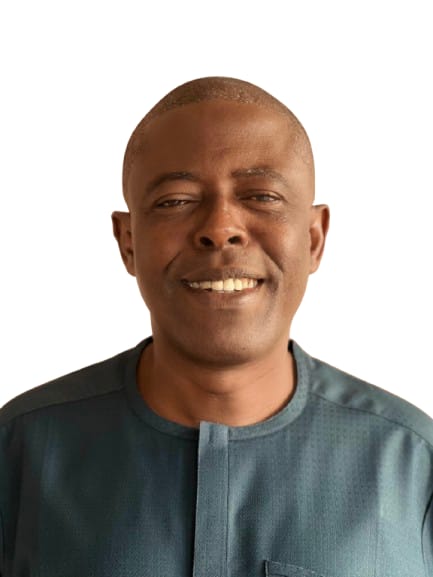

- Ghana Must Widen Financing Options as Non-Interest Finance Offers US$4tn Global Capital Pool — Nicholas Gbana
Ghana must broaden the range of financing instruments available to government and businesses if it is to fund infrastructure, support private-sector expansion and reduce its dependence on traditional sources of development finance, according to development economist and chartered accountant Nicholas Gbana.
Mr Gbana said the rapid expansion of the global non-interest banking and finance industry presents Ghana with an opportunity to tap an additional pool of capital that could complement financing from institutions such as the International Monetary Fund, World Bank and bilateral partners.
Speaking at a national dialogue on non-interest banking, he argued that Ghana’s financing challenge should not be viewed simply through how much money the country can borrow, but also through how effectively it diversifies the channels through which capital is mobilised.
“As a country, we need financing. I mean government needs financing for a wide range of things: infrastructure, social services. Business also needs financing. And so for me, any additional source of financing that expands the pool of capital, both to government and also to business, it’s welcome,” Mr Gbana said.
His argument comes against the background of Ghana’s persistent financing constraints. Public investment requirements remain substantial, while fiscal pressures have narrowed the government’s room to rely heavily on conventional borrowing. Businesses, particularly small and medium-sized enterprises, also continue to face difficulties securing suitable long-term finance for expansion.
Mr Gbana pointed to the scale of the international non-interest finance industry as evidence of the opportunity.
“If you look at the data, I mean this is an industry that, at the end of 2025, had global assets in excess of US$4 trillion. US$4 trillion. That is much more than the capital base of the World Bank and the IMF combined,” he said.
The significance, he argued, is not that Ghana should replace its established multilateral and bilateral financing relationships, but that a global capital pool of that size provides an additional route through which domestic and international funds could reach productive sectors of the economy.
“As a country, consistently we look more and more to the likes of the IMF, the World Bank, and also to bilateral countries for one kind of financing or the other. And so for me, if we have an additional pool like this, such a large pool, US$4 trillion and above, that gives us an additional option,” he said.
“It’s definitely not going to supplement what exists. What it does is that it gives us additional options to at least complement the financing we have with this new form of financing.”
That distinction is important for Ghana’s broader fiscal strategy. Non-interest finance cannot by itself resolve the country’s debt, revenue or expenditure challenges, but a more diversified financial architecture could allow government and businesses to match different projects with different forms of capital rather than depending overwhelmingly on conventional debt.
Mr Gbana said Ghana had been slow to embrace that opportunity.
“I have been, as a country, we’ve been too late to embrace this. So from my perspective, first and foremost, is to expand the range of options we have, both as a country and also for businesses to finance our development,” he said.
One of the most immediate possibilities is Sukuk, an instrument that can be structured around identifiable assets or projects and used to mobilise long-term capital for infrastructure.
Mr Gbana pointed to Nigeria’s use of Sukuk for road construction and other African examples involving housing.
“We’ve seen our counterparts in Nigeria, they have used sukuk to finance roads. Why? We can also do same in Ghana,” he said.
“We’ve seen, I think either Kenya or South Africa also, they’ve done some sukuks for housing. We can do same in Ghana.”
The potential relevance to Ghana is significant because infrastructure projects typically require long-term financing and predictable repayment structures. Appropriately designed Sukuk could link investment to specific assets or projects while opening participation to investors whose mandates limit exposure to conventional interest-based instruments.
But Mr Gbana cautioned that financial innovation cannot substitute for sound economic fundamentals.
“But I think that it’s important to note that the fundamentals that we see in Ghana must be right. And I think that as our macroeconomic fundamentals get right…” he said.
The warning is central to Ghana’s prospects of attracting non-interest capital at scale. Investors will still assess the credibility of the economy, institutional strength, currency risks, inflation, fiscal sustainability and whether underlying projects can generate adequate returns.
A strong legal and regulatory framework alone will therefore not be enough. Ghana would also need a credible macroeconomic environment capable of giving investors confidence that the risks attached to long-term commitments are manageable.
Mr Gbana also highlighted agriculture and SME financing as areas where non-interest banking could have particular relevance.
He pointed to Ijara, a leasing structure, as well as products for financing agricultural inputs, arguing that the range of instruments available could be adapted to different activities across the agricultural value chain.
“Well, looking at the range of products that exist in non-interest banking and finance, there are alternative products. For instance, you have ijara, which is a lease. You also have products, for instance, for financing inputs,” he said.
The flexibility matters in agriculture, where financing needs vary from seasonal inputs and equipment to processing facilities, storage, logistics and longer-term expansion capital.
Non-interest finance can also include structures resembling equity participation, allowing returns to be based on profit-sharing rather than simply interest charged on borrowed capital.
“There are also products that are almost similar to equity, to the extent that they provide profit-sharing options,” Mr Gbana said.
For SMEs, such products could potentially offer alternatives to conventional collateral-heavy lending models, particularly for businesses whose assets, cash flows or growth characteristics do not fit traditional bank credit criteria.
“The range is quite wide, and I think that non-interest banking products suit a lot of our SME financing needs,” he said.
The wider opportunity, therefore, is not to position non-interest finance as a niche model serving a particular constituency, but to integrate it into Ghana’s broader financial architecture.
For government, that could mean a wider menu of financing tools for infrastructure and development. For businesses, it could provide additional capital for expansion. For agriculture and SMEs, it could offer structures better aligned with the underlying economics of their operations.
Ghana’s challenge is no longer simply to identify alternative pools of capital. It must create the regulatory, institutional and macroeconomic conditions that persuade investors to commit those resources at scale.
As Mr Gbana put it, the priority is to “expand the range of options” available to government and businesses. In an economy where financing constraints remain significant, that diversification could become an increasingly important part of how Ghana funds its next phase of development.

