

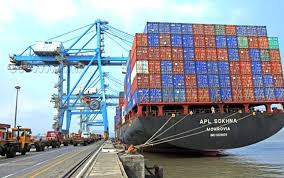

- Tema Customs Revenue Jumps From GH¢500m to Over GH¢1.2bn After ICUMS Rollout — World Bank
The introduction of Ghana’s Integrated Customs Management System by the Ghana Link Network Services Ltd has more than doubled monthly Customs revenue collections at the Tema Port, with receipts rising from roughly GH¢500 million-GH¢600 million before the system was deployed to between GH¢1.2 billion and GH¢1.4 billion following its implementation, according to the World Bank.
The sharp improvement has been attributed to stronger compliance, reduced opportunities for revenue leakage and evasion, and greater efficiency in Customs administration following the digital transformation of Ghana’s principal seaport.
The findings are contained in the World Bank’s 10th Ghana Economic Update, titled Reset for Growth: Sustaining Macroeconomic Recovery and Unlocking Transport for Transformation, published in August 2026.
The report compares Customs revenue performance during the 15 months preceding ICUMS from January 2019 to March 2020 with collections after the platform became operational.
Before ICUMS, monthly Customs revenue generated at the port generally ranged between GH¢500 million and GH¢600 million. Collections then rose sharply to about GH¢1.2 billion in April 2020, the first month of ICUMS operations.
Between April and December 2020, monthly revenue remained substantially above pre-ICUMS levels, fluctuating between approximately GH¢1.2 billion and GH¢1.4 billion.
The World Bank said government data subsequently showed that Customs revenue supported by the system remained at about GH¢1.2 billion a month, while cumulative collections surpassed GH¢120 billion during ICUMS’ first five years of operation through 2025.
The multilateral institution linked the improvement primarily to better compliance and the reduction of avenues through which importers or other actors could under-declare, evade payments or manipulate Customs processes.
ICUMS, operated by Ghana Link Network Services Ltd, has digitised and integrated processes that were previously conducted manually or through fragmented systems, reducing human intervention while strengthening transparency and administrative efficiency.
The system represents the latest stage in Ghana’s Customs technology evolution, following the transition from manual Customs processes to automated data systems and subsequently the Ghana Customs Management System.
Unlike earlier arrangements, ICUMS combines Customs administration with trade facilitation and security functions within a single digital environment, improving the ability of Customs to scrutinise declarations, verify documentation and process consignments.
The World Bank said this has made document falsification more difficult while also reducing delays and improving transparency within the clearance process.
Technology-driven inspection has become another important component of the reform.
Customs operations at the ports are increasingly supported by non-intrusive inspection technologies, including X-ray systems, GAMA systems, trans-infrared spectroscopy, field Raman spectroscopy and backscatter systems.
These technologies allow Customs officers to examine consignments beyond what can be seen physically and, in many instances, assess cargo without opening containers.
The World Bank said the technologies have improved officers’ ability to determine the contents and potential risks associated with consignments while speeding up the clearance of legitimate goods.
The growing use of non-intrusive inspection technology therefore serves two objectives: protecting government revenue and strengthening security at Ghana’s borders.
ICUMS has also created a digital platform through which multiple state institutions involved in the clearance process can collaborate.
Relevant regulatory agencies are connected to the system, allowing them to participate in joint inspections and exchange information in real time rather than undertaking completely separate processes.
The system also uses traders’ compliance history to determine the level of scrutiny applied to consignments, allowing authorities to direct greater enforcement resources towards higher-risk transactions.
Under the tiered risk-management arrangement, traders are placed into different channels depending on their compliance profile.
Importers assigned to the Red Channel face stringent checks, while Yellow Channel traders undergo moderate scrutiny after demonstrating a stronger level of compliance. Highly compliant traders are placed in the Green Channel, where intervention is minimal.
Trusted traders classified under the Blue Channel can benefit from arrangements that allow goods to be released even before arrival at the port.
The approach effectively links trade facilitation to compliance, rewarding businesses with good records while allowing Customs to concentrate enforcement resources on transactions considered to present greater risk.
The digital reforms have also affected the physical movement of cargo through the Tema Port. According to the World Bank, the combination of the Single Window System and Truck Appointment System has helped reduce container turnaround time at Terminal 3 to about three days, representing a marked improvement on the broader West African regional average.
The Bank said the experience demonstrates how digital governance can improve efficiency across logistics networks, although many of the strongest gains remain concentrated within the geographical area served by the Tema Port.
The economic implications extend beyond Customs revenue. For businesses, faster clearance means lower demurrage and port-related costs, reduced working-capital pressure and greater certainty in supply chains. These improvements can strengthen the competitiveness of importers, exporters and manufacturers that depend on imported raw materials and intermediate goods.
For government, increased automation can strengthen domestic revenue mobilisation by narrowing opportunities for smuggling, under-declaration, corruption and other forms of revenue leakage.
That is particularly significant as Ghana seeks to mobilise more domestic resources without relying excessively on higher tax rates or additional borrowing.
Higher Customs collections can potentially create additional fiscal space for infrastructure, education, healthcare and other public investments, provided the gains are sustained and efficiently managed.
The World Bank’s assessment also presents the digital transformation of the Tema Port as a potential model for wider reforms across Ghana’s transport, logistics and border-management ecosystem.
The next stage will therefore be less about whether digitalisation can generate results and more about whether the efficiency, compliance and revenue gains demonstrated at Tema can be replicated across other ports and border entry points.
With ICUMS increasingly embedded in Customs administration, the World Bank’s assessment suggests Ghana has an opportunity to deepen trade facilitation while simultaneously strengthening revenue protection and border security.
The central lesson from the Tema experience is that the value of Customs digitalisation is not limited to faster processing. By connecting revenue collection, risk management, inspections and trade facilitation within an integrated system, ICUMS has demonstrated how technology can improve both the efficiency of trade and the government’s ability to protect public revenue.

