

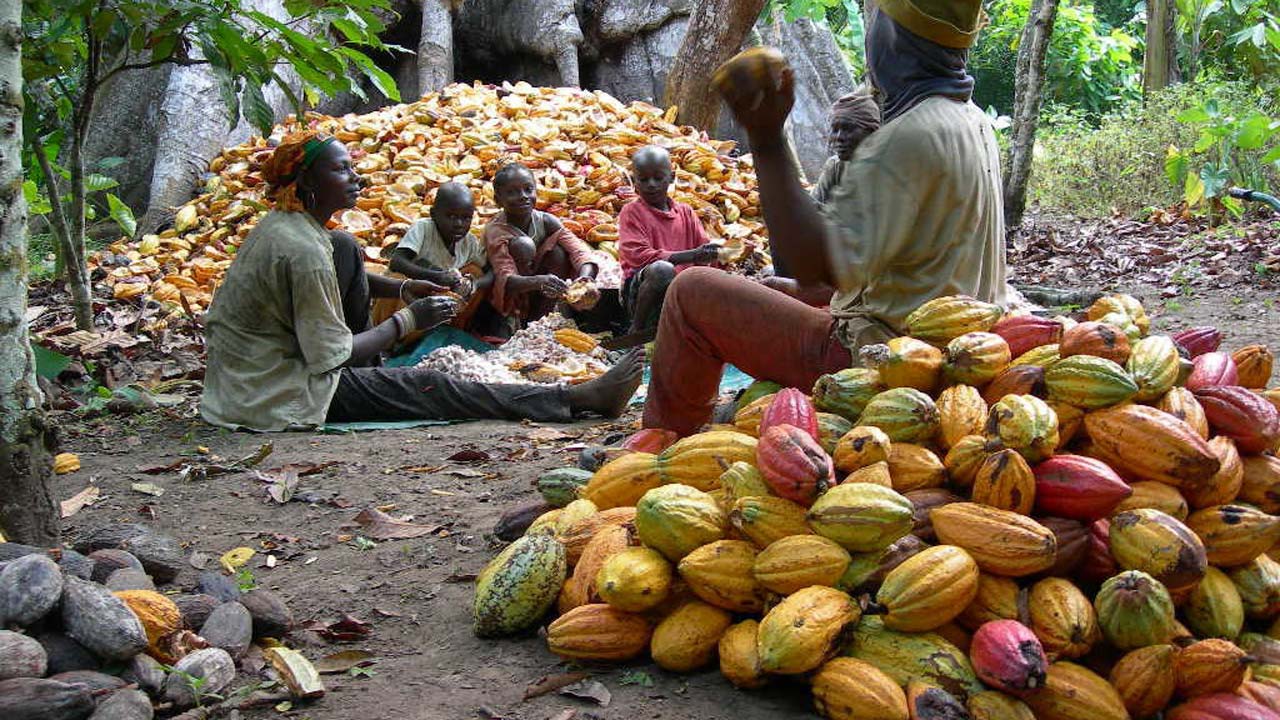

- Ghana Cocoa Farmers Look to March as Erratic Rains Threaten Harvest
Ghanaian cocoa farmers are hoping for improved harvests by March after heavy rain in some growing areas and prolonged dry conditions in others damaged the season’s early development.
But the prospect of a recovery remains uncertain, with delayed fertiliser distribution and a strong El Niño outlook adding to the pressure on farmers and the country’s cocoa supply.
Joseph Agbeko, a farmer who has harvested five bags since the season began, compared with 31 bags last year, said recent rain had raised hopes. “It has now started raining, so we are looking forward to an improved harvest by March next year,” he said.
His experience illustrates the severity of the setback on some farms, though it should not be read as a measure of national output.
The Ghana Cooperative Cocoa Farmers and Marketing Association says conditions vary across the growing regions. Farm visits in four regions found that heavy rain had caused flowers to fall in some areas, while insufficient rain and heat had left flowers withered in others.
The association’s administrator, Moses Djan Asiedu, said a recovery would depend on rainfall arriving in the right quantities and the harmattan not setting in too strongly in January. He cautioned: “But this is not predictable.”
That uncertainty is central to the outlook. The return of rain can support new fruiting, but it cannot immediately reverse damage to flowers that have already fallen or withered. March is therefore a hope held by farmers, not a forecast of a guaranteed rebound.
COCOBOD’s July projection points to a difficult season. The regulator said output could fall by at least 16% in the 2026/27 crop year, citing the likelihood of El Niño conditions, excessive rain in May and June, the cocoa tree’s natural bearing cycle and disease.
Ghana produced 771,000 tonnes in the previous season, against a target of 650,000 tonnes. COCOBOD has not announced a target for the current season or a revised national output forecast.
The outlook is complicated by the climate risk ahead. The Ghana Meteorological Agency has warned that a very strong El Niño could expose parts of the country to prolonged dry spells.
Its seasonal outlook indicates normal-to-below-normal rainfall across much of Ghana, although some areas may receive above-normal rainfall.
That uneven pattern echoes the problem farmers already describe: too much rain in one location and too little in another.
Fertiliser distribution has added another concern. Farmers usually apply fertiliser between March and May, but this season supplies arrived in August, and some farmers are still waiting.
The delay matters because production depends not only on rainfall but also on whether farmers have timely access to inputs and support when crops need them. A late delivery can reduce the benefit of a favourable weather window, while shortages leave growers with fewer options to protect yields.
The risks carry consequences beyond individual farms. Cocoa is a major source of export earnings and foreign exchange for Ghana. A smaller crop could reduce bean sales and export receipts, depending on international prices and the volume ultimately harvested.
It could also complicate COCOBOD’s purchasing and financing plans if the season’s needs differ from the assumptions used to arrange funding.
The producer price has increased for the new season. COCOBOD set the price at GH¢42,400 per tonne, up from GH¢41,392 in 2025/26, a rise of about 2.4%. The new price represents 71.18% of the realised gross free-on-board value and translates to GH¢2,650 per 64-kilogram bag.
A higher price per tonne can support farmers’ earnings, but it cannot necessarily offset a significant fall in the amount harvested. As an illustration, if output fell by 16% and the producer price rose by 2.4%, total gross purchases at the farmgate would still be about 14% lower than in the previous season, assuming all other factors remained unchanged.
This is not an income forecast: actual results will depend on final production, the distribution of yields and other costs. It does show why price increases and crop volumes need to be assessed together.
Financing is another part of the picture. Cocoa Capital PLC, COCOBOD’s wholly owned subsidiary, raised GH¢3.39 billion through its inaugural 266-day commercial paper issuance. The proceeds are intended to support cocoa purchases for the 2026/27 season.
The domestic financing programme offers a channel for seasonal working capital, but timely and transparent use of funds will matter as the crop develops and buying requirements become clearer.
For farmers, the immediate priorities are reliable weather information, timely access to fertiliser and other productivity support, and clear communication about the season’s outlook.
For COCOBOD, the task is to update production estimates as field evidence improves and ensure financing reaches licensed buyers in time to purchase beans.
A late or uncertain purchasing system risks weakening confidence even where farmers have marketable cocoa.
The coming months will test whether recent rainfall leads to new fruiting and whether the January harmattan remains moderate.
A March improvement is possible, but the regional differences in rainfall, the warning of dry spells and the delayed delivery of fertiliser make a confident recovery difficult to call.
Ghana’s cocoa season has started with a warning about the limits of relying on a single national forecast for farms facing sharply different conditions.
The next harvest will depend on weather, inputs and effective purchasing arrangements. Until those factors align, farmers’ hopes for March will remain just that: hopes.

