

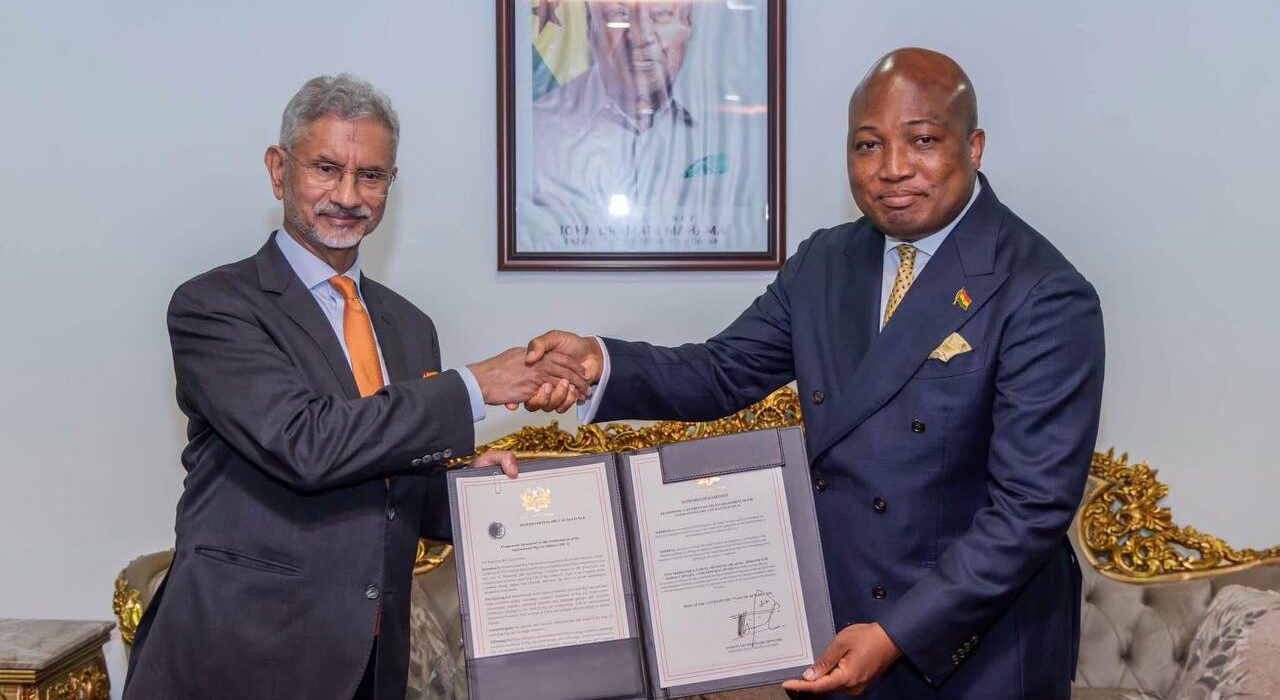

- Ghana Joins India-Led Big Cat Alliance to Boost Conservation and Ecotourism
Ghana has formally joined the International Big Cat Alliance, an India-led conservation initiative that could strengthen wildlife protection and unlock new investment opportunities in the country’s ecotourism industry.
Foreign Affairs Minister Samuel Okudzeto Ablakwa presented Ghana’s signed agreement and instrument of acceptance to India’s External Affairs Minister, Dr Subrahmanyam Jaishankar, at the Kwame Nkrumah Mausoleum in Accra on Wednesday, October 7, 2026.
The accession broadens cooperation between Ghana and India beyond traditional areas such as trade, infrastructure, pharmaceuticals, technology and development assistance.
Launched by Indian Prime Minister Narendra Modi in April 2023, the International Big Cat Alliance promotes international collaboration in the conservation of seven major species: lions, tigers, leopards, snow leopards, cheetahs, jaguars and pumas.
The alliance provides participating countries with a platform to exchange technical expertise, improve wildlife-protection systems and mobilise financing to address poaching, habitat destruction and biodiversity loss.
For Ghana, membership is expected to complement efforts to expand wildlife reserves, rehabilitate zoological facilities and strengthen protection for endangered species. It could also support the government’s ambition to position nature-based tourism as a more important source of investment, employment and foreign-exchange earnings.
The country’s existing natural attractions, including Mole National Park and other wildlife reserves, offer a foundation for attracting private investment into eco-lodges, guided tours, transportation and related hospitality services.
However, Ghana will need to improve accessibility, accommodation standards, wildlife management and international marketing to compete effectively with Africa’s established safari and conservation-tourism destinations.
Membership of the alliance does not automatically guarantee financing for local conservation projects. The government will consequently need to develop commercially and environmentally viable programmes capable of attracting development finance, philanthropic funding and responsible private capital.
Blended-finance arrangements involving public funds, concessional resources and private investment could help finance habitat restoration, anti-poaching operations, surveillance technology and scientific research without placing excessive pressure on the national budget.
Community participation will also be critical. Revenue-sharing mechanisms, employment in protected-area management and support for community-owned tourism businesses could provide local economic benefits while reducing incentives for illegal hunting and environmental degradation.
Ghana’s accession comes as economic relations with India continue to expand. President John Dramani Mahama recently said Ghanaian exports to India had increased from approximately US$3bn to almost US$7bn, driven mainly by goods exports.
“In the area of trade, we are already doing quite well. Our exports to India have increased from just about US$3 billion to almost US$7 billion,” President Mahama said.
The alliance could now add scientific exchanges, conservation technologies and specialist training to that relationship.
The economic value of Ghana’s membership, however, will depend on implementation. Clear conservation targets, transparent financing and measurable improvements in wildlife protection will be required to transform the agreement from a diplomatic commitment into sustainable tourism investment, employment and biodiversity gains.

