


- Ghana Moves to Lead ECOWAS Adoption of Accra Convention on Cargo Documents
Ghana is seeking to lead the adoption and implementation of the Accra Convention on Negotiable Cargo Documents across the Economic Community of West African States, as the region looks to modernise trade documentation and expand access to financing.
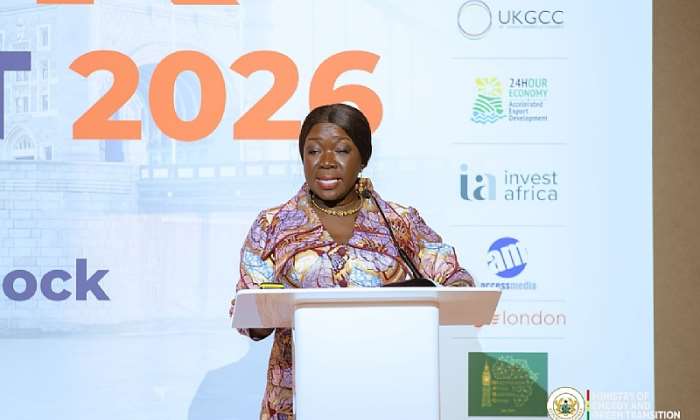
Minister for Trade, Agribusiness and Industry Elizabeth Ofosu-Adjare said Ghana was committed to signing and ratifying the United Nations Convention, which establishes common rules for using negotiable cargo documents in paper and electronic forms.
She said the framework could help transform trade finance, cross-border commerce and the digital documentation of cargo transported by road, rail and air.
The Minister made the commitment on Wednesday, October 7, 2026, during a virtual sensitisation programme organised for ECOWAS member states.
The United Nations General Assembly adopted the Convention on December 15, 2025, through Resolution 80/162. Although its official name is the United Nations Convention on Negotiable Cargo Documents, it is also known as the Accra Convention.
The agreement is expected to be opened for signature in Accra on October 26, positioning Ghana as the host of a significant international treaty-signing event.
Negotiable cargo documents allow rights over goods in transit to be transferred from one party to another. They may also be used to support financing transactions, enabling traders to raise funds against goods while the cargo is still being transported.
Unlike maritime trade, where bills of lading have long performed this function, goods transported by land and air have not always benefited from an equally consistent and internationally recognised legal framework.
The Convention seeks to address this gap by creating harmonised rules for negotiable cargo documents across different modes of transport.
It is also expected to support multimodal transportation, in which goods move through more than one form of transport under a connected commercial arrangement.
For West Africa, the framework could help businesses reduce the legal and administrative uncertainties associated with moving goods across national borders.
It may also improve access to working capital for traders and logistics companies by giving financial institutions greater confidence in documents representing cargo in transit.
Madam Ofosu-Adjare said the agreement offered an opportunity to deal with long-standing difficulties associated with financing and trading goods transported by road, rail and air.
She added that its adoption could support regional trade and deepen economic integration within ECOWAS.
The Minister described the sensitisation programme as an opportunity for member states to build a common understanding of the Convention and assess its implications for their respective trade and legal systems.
She urged participating countries to review the Convention against their domestic laws and return to their governments with clear recommendations on whether and how they should proceed with signature and ratification.
Ghana’s planned leadership comes as African governments seek to reduce the cost and complexity of cross-border trade under both ECOWAS protocols and the African Continental Free Trade Area.
While improvements in ports, roads and customs systems remain important, trade can still be delayed by fragmented documentation, inconsistent laws and the continued dependence on paper records.
The use of legally recognised electronic cargo documents could reduce processing time, improve traceability and make it easier for customs authorities, banks, traders and transport operators to exchange verified information.
However, effective implementation would require more than countries signing the Convention. Governments may need to revise domestic laws, develop secure digital systems and ensure that banks, courts, customs administrations and logistics companies recognise the new documentation.
Regional co-ordination will also be necessary to prevent different interpretations of the Convention from recreating the legal fragmentation it is intended to address.
Anna Joubin-Bret, Secretary of the United Nations Commission on International Trade Law, and Kolawole Sofola, Director of Trade at the ECOWAS Commission, encouraged member states and other stakeholders to participate fully in the process.
They called for stronger regional and international support for the Convention’s signature, ratification and implementation.
The Convention will enter into force 180 days after the tenth instrument of ratification, acceptance, approval or accession has been deposited.
Ghana has said it is ready to welcome ECOWAS member states and other international stakeholders to Accra for the signing ceremony.
The October event will provide the first test of whether Ghana can translate its hosting role into sufficient regional support to move the Convention from a diplomatic agreement into a practical instrument for financing and facilitating African trade.

