

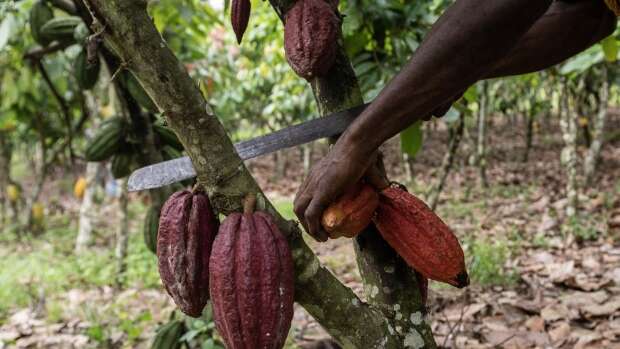

- Ghana to Press Global Chocolate Buyers to Invest Directly in African Cocoa Farms
Ghana is preparing to push global chocolate manufacturers, traders and development finance institutions to invest directly in African cocoa farms, as producing countries seek a fairer financing model for a value chain that still leaves many farmers struggling below living-income benchmarks.
The call will be made at the World Cocoa Foundation Partnership Meeting, which Accra will host from March 16 to 18 next year under the theme “From Origin to Global Resilience.”
It will be the first time Ghana, the world’s second-largest cocoa producer, has hosted the meeting since its inception nearly two decades ago.
Randy Abbey, Chief Executive Officer of the Ghana Cocoa Board, said the gathering would provide a platform to advocate a “paradigm shift” in how cocoa production is financed, with global buyers and downstream players expected to assume greater responsibility for sustaining production at origin.
The three-day conference is expected to bring together chocolate manufacturers, cocoa traders, development finance institutions, farmer organisations, policymakers and sustainability actors at a time when the global cocoa industry is facing renewed pressure over supply security, farmer incomes and climate resilience.
Deputy Finance Minister Thomas Nyarko Ampem described Ghana’s hosting of the event as both symbolic and strategic, arguing that cocoa-producing countries must play a stronger role in shaping the structure and future of the global cocoa economy.
He said cocoa remains a “strategic national asset” for Ghana, supporting rural livelihoods, export earnings and foreign exchange inflows. But he warned that farmers continue to carry a disproportionate share of the sector’s economic strain, despite being the foundation of the global chocolate industry.
That imbalance remains one of the most persistent contradictions in the cocoa value chain. The global chocolate industry generates more than $100 billion annually, yet many cocoa farmers in West Africa continue to earn below living-income levels.
For Ghana and other producing countries, the concern is no longer only moral. It is also economic. If farmers cannot earn enough to maintain farms, invest in productivity and attract younger generations into cocoa production, long-term supply stability could be at risk.
The sector is already facing overlapping pressures from climate change, crop disease, ageing farms, environmental degradation and volatile prices. Cocoa swollen shoot disease has also affected production in Ghana, while rising input and labour costs have further squeezed farmers and weakened farm-level viability.
Ghana’s response has been framed around a broader policy push known as the “Cocoa Reset,” aimed at improving productivity, strengthening farmer support systems and expanding local processing capacity to retain more value domestically.
The reform agenda also places emphasis on governance, transparency, traceability and compliance with increasingly stringent sustainability rules in major consuming markets, particularly in Europe.
Mr Abbey said the Accra meeting would seek to reposition cocoa financing around shared responsibility, arguing that global supply chain actors must contribute more directly to the resilience of farms and farming communities.
That message is likely to resonate strongly across West Africa, where Ghana and Côte d’Ivoire together account for the majority of global cocoa supply but have long argued that the pricing structure of the industry does not sufficiently reward producers.
For global chocolate buyers, the pressure is likely to intensify. Concerns over deforestation, child labour, living income and climate risk have already forced many companies to invest more in sustainability programmes. But producing countries are increasingly demanding that these commitments move beyond pilot projects and corporate social responsibility language into deeper, long-term financing of farm productivity and farmer welfare.
For Ghana, hosting the World Cocoa Foundation Partnership Meeting offers an opportunity to shift the debate from sustainability compliance to value-chain fairness.
The outcome of the Accra meeting could therefore shape more than Ghana’s cocoa strategy. It could test whether the global chocolate industry is ready to rebalance a system in which the countries that grow the beans still capture too little of the value created from them.

