


- Ghanaian Kidney Patient Loses Japan Welfare Appeal as Supreme Court Upholds Exclusion
A Ghanaian national receiving treatment for chronic kidney failure in Japan has lost a final appeal for public welfare support after the country’s Supreme Court left intact lower-court rulings that excluded him from statutory assistance because he is not a Japanese citizen.
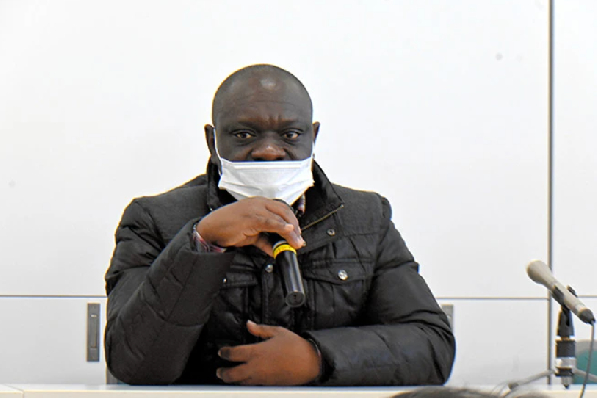
Siaw Johnson Kwaku, 36, had challenged Chiba city’s refusal to grant him benefits under Japan’s Public Assistance Act, arguing that the exclusion was unconstitutional given his serious medical condition and inability to work. T
he Supreme Court’s Second Petty Bench dismissed the appeal on September 9, allowing the earlier decisions against him to stand.
The case has drawn attention because Kwaku is undergoing regular treatment for chronic kidney failure and holds a “Designated Activities” residence status that allows him to remain in Japan for medical care but does not permit him to work.
He developed severe kidney failure in 2019 and subsequently applied for public assistance after his circumstances left him unable to earn an income.
Chiba city rejected the application on the basis that he did not qualify as a Japanese national under the relevant welfare legislation.
Kwaku argued through the courts that excluding him from welfare support violated constitutional protections relating to survival and equality.
The Chiba District Court rejected that argument in January 2024, ruling that the decision over whether foreign nationals should be included within the welfare system was a matter for the legislature.
The Tokyo High Court upheld that conclusion in August 2024, before the dispute reached the Supreme Court.
Japan’s top court did not, however, issue a broad new constitutional judgment overturning the country’s welfare framework. Instead, the Second Petty Bench concluded that Kwaku’s grounds for final appeal did not fall within the categories permitted under Japan’s civil procedure rules, meaning the lower-court decisions remained effective.
That distinction is important because the outcome leaves the existing legal position in place without necessarily resolving every wider constitutional argument raised about the treatment of foreign residents.
The most striking part of the ruling came from Presiding Justice Mamoru Miura, who dissented from the outcome.
Miura argued that excluding foreign nationals undergoing medical treatment and unable to work could threaten their ability to maintain a minimum standard of living, saying it was difficult for such people to avoid “danger to their survival”.
He concluded that foreign residents in those circumstances should be eligible for public assistance and that the high court judgment should have been overturned.
Miura’s dissent went further by questioning whether the exclusion was consistent with Japan’s constitutional protections.
Reporting on the decision said he considered the exclusion of foreign residents receiving medical treatment to be contrary to constitutional guarantees concerning the right to life and equality before the law.
The majority nevertheless declined to disturb the existing statutory framework, leaving Kwaku without a legally enforceable claim under the Public Assistance Act.
Japan’s welfare regime is built around the Public Assistance Act, which limits statutory entitlement to Japanese nationals.
The Supreme Court had already ruled in 2014 that foreign nationals do not possess a legal right to receive benefits under the Act, although some foreigners are provided assistance administratively on humanitarian grounds.
Those categories can include permanent residents, long-term residents, spouses of qualifying residents, special permanent residents and refugees.
Kwaku sought to rely partly on a 1954 notice from the former Ministry of Health and Welfare under which certain foreigners could receive assistance as an administrative measure. The lower courts rejected that argument, finding that such arrangements did not create a statutory entitlement and applied only to specific categories of foreign residents.
His medical-treatment residence status therefore left him outside the administrative framework traditionally used to extend assistance to some non-Japanese residents.
The case highlights the difficult policy intersection between immigration status, welfare entitlement and long-term medical care.
A foreign resident who is legally permitted to remain in Japan for treatment but prohibited from working can face a particularly severe financial gap if they are also excluded from public assistance.
That contradiction formed the core of Miura’s dissent and is likely to fuel further debate over whether Japan’s social protection rules adequately reflect the circumstances of a growing foreign population.
Japan’s foreign resident population has expanded rapidly in recent years, reaching a record 4.13mn at the end of 2025, up 9.50% from a year earlier.
African nationals remain a relatively small share, but data cited by the Japan International Cooperation Agency showed 23,788 African residents in June 2024, including 2,996 Ghanaians.
Ghanaian nationals were the second-largest African community in Japan at the time, behind Nigerians.
The case therefore carries broader significance for African migrants and other foreign residents who may find themselves unable to work because of serious illness.
Japan’s demographic pressures and labour shortages have encouraged a larger foreign presence in the workforce, but welfare entitlements have not expanded at the same pace across all immigration categories.
The resulting gap raises questions about how far a country can rely on migrant labour and long-term foreign residency while maintaining strict distinctions in access to social protection.
For Kwaku, however, the immediate consequence is much narrower and more personal. The Supreme Court’s decision means the rejection of his welfare application remains legally valid, while the dissenting opinion has no binding effect on his entitlement.
His case now stands as a significant test of Japan’s approach to foreign residents who are lawfully present, medically vulnerable and unable to work and as a reminder that immigration status can determine access not only to employment and residency, but also to the basic safety net available when illness removes the ability to earn.

