


- Ghana’s Artisanal Gold Output on Track to Beat 2025 Record – Goldbod Says
Ghana’s artisanal and small-scale gold sector is on course to match or surpass its record 2025 output, strengthening the country’s foreign exchange position and reinforcing gold’s role as the economy’s most important export earner.
The Ghana Gold Board, known as GoldBod, purchased between 50 and 54 metric tons of gold from the artisanal and small-scale mining sector in the first half of 2026, according to its Chief Executive Officer, Samuel Gyamfi. At that pace, output from the sector could exceed last year’s record of 104 metric tons.
“We are around 50-54 metric tons this year,” Mr Gyamfi told reporters, adding that “at this rate” Ghana was likely to match or surpass last year’s output.
The projection is economically significant. Ghana, Africa’s largest gold producer, has been relying heavily on gold exports to support foreign exchange inflows and stabilise an economy recovering from one of its worst financial crises in decades. Stronger gold purchases through official channels could help improve dollar liquidity, support the cedi and strengthen reserves if the earnings are effectively captured.
The rise of artisanal and small-scale mining has also changed the structure of Ghana’s gold industry. In 2025, production from the sector reached a record 104 metric tons, overtaking large-scale mining output for the first time. That shift shows how important small-scale mining has become, not only as a rural livelihood activity, but as a major macroeconomic force.
According to Mr Gyamfi, GoldBod generated nearly US$11.00 billion in foreign exchange earnings from the artisanal and small-scale mining sector last year, compared with about US$9.00 billion from large-scale miners.
Those numbers explain why the government has moved aggressively to formalise gold trading, curb smuggling and increase the share of production that passes through official export channels. The central policy question is no longer whether artisanal gold matters. It clearly does. The question is whether Ghana can capture the value without deepening environmental damage, illegal mining, land degradation and water pollution.
GoldBod’s optimism comes despite recent weakness in international gold prices. Mr Gyamfi said the Board’s 2026 projections had been based on an average gold price of about US$5,000 per ounce and weekly purchases of around 2.5 metric tons. Although recent price declines have reduced earnings expectations, he said Ghana was still on course to generate higher gold export earnings than in 2025 because average bullion prices remain above last year’s levels.
That gives Ghana an important external-sector cushion. If production volumes rise while average prices remain favourable, gold could continue to provide the country with stronger dollar inflows at a time when many emerging markets are facing tighter global financing conditions, geopolitical uncertainty and commodity-price volatility.
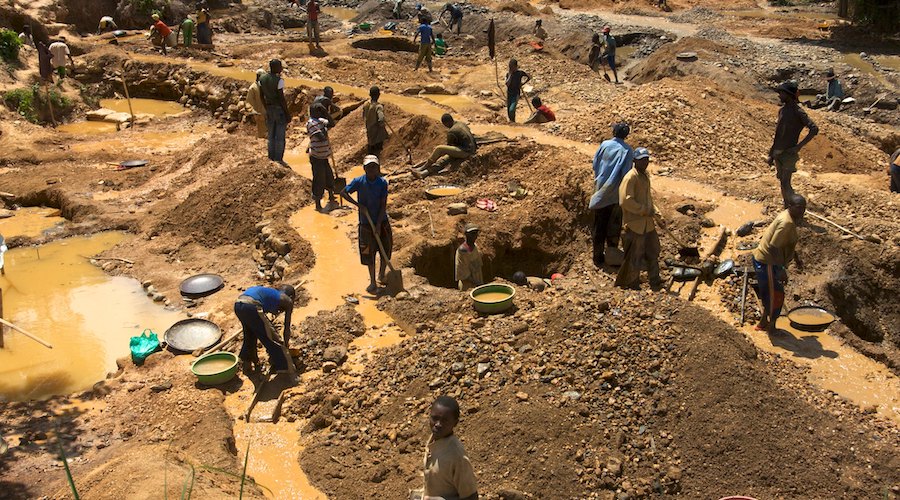
However, the growing dominance of artisanal gold also carries risks. Small-scale mining remains one of Ghana’s most politically sensitive sectors. It supports jobs and rural incomes, but it is also closely associated with illegal mining, river pollution, forest destruction and conflict over land use. A record year for output will therefore be celebrated by fiscal and monetary authorities, but it will also intensify scrutiny of how the gold is produced.
The challenge for GoldBod and the broader regulatory system is to separate formal, traceable, responsible small-scale mining from illegal and destructive operations. If reforms only increase purchases without improving environmental compliance, Ghana may gain foreign exchange while losing water bodies, farmlands and public confidence.
The current surge also creates a governance test. Higher official purchases can reduce smuggling and improve transparency, but only if pricing, licensing, aggregation, export documentation and payments are managed with discipline. A sector generating billions of dollars in annual foreign exchange must be protected from leakages, political interference and weak accountability.
For Ghana’s economy, the upside is clear. More gold flowing through official channels can support reserves, improve balance-of-payments performance, enhance tax and royalty visibility, and create a stronger basis for local value addition. It can also provide an important counterweight to pressures from fuel imports, debt service and other external obligations.
But the country must be careful not to treat higher artisanal gold output as a simple success story. The same sector that is now strengthening foreign exchange earnings is also at the centre of Ghana’s environmental crisis. The policy win will come only if production growth is matched by stricter regulation, better traceability, responsible mining practices and credible enforcement against illegal operators.
GoldBod’s first-half purchases suggest that 2026 could become another historic year for Ghana’s gold industry. If the current pace is sustained, artisanal and small-scale mining will again sit at the heart of the country’s export performance.
The numbers are impressive. The policy test is harder.
Ghana must now prove that it can turn the small-scale gold boom into a source of national resilience without allowing it to become a deeper environmental and governance liability.

