


- Guinea seeks bigger share of gold value chain with new regional refinery
Guinea has joined the growing race among West African gold producers to capture more value from their mineral wealth, announcing plans to become a regional gold refining hub after banning the export of raw gold with immediate effect.
The move places Guinea alongside Ghana, Mali and Burkina Faso, which are also pushing to expand domestic gold refining capacity as governments seek to reduce raw mineral exports, retain more value locally and build downstream industries around one of the region’s most important export commodities.
Guinea’s Mines Minister Bouna Sylla told Reuters that the country wants to build a competitive refining ecosystem capable of processing not only domestic output but also gold from across the region.
“If each West African country has a refinery, there is no problem,” Mr Sylla said. “If your refinery is not competitive, it will fail or succeed because of economics, not politics.”
The comments come after President Mamady Doumbouya banned raw gold exports last week as the world’s top bauxite producer seeks to retain more value from its mineral resources.
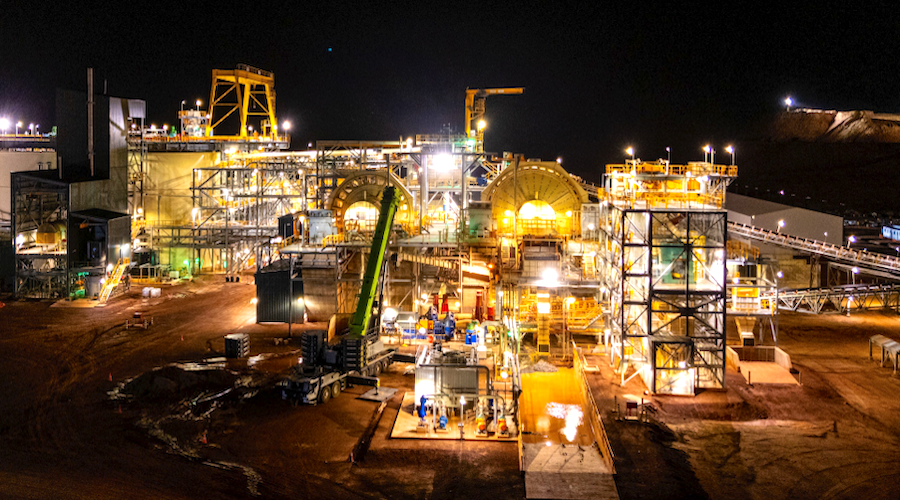
Guinea has built a new refinery that officials describe as among the largest in Africa. Bangaly Steve Toure, deputy head of Guinea’s Mining Investment Fund, said the US$30 million plant would initially process 530 metric tonnes, equivalent to about 17 million ounces, annually, before rising to 733 tonnes at full capacity.
Commercial operations are expected to begin in July after final approvals.
The project signals a broader shift in West Africa’s mining policy. For decades, African countries have exported raw or semi-processed minerals while most of the higher-value refining, trading, financing and certification activity took place outside the continent, particularly in global bullion centres in the Middle East, Europe and Asia.
That model is now being challenged by governments seeking more jobs, tax revenue, industrial capabilities and foreign exchange benefits from the commodities they produce.
Gold is central to that shift because West Africa is one of the world’s most important producing regions. Industry estimates cited by Reuters show that West Africa produced about 11 million ounces of gold in 2025.
Guinea alone produced roughly 2.32 million ounces last year, worth about US$7 billion, but retains less than 1.00% of that value domestically, according to Mr Sylla.
“It is not just about revenue and jobs,” he said. “Countries like the UAE do not produce gold but built refining capacity to stimulate broader economic growth. We want to create the same value chain.”
That comparison is important. The United Arab Emirates has become a major global gold trading and refining hub despite not being a major producer. Its role in the bullion economy has been built around logistics, refining, trading infrastructure, certification, financial services and market access.
Guinea’s ambition is to replicate part of that value-chain advantage closer to the source of production.
The refinery, structured as a public-private partnership, forms part of a wider push by Guinea to develop downstream industries, mirroring similar value-addition efforts in its bauxite sector.
The country is also preparing a decree to encourage local refining and plans reforms to formalise artisanal production and improve traceability by 2026.
That traceability agenda will be critical. Gold markets are increasingly shaped by compliance requirements around responsible sourcing, anti-money laundering controls, conflict financing and environmental standards. A refinery can only become competitive if buyers trust the origin, documentation and certification of the gold it processes.
For Guinea, the challenge will be to move from policy ambition to operational credibility. A raw gold export ban may force supply into domestic refining channels, but it can also create smuggling risks if pricing, payment systems and refinery terms are not competitive.
That is why Mr Sylla’s warning that refineries must succeed on economics rather than politics is significant. A refinery built behind policy restrictions may process gold initially, but long-term success will depend on efficiency, transparency, competitive charges, trusted certification and access to international markets.
Ghana faces a similar question. As Africa’s top gold producer, Ghana has long argued for greater local refining and value addition, but the country must also ensure that refining capacity is matched by credible regulatory systems, good delivery standards, traceability and strong links to global bullion markets.
The wider regional race could become productive if it leads to better infrastructure, stronger competition and more local value capture. But it could also become fragmented if each country builds capacity without enough scale, coordination or market discipline.
West Africa’s gold economies therefore face a strategic choice. They can compete against one another for refining flows, or they can build a more integrated regional bullion ecosystem that combines production, refining, certification, trading, logistics and financial services.
The prize is significant. More domestic refining could generate skilled jobs, improve revenue collection, reduce illicit flows, strengthen mineral traceability and give governments better visibility over production and export values.
It could also support the emergence of related services, including assaying, secure transport, insurance, vaulting, compliance, commodity finance and gold-backed investment products.
But the risks are equally clear. Export bans without enforcement capacity can push trade underground. Refining mandates without competitive pricing can discourage formal supply. Weak traceability can limit access to high-value markets. And politically driven projects can become underutilised assets if they fail to meet commercial standards.
Guinea’s entry into the refining race therefore raises a question that applies across West Africa: can mineral-rich countries finally build value chains around gold, or will they simply replace raw export dependence with refinery projects that struggle for scale?
For now, the direction of policy is unmistakable. West African governments no longer want to remain suppliers of raw bullion while others capture the higher-value layers of the trade.
Guinea’s raw gold export ban and new refinery show how quickly the region’s mining politics is changing. The next test will be whether this new push produces competitive refining hubs, stronger formal markets and real domestic value, rather than another cycle of resource ambition without industrial depth.

