
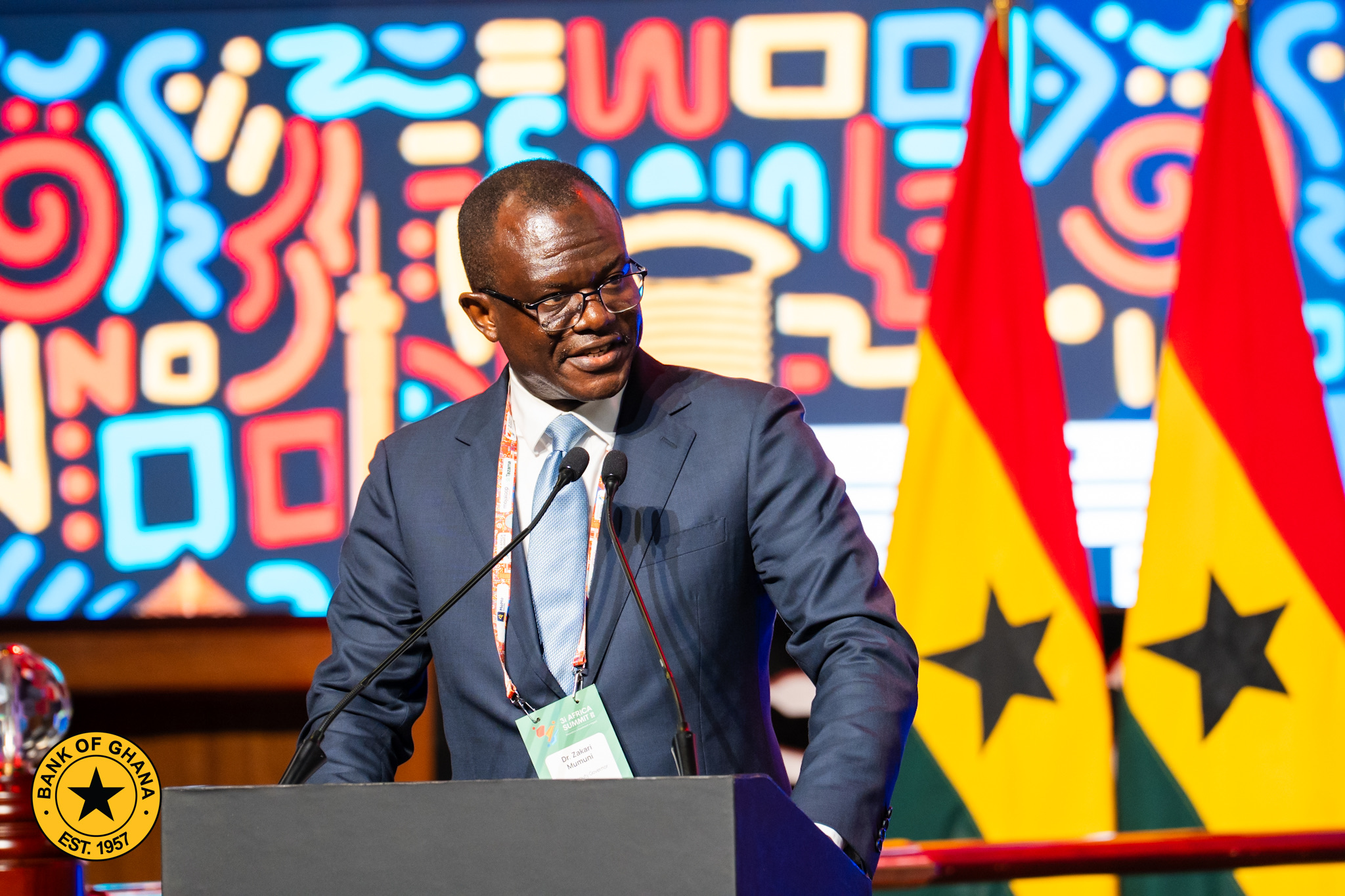

- Africa’s Digital Finance Future Hinges on Scale, Trust and Execution — Deputy Governor
First Deputy Governor of the Bank of Ghana, Dr Zakari Mumuni, has urged African governments, central banks and regulators to move beyond digital finance ambition and focus on execution, warning that fragmented systems could prevent the continent from building a truly integrated financial market.
Delivering the closing keynote at the 2026 3i Africa Summit at the Destiny Arena in Accra, Dr Mumuni said Africa’s digital financial future is not a distant prospect but a live policy choice being shaped by decisions taken today.
“The next frontier in Africa’s financial future is not ahead of us it is being decided in this room now, by the choices we make,” he said.
Speaking on the theme “The Next Frontier Begins Here,” Dr Mumuni said the summit had moved conversations from broad vision to practical clarity on what is required to build a digital financial system that is innovative, inclusive, secure and truly pan-African.
He said Africa does not lack digital finance models. Across the continent, countries have already developed mobile money platforms, instant payment systems, agent networks and government-led digital transfers.
“Across the continent, we have proven models mobile money, instant payments, agent networks, and government-led digital transfers,” he said. “The task before us is not invention, but scale: connecting national systems, harmonising standards, and enabling seamless movement of value across borders.”
The First Deputy Governor identified fragmentation as Africa’s biggest constraint, arguing that disconnected payment systems, uneven regulatory frameworks and limited interoperability continue to weaken the continent’s digital finance potential.
“Without deliberate coordination, these gaps will persist and the promise of a single digital market will remain out of reach,” he cautioned.
His comments come as African policymakers and financial institutions intensify discussions on how to deepen digital integration under the African Continental Free Trade Area. While fintech adoption, mobile money and digital payments have expanded rapidly, many systems remain domestic, siloed and difficult to connect across borders.
Dr Mumuni said leadership will determine whether Africa can turn its digital finance gains into a continent-wide ecosystem.
“Markets alone will not deliver this transformation,” he said, adding that governments, central banks and relevant regulatory authorities must actively shape both the architecture and direction of the ecosystem to ensure that innovation advances stability, trust and inclusion.
He called for African countries to scale what works by committing to concrete timelines and cross-border partnerships that move beyond pilots into full implementation.
He also urged policymakers to build systems rather than silos by strengthening digital public infrastructure, investing in supervisory capacity and developing the talent needed to sustain a continent-wide financial ecosystem.
The warning is significant because Africa’s digital finance story has often been built around success in individual markets. But without interoperable systems, shared standards, trusted digital identity frameworks and coordinated regulation, national success stories may struggle to support cross-border trade, payments and investment.
Dr Mumuni said the true success of the summit would not be measured by the quality of discussions but by what happens after participants leave the conference hall.
“The success of 3i Africa will not be measured by the quality of our discussions today, but by the actions we take tomorrow,” he said. “Do our collaborations endure? Do our reforms materialise? Do our institutions translate insight into execution?”
He also warned that Africa’s digital transition carries risks, including cybersecurity vulnerabilities, data misuse, irresponsible lending and market concentration.
“At every step, we must ask a fundamental question: who benefits, and are we expanding inclusion in practice, not just in promise?” he said.
The caution reflects growing regulatory concerns that rapid fintech expansion, if not properly governed, could expose consumers and financial systems to fraud, exclusion, data abuse and concentration of market power.
For central banks, the challenge is to support innovation while protecting financial stability, consumer confidence and inclusion.
Dr Mumuni said the next frontier is not merely a concept, but a commitment shaped by policy decisions, institutional investments and cross-border partnerships.
“Let us, therefore, leave this Summit with clarity and resolve: to connect our systems, to align our policies, and to execute deliberately and at scale,” he said.
He added that if Africa succeeds, the impact of the summit will be visible not in months, but in the transformation of the continent’s financial landscape over the years ahead.
“The frontier begins here but its success depends on what we do next,” he said.

