


- NRGI Urges Ghana to Extend PIAC-Style Oversight to Mineral Revenues as Extractive Risks Deepen
The Natural Resource Governance Institute has called for lessons from Ghana’s petroleum revenue oversight system to be extended to the minerals sector, arguing that stronger transparency and accountability will become increasingly important as the country confronts declining oil production, the energy transition and difficult choices over the use of accumulated petroleum wealth.
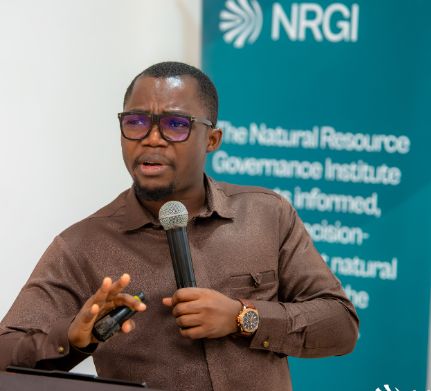
Patrick Stevenson, Country Representative of NRGI, said the 15-year experience of the Public Interest and Accountability Committee offers Ghana a valuable institutional model for strengthening oversight of revenues generated from the broader extractive economy.
Speaking at the launch of PIAC’s 15th anniversary, Mr Stevenson said the committee had become an important part of Ghana’s democratic governance architecture since its establishment following the discovery of commercial oil and the enactment of the Petroleum Revenue Management Act.
“This milestone is significant not only for PIAC, like I said, but also for Ghana’s democratic governance journey and the country’s commitment to transparency and accountability in the management of our petroleum revenues,” he said.
PIAC was established in 2011 as an independent statutory body to monitor and evaluate the management and use of Ghana’s petroleum revenues and provide citizens with a mechanism for assessing whether those resources are being handled in accordance with the law.
Its creation reflected a deliberate attempt to avoid the governance failures associated with the so-called resource curse, where countries rich in natural resources accumulate substantial revenues without translating them into broad-based improvements in living standards.
“Fifteen years ago, following the discovery of oil and gas and the enactment of the Petroleum Revenue Management Act, I think the country took a bold step so that we don’t suffer the pain that other countries that have equally discovered petroleum resources have suffered, what some scholars have called some resource curse of sort,” Mr Stevenson said.
“Why should we have a resource curse if we put in place the right strategy? It helps us drive the development of the country forward.”
For NRGI, the larger question now is whether the institutional lessons accumulated through petroleum governance can be applied to minerals.
Ghana remains a major gold-producing economy, while the growing global demand for minerals used in renewable energy systems, electric vehicles and other low-carbon technologies is increasing the strategic importance of the mining sector.
The policy challenge is therefore not only how much Ghana extracts, but how effectively revenues are collected, monitored, allocated and converted into productive assets.
“The work PIAC has done is such an important piece of work that if we can get a similar model in the mineral revenue management space, that could go a long way to support how we manage our extractives,” Mr Stevenson said.
He stopped short of calling for a replica of PIAC for mining. “We’re not saying we support the establishment of another PIAC in the mineral revenue management space, but those experiences should be brought to bear beyond what the law [currently mandates],” he said.
That distinction is important. NRGI’s argument is less about creating another bureaucracy and more about adapting the principles that have underpinned petroleum revenue oversight: independent scrutiny, transparent reporting, citizen engagement and regular assessment of how resource revenues are used.
The proposal could become increasingly important as Ghana’s extractive profile changes. Petroleum production is facing structural pressure, while gold is taking on greater importance in the country’s external and fiscal accounts. That means the governance architecture built during the oil era may need to evolve around an economy where mineral revenues play a larger role.
Mr Stevenson also raised concerns around the Ghana Heritage Fund, which was established under the Petroleum Revenue Management Act to preserve a portion of petroleum wealth for future generations.
The central question is whether accumulated savings should remain protected for the future or be deployed to meet urgent infrastructure and development needs today.
“The discussion of spending it today, at least to the best of our knowledge, is already in the works,” he said.
That debate goes to the heart of intergenerational resource governance. Petroleum is finite. Once extracted and sold, the asset is permanently depleted. The policy challenge is therefore to determine how much should be consumed now and how much should be saved or invested for citizens who will live beyond the productive life of Ghana’s oil fields.
The issue becomes more consequential as production declines. “As a country continues today to navigate the challenges around energy transition [and] declining oil production … I think one of the things that have become important is the institution of PIAC and following and monitoring the policies of government,” Mr Stevenson said.
Lower output could translate into weaker petroleum receipts over time, increasing the importance of how remaining revenues are allocated. It could also make decisions over the Heritage Fund, stabilisation reserves and infrastructure expenditure more politically sensitive.
At the same time, the global energy transition is forcing hydrocarbon-producing countries to consider how quickly remaining resources should be developed and how long demand will remain strong enough to support profitable extraction.
For Ghana, those questions will increasingly interact with public finance.
If petroleum receipts decline while fiscal pressures remain high, government may face stronger incentives to draw on accumulated resource funds or redirect savings towards current expenditure. That makes independent oversight more important, not less.
“Transparency, prudent revenue management, citizen engagement, and intergenerational accountability … will continue to remain as compelling questions for resource governance,” Mr Stevenson said.
NRGI’s relationship with PIAC dates back to the committee’s early years, when the institution operated with limited resources and was still building the technical capacity required to scrutinise petroleum revenue management.
Then known as the Revenue Watch Institute, the organisation provided early institutional and office support to PIAC. “Over the years, NRGI and PIAC have shared a common vision, not only an office space,” Mr Stevenson said.
“And that vision is to ensure that petroleum revenues must be managed openly, responsibly, and in the interest of the public.”
NRGI has subsequently worked with PIAC to share Ghana’s experience with other countries in the sub-region, giving the committee significance beyond the domestic petroleum sector.
After 15 years, however, PIAC is entering a potentially more difficult phase. Its first era was built around the optimism of a new petroleum producer designing systems to govern an emerging revenue stream. The next may be defined by declining production, pressure on accumulated savings and the need to apply lessons from oil to a broader extractive economy.
That is why NRGI believes PIAC’s experience should not remain confined to petroleum.
“So PIAC, maybe the next 15 [years] will be for you to learn and extend this experience you have,” Mr Stevenson said.
The broader policy test for Ghana will be whether the accountability architecture created during the petroleum era can evolve quickly enough to match the changing structure of the extractive economy.
If oil revenues decline while mineral revenues expand, weak oversight in the mining sector could simply shift governance risks from one resource to another.
The next stage of Ghana’s resource governance may therefore depend less on building entirely new institutions than on extending the principles that have worked transparency, independent scrutiny and intergenerational accountability across the full extractive value chain.

