

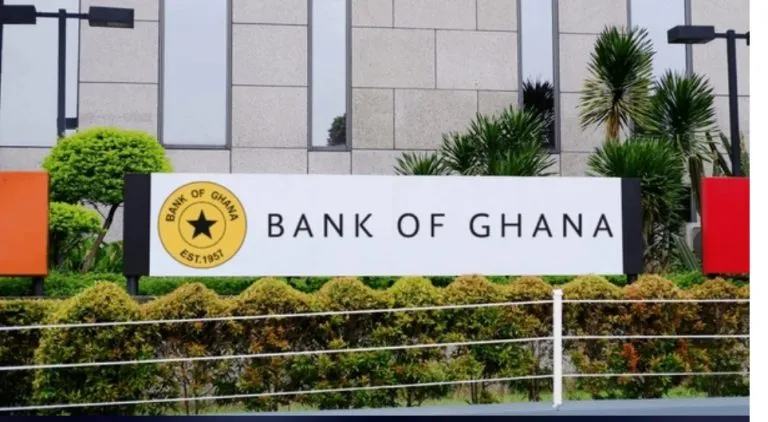

- Social Engineering Now Ghana’s Weakest Link in Digital Finance Security – BoG
The Bank of Ghana has warned that while financial institutions can protect digital platforms from hacking, technology alone cannot stop fraud when customers are manipulated into voluntarily giving away PINs, passwords and one-time passwords.
The Bank’s Head of Fintech and Innovation, Elhanan Owureku Asare, said Ghana’s digital financial ecosystem faces a growing trust problem because fraudsters are increasingly bypassing secure systems by targeting the human beings who use them.
Speaking in a documentary ahead of the maiden Digital Economy Forum, Mr Asare said banks, fintech companies and mobile money operators can invest in secure applications, cybersecurity systems and stronger authentication tools, but those defences become ineffective when customers surrender the very credentials designed to protect them.
“One thing that we always forget is that we can protect the technology. We can protect it, prevent it from being hacked. Cyberattacks can be prevented,” he said.
He noted that Ghana already has the Financial Industry Command Security Operations Centre, with financial institutions and fintechs being connected to help prevent cyberattacks. But he said the more difficult problem is social engineering, where fraudsters manipulate customers into disclosing sensitive information.
That distinction is important. Cybersecurity systems can block malware, detect suspicious traffic and protect applications from intrusion. But they cannot always stop a customer from believing a fake call, joining a fraudulent WhatsApp group or repeating an OTP to someone pretending to be from a bank, telecom company or support centre.
Mr Asare said fraudsters increasingly exploit authentication processes by convincing victims to disclose OTPs and PINs over the phone.
“Don’t forget that these are processes that are supposed to protect the customer. That is authentication. That same authentication, they call you for you to freely provide it, and you provide it,” he said.
The warning comes at a time when Ghana’s digital payments ecosystem is expanding rapidly, with mobile money, bank apps and fintech platforms becoming central to everyday commerce.
But the growth of digital finance has also created new opportunities for criminals. Instead of attacking banks directly, many fraudsters now target customers through impersonation, fake customer service calls, phishing links, WhatsApp groups and social media scams.
The result is a shift from technical hacking to psychological manipulation.
This is why social engineering has become one of the most dangerous forms of digital fraud. It does not always require sophisticated technology. It requires trust, pressure, fear or greed.
A customer may be told their account will be blocked, that they have won money, that a transaction has failed, or that they must confirm an OTP to reverse a payment. In that moment, the fraudster is not hacking the system. The fraudster is persuading the customer to open the door.
For Ghana’s financial institutions, this creates a difficult challenge. Stronger apps and better firewalls are necessary, but they are not enough. The weakest link in the digital financial chain may now be user behaviour.
The implications are significant for financial inclusion.
Digital payments have made financial services easier, faster and more accessible for millions of Ghanaians. But if customers feel unsafe, adoption could slow. People may reduce digital transactions, avoid mobile wallets or return to cash, especially in communities where fraud stories spread quickly.
Trust is therefore becoming as important as technology.
This explains why the issue will feature prominently at the maiden Digital Economy Forum, which will be held under the theme, “The Trust Crisis: Why Fraud Is Holding Back Ghana’s Digital Economy.” The forum, an initiative of Hubtel, will bring attention to the fraud risks undermining confidence in digital commerce and financial services.
The discussion also connects with the Bank of Ghana’s wider push for an industry-wide fraud prevention framework linking banks, fintech firms, mobile money operators and other regulated financial institutions.
Such a framework would help institutions share fraud intelligence, trace suspicious transactions and respond more quickly when stolen funds are moved across accounts and wallets.
But the customer education component will be just as important.
Consumers must understand that no legitimate bank, mobile money operator, telecom company or fintech platform should ask them to disclose their PIN, password or OTP. Any request for such information should be treated as a fraud attempt.
The same applies to unsolicited calls, urgent account warnings, investment offers, prize claims and links sent through WhatsApp or SMS.
For banks and fintechs, the responsibility is to make security communication simple, constant and practical. Fraud education cannot be treated as a one-off campaign. It must become part of every customer interaction, from onboarding and app notifications to transaction alerts and agent training.
For regulators, the challenge is to ensure that consumer protection keeps pace with innovation. As digital finance expands, institutions must be held to strong standards on fraud reporting, customer alerts, dispute resolution and transaction monitoring.
For customers, the message is even simpler: your PIN is not customer service information. Your OTP is not for verification by a stranger. Your password should never be shared.
Ghana’s digital economy will not be protected only by technology. It will be protected by a combination of secure systems, coordinated industry response, strong regulation and informed users.
Mr Asare’s warning captures the central weakness in the current fraud fight. The system may be secure, but if the customer is tricked into surrendering access, the criminal has already won.
The next stage of Ghana’s digital finance growth will therefore depend not only on building better platforms, but on building a more security-conscious public.
In the end, the battle against fraud is not only a technology battle. It is a trust battle.

