


- Uganda Passes Scaled-Back Sovereignty Law After Central Bank Warning
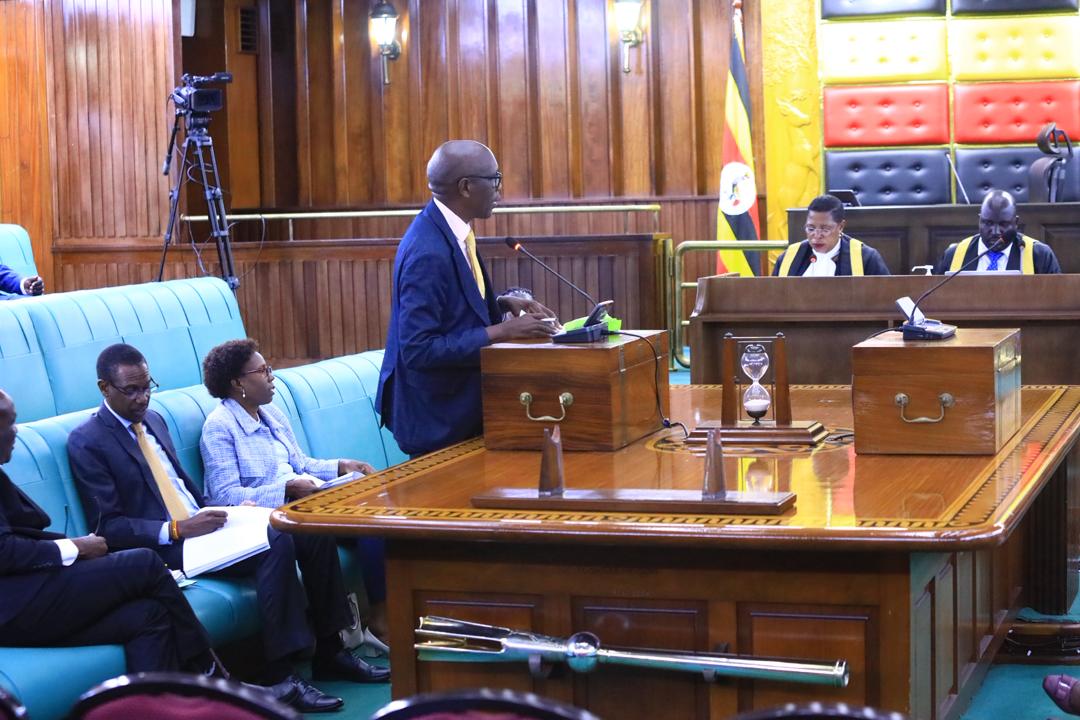
Uganda’s parliament has passed a scaled-back version of a controversial sovereignty law aimed at curbing alleged foreign influence, after the country’s central bank warned that earlier provisions could trigger serious economic consequences.
The legislation, titled the Protection of Sovereignty Bill, was adopted late on Tuesday and now awaits the signature of President Yoweri Museveni.
The bill had initially drawn concern from economic actors and development partners over provisions that could have imposed broad foreign agent registration and disclosure obligations on Ugandans receiving money from abroad.
Central Bank Governor Michael Atingi-Ego warned last week that the proposed law could reduce financial inflows into Uganda and risk running down foreign exchange reserves a scenario he described as an “economic disaster” for the country.
The final version softened that language. A provision that would have required any Ugandan receiving money from abroad to register as a foreign agent and disclose incoming funds was amended to apply only to people receiving funds for political purposes that advance foreign interests
The revision is significant because remittances from Ugandans living abroad are an important source of foreign exchange for the East African economy. A broad disclosure regime risked creating uncertainty around legitimate inflows, including family remittances, development support, civil society funding and private transfers.
Despite the scaling back, the law remains politically sensitive.
Under its provisions, anyone working on behalf of foreign interests is barred from developing or implementing policy without government approval. It also criminalises the promotion of the interests of a foreigner against the interests of Uganda, with penalties of up to 10 years in prison for violations.
Rights groups have warned that the language remains broad enough to be used against political opposition, civil society organisations and activists. The government, however, has accused critics of exaggerating the bill’s impact.
The debate reflects a wider tension in Uganda’s politics. President Museveni, who has been in power since 1986, and his ruling party allies frequently accuse domestic opponents of being influenced or funded from abroad. The issue has also intersected with disputes over LGBTQ rights, foreign donor influence and civil society activity.
The World Bank had also raised concerns over the bill, warning last month that it could expose a broad range of routine development activities to criminal liability, including meetings where alternative policy ideas are discussed. Reuters reported that it was not immediately clear whether parliament’s amendments fully addressed those concerns.
The World Bank halted new lending to Uganda in 2023 after the government enacted a strict anti-homosexuality law, before resuming funding two years later after authorities agreed to some compromises.
For Uganda, the passage of the amended law signals a balancing act between political control and economic pragmatism. The government has preserved the core objective of restricting perceived foreign influence, but lawmakers appear to have narrowed the foreign funding provisions to avoid damaging financial inflows and donor relations.
For investors and development partners, the remaining concern is legal uncertainty. Broadly framed sovereignty laws can create compliance risks, deter civil society engagement and complicate development programming if implementation is aggressive or politically selective.
The immediate test will now be how President Museveni responds and, if he signs the bill into law, how narrowly or broadly state institutions interpret its provisions.
For Uganda’s economy, the central bank’s intervention appears to have achieved one important result: it forced lawmakers to recognise that political regulation of foreign influence can carry real macroeconomic costs when it touches remittances, donor flows and foreign exchange confidence.

