

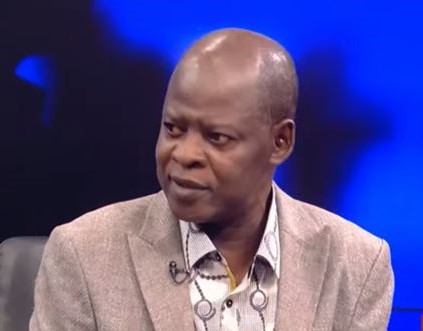

- Weak Royalty Governance Leaves Mining Communities Poor Despite Gold Wealth – Steve Manteaw
Mining communities in Ghana continue to lose out on the economic benefits of mineral extraction because of weak governance, poor planning and inefficient use of royalty revenues, policy analyst and extractive sector governance expert Dr Emmanuel Steve Asare Manteaw has warned.
Dr Manteaw, who is Co-Chair of the Ghana Extractive Industries Transparency Initiative, said the country’s mineral royalty management system has not delivered the level of development expected in communities that host mining operations.
His comments add to growing concerns that while Ghana continues to earn significant revenue from gold and other minerals, many mining communities remain burdened by poor roads, weak social infrastructure, environmental degradation and limited local economic transformation.
The issue has become more urgent as government seeks to increase the state’s share of mining revenues and reform the broader mineral governance framework.
For Dr Manteaw, the challenge is not only the size of royalties allocated to local authorities and communities. It is also how those resources are managed and whether they are used for projects that produce lasting development impact.
He argued that central governments routinely cede a portion of mineral royalties to local authorities with the expectation that these funds will support mining-affected communities. Yet, in many cases, the money fails to translate into visible economic benefits because of mismanagement and weak accountability.
That warning strikes at the heart of Ghana’s long-running mining paradox.
The country is one of Africa’s leading gold producers, but mining districts often do not reflect the wealth extracted from their lands.
Communities that host mines frequently complain of inadequate schools, limited health facilities, poor roads, polluted water bodies and insufficient jobs for local people.
This disconnect between mineral wealth and local development has deepened public frustration and weakened trust in both mining companies and state institutions.
GHEITI has over the years used extractive sector reporting to highlight gaps in revenue collection, allocation and utilisation.
The EITI framework is intended to improve transparency and accountability in the management of oil, gas and mineral resources. Ghana’s implementation has improved public disclosure of extractive sector revenues, but the bigger challenge remains how disclosed revenues are converted into development outcomes.
A 2022 study on Ghana’s adoption of EITI found that despite improved disclosure of royalty payments, weak local governance institutions continued to impede accountability and limit the benefits reaching mining communities.
This is why Dr Manteaw’s intervention matters. Transparency alone is not enough.
Publishing how much money is paid and transferred may improve public knowledge, but it does not automatically ensure better roads, schools, clinics or livelihoods.
For transparency to matter, citizens must be able to trace royalty funds from payment to project delivery, and local authorities must be held accountable for how the funds are spent.
GHEITI had earlier recommended clear guidelines to regulate how district assemblies and communities use their share of mineral royalties. However, reports indicate that rather than implementing one unified framework, government created additional structures, including the Mining Community Development Scheme, which Dr Manteaw has described as a parallel system for managing similar resources.
The result is a fragmented royalty governance system.
Multiple institutions may have roles in receiving, distributing, investing or supervising mineral revenues, but communities often struggle to understand who is responsible for what.
If a mining community receives little visible benefit from royalties, it is not always clear whether the problem lies with central government, the district assembly, traditional authorities, local development schemes or weak project execution.
This institutional confusion creates room for waste and blame-shifting.
It also makes it difficult for citizens to demand answers.
A stronger royalty governance system should answer four simple questions: how much was received, who received it, what was it spent on, and what development outcome did it produce?
At present, those answers are often difficult to obtain. The reform required is therefore both administrative and political.
Ghana must harmonise overlapping royalty frameworks, publish clear disbursement data, define spending priorities and require beneficiary institutions to report on projects funded from mineral revenues.
District assemblies and traditional authorities that receive royalty-related transfers should also be required to disclose project lists, contract values, implementation status and community beneficiaries.
This is particularly important because mineral royalties are not ordinary public funds.
They are compensation linked to the extraction of non-renewable resources from specific communities.
Once the gold is mined and exported, the community cannot recover the resource. The royalty must therefore help build assets that can outlive the mine.
That means spending should prioritise durable development: roads, schools, health centres, water systems, skills training, local enterprise support, environmental restoration and alternative livelihoods.
Using royalty revenues mainly for recurrent spending, ceremonies, administrative costs or poorly planned projects defeats the purpose of the transfers.
It also undermines the social licence of mining companies.
Even when companies pay royalties and taxes, communities may still blame them for underdevelopment if public institutions fail to use mineral revenues effectively.
The government’s current mining reform agenda provides an opportunity to fix this problem.
Ghana is already reviewing royalty rates, local content requirements and mining lease conditions as part of a broader effort to capture more value from the sector. Reuters has reported that Ghana is seeking higher royalties and stronger community investment obligations under mining reforms.
But raising more money will not be enough if the spending system remains weak.
Higher royalties without better governance could simply increase the amount of money exposed to mismanagement.
The real test of reform is whether mining communities begin to see measurable improvements in their living conditions.
Dr Manteaw’s warning should therefore be treated as a call for discipline in revenue governance.
Mining communities do not need more promises. They need traceable funds, enforceable rules and visible development.
Ghana’s mineral wealth can support national growth, but its legitimacy will always be tested in the communities where extraction takes place.
If those communities remain poor while royalties flow through multiple institutions, public confidence in the mining sector will continue to erode.
A harmonised, transparent and accountable royalty management system is no longer optional.
It is central to making mining work for the people who bear its direct costs.

