


- Why Africa’s Dream of Winning the World Cup No Longer Feels Impossible
For generations, the FIFA World Cup has belonged almost exclusively to Europe and South America. The sport’s biggest prize has never been lifted by a nation outside those two football powerhouses, leaving Africa chasing a dream that often felt painfully distant.
But as the 2026 FIFA World Cup draws closer, something feels different.
There is now genuine belief that Africa is no longer arriving at the tournament simply to participate or entertain. For the first time, the continent enters the World Cup with a realistic chance of producing a serious title contender.
From Morocco’s historic run in Qatar to the rise of world-class African stars dominating Europe’s biggest clubs, the signs are becoming impossible to ignore. Africa’s football growth is no longer potential — it is reality.
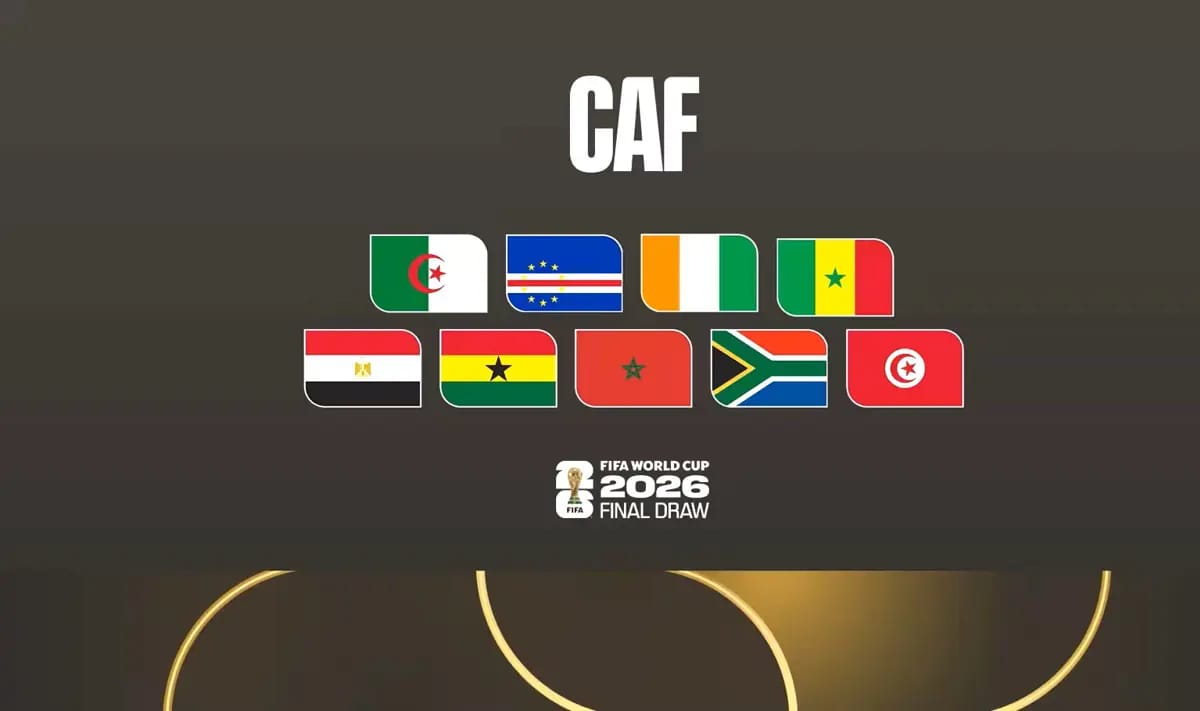
And with a record 10 African nations set to compete in the United States, Mexico and Canada, many believe this could be the continent’s strongest opportunity yet to challenge for football’s greatest prize.
Perhaps the biggest transformation in African football is mental rather than tactical.
For years, African nations arrived at World Cups hoping to surprise bigger football countries. Now, teams like Morocco, Senegal, Ghana and Côte d’Ivoire are entering tournaments believing they belong among the elite.
Morocco’s extraordinary semi-final run at the 2022 FIFA World Cup changed perceptions across the globe. The Atlas Lions defeated Belgium, Spain and Portugal to become the first African and Arab nation to reach the final four.
That achievement shattered a psychological barrier and proved that African nations can compete with the world’s best on the biggest stage.
Record Representation Gives Africa More Opportunities
The expansion of the World Cup from 32 to 48 teams has increased Africa’s representation from five nations to a record ten.
Morocco, Senegal, Ghana, Egypt, Algeria, Côte d’Ivoire, Tunisia, South Africa, Cape Verde and DR Congo will all represent the continent at the tournament.
The increased number of teams gives Africa more chances to make an impact in the knockout stages while also building momentum across the continent during the competition.
More representation also reflects the growing quality and depth of football talent emerging from Africa.
African Stars Are Dominating World Football
African players are no longer outsiders in elite football — they are among the game’s biggest stars.
Morocco’s Achraf Hakimi has developed into one of the world’s best full-backs at Paris Saint-Germain, helping the French side win back-to-back UEFA Champions League titles.
Egyptian forward Mohamed Salah continues to rewrite records at Liverpool after winning every major trophy available with the club, while Senegal’s Sadio Mane has spent years terrorizing defenses across Europe and beyond.
Across Europe’s top leagues, African players continue to play central roles for elite clubs, proving that the continent’s talent can succeed at the highest level.
The technical, tactical and physical gap between African football and the traditional football powers has narrowed dramatically over the past decade.
History suggests Africa is edging closer to a breakthrough. Cameroon became the first African nation to reach the quarter-finals in 1990 before Senegal repeated the feat in 2002.
Ghana then came heartbreakingly close to becoming Africa’s first semi-finalist in 2010, missing out after a dramatic penalty defeat to Uruguay.
Twelve years later, Morocco finally pushed Africa beyond that barrier in Qatar.
The progression is clear: African teams are no longer merely competing at the World Cup — they are becoming genuine contenders capable of defeating football’s traditional giants.
The expanded 48-team World Cup introduces more matches and a longer path to the final, making squad depth and recovery management more important than ever.
African nations now appear better equipped for that challenge with ten countries —Morocco, Senegal, Ghana, Egypt, Côte d’Ivoire, Cape Verde, Tunisia, South Africa, Algeria— possessing stronger and deeper squads than in previous tournaments, with experienced players competing regularly at elite club level.
Modern African footballers are tactically disciplined, physically powerful and increasingly experienced in high-pressure competitions.
The 2026 World Cup will be played during the North American summer, with concerns already being raised about high temperatures and humidity in some venues across the United States and Mexico.
While all nations must adapt, many African players are naturally familiar with physically demanding climates and conditions.
That resilience and adaptability could become an important factor during a long and exhausting tournament.
Although climate alone cannot determine success, it may remove some of the environmental advantages European nations have traditionally enjoyed.
Africa has never looked more prepared to challenge for the FIFA World Cup.
The continent now boasts elite players, stronger squads, increased representation and growing confidence on the global stage. More importantly, African football no longer carries the mentality of an underdog.
No one can predict whether 2026 will finally produce Africa’s first world champion, but one thing is becoming increasingly clear: the idea is no longer fantasy.
For the first time in World Cup history, Africa’s dream feels truly within reach.

