
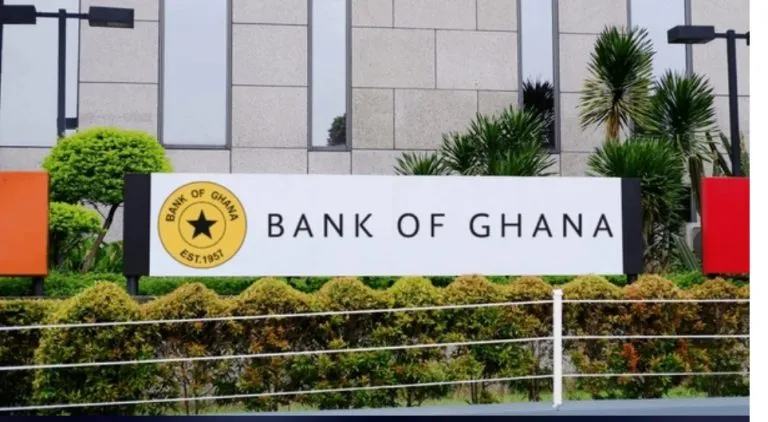

BoG’s losses expose policy trade-offs as central bank prioritises macroeconomic recovery over profitability
The Bank of Ghana’s (BoG) recent financial losses and negative equity position reflect the cost of stabilising an economy in crisis rather than signs of institutional weakness, according to Dr Theo Acheampong, Technical Advisor at the Ministry of Finance.
Speaking during the NorvanReports and Economic Governance Platform (EGP) X Space on the theme “The Price of Stability: Did BoG’s Loss Deliver Real Gains for Ghana’s Economy?”, Dr Acheampong argued that a closer reading of the central bank’s financials reveals improving operational performance, even as legacy interventions continue to weigh on its balance sheet.
BoG’s operating income rose sharply to GH¢22.3 billion in 2025, against costs of GH¢16.7 billion, leaving a surplus of GH¢5.5 billion — a significant increase from the near-flat performance recorded in 2024. The figures, he noted, highlight a strengthening in the Bank’s core operations.
However, this improvement has been offset by structural pressures that have pushed the central bank into a sustained negative equity position. Dr Acheampong identified three key drivers: residual losses from Ghana’s 2022 domestic debt restructuring programme, accounting losses linked to the Gold-for-Reserves initiative, and currency revaluation effects following the appreciation of the cedi.
Under the gold programme, purchases made at prevailing market exchange rates were recorded at the lower interbank rate, creating valuation gaps that translated into losses on the central bank’s books. At the same time, the strengthening cedi reduced the domestic value of foreign-denominated assets, further weakening the balance sheet.
Despite these developments, Dr Acheampong dismissed suggestions that negative equity signals insolvency. He pointed out that several central banks globally have operated under similar conditions, particularly after deploying aggressive interventions to restore stability.
“The real test is whether the central bank is delivering on its mandate,” he said, pointing to easing inflationary pressures and improved exchange rate stability as evidence that policy actions are yielding results.
From the perspective of the private sector, early signs of stabilisation are already emerging. Businesses are reporting improved predictability in the macroeconomic environment, although the focus is now shifting to whether this stability can translate into increased production and investment.
Still, the Bank’s weakened capital position carries fiscal consequences. With negative equity, BoG is unable to declare dividends to the government, limiting a potential source of public revenue at a time of tight fiscal conditions.
Rebuilding capital buffers has therefore become a key pillar of Ghana’s IMF-supported programme. Among the corrective measures already implemented is the restructuring of the GoldBod framework, with trading activities now ring-fenced onto its own balance sheet to reduce future risks to the central bank.
While the debate over BoG’s financial position continues, Dr Acheampong maintained that the losses represent a deliberate policy trade-off one that has helped restore macroeconomic stability, but will require disciplined reforms to rebuild resilience in the years ahead.

